Doctoral students hold the fellowship in the third, fourth, or fifth year of their Ph.D. program and at any stage of their pursuit of the doctoral certificates in collaborative, digital, and environmental humanities. They may reside on campus or be conducting field or archival work while on fellowship.
Cogut Institute for the Humanities
Cogut Doctoral Certificate Fellows
Cogut Doctoral Certificate Fellows
-
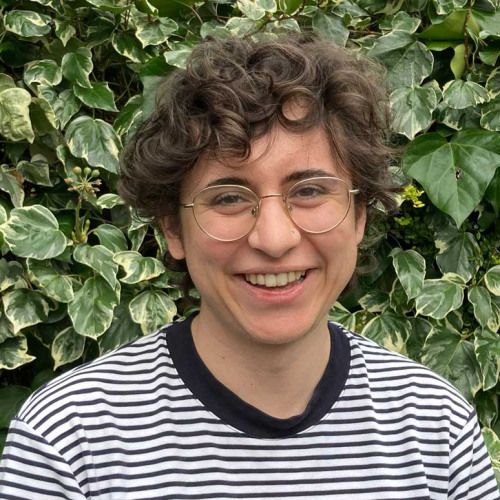
Jason Collins
Collaborative Humanities Fellow, EnglishJason Emmett Collins is a fourth-year doctoral student in the Department of English. He specializes in 18th- and 19th-century British and Irish fiction, with interdisciplinary interests in religious studies and music. His dissertation, tentatively titled “Lessons in Modernity: The Novel and Nostalgia for the Sacred,” focuses on theorizing the history of the Anglophone novel with specific attention to the interrelated problematics of religion, secularism, and modernity. He holds a B.A. in English and History from the University of Southern California, where he was a Trustee Scholar, and an M.Phil. in English from the University of Cambridge, where he was a recipient of the Trinity College Gould Studentship in English Literature. His work has appeared in Religion and the Arts and George Eliot-George Henry Lewes Studies.
-
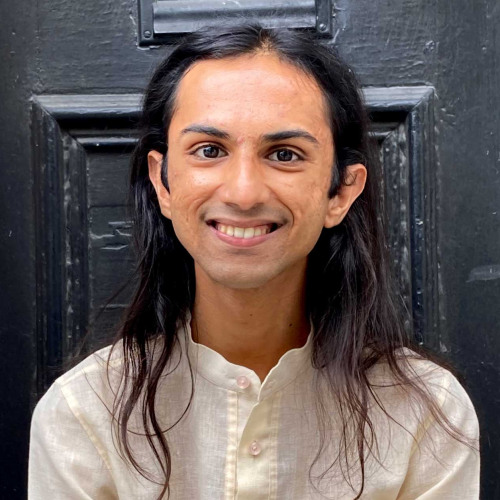
Arunav Jain
Collaborative Humanities Fellow, EnglishArunav Jain is a fifth-year doctoral candidate in the Department of English. His dissertation, titled “Austerities,” examines the reductive influence of market metrics and logics on ethical life (the care of self as care of others), with a view towards understanding how the humanities can respond to this reduction. It takes as its starting point the rise of “austerity,” a strategy of governance in which the state responds to difficult market conditions by reducing public services and/or increasing taxes. Economists call this strategy austerity in recognition of the state’s budgetary restraint, but the name more appropriately describes the sacrificial self-conduct of working-class subjects forced to reduce their wants and needs in response to the state’s frugality. Against the ascendancy of this coercive style of austerity, Arunav wants to set off the memory of an uncoercive style of austerity, one that encourages mobilizing for justice over festering in docility. It is the practice of austerity that Gandhi fashioned under the banner of satyagraha, “truth-force”: the art of nonviolently adhering to one’s truth. The reason for the juxtaposition is fully elaborated in the dissertation, but here this non-sequitur from the man himself will suffice: “Morality is contraband in war.”
-

Tianren Luo
Collaborative Humanities Fellow, Comparative LiteratureTianren Luo is a third-year doctoral student in the Department of Comparative Literature. An interdisciplinary scholar, writer, and activist, they work at the intersections of racial capitalism, extractivism, decolonial theory, and contemporary art criticism, with a focus on postcolonial Africa and Asia. Their dissertation examines financialization and racial capitalism through postcolonial "global cities" — including Tangier, Johannesburg, and Singapore — tracing how these cities have consolidated multiple modes of accumulation since the 1980s while remaining shaped by the afterlives of colonialism. The project also attends to how these urban formations are mapped, contested, and reimagined through the work of local artist-activists forging new forms of Afro-Asian transnational solidarity. Their writing has appeared in venues including positions politics, Theory, Culture & Society, ASAP/Review, and Critical Asian Studies, among others.
-
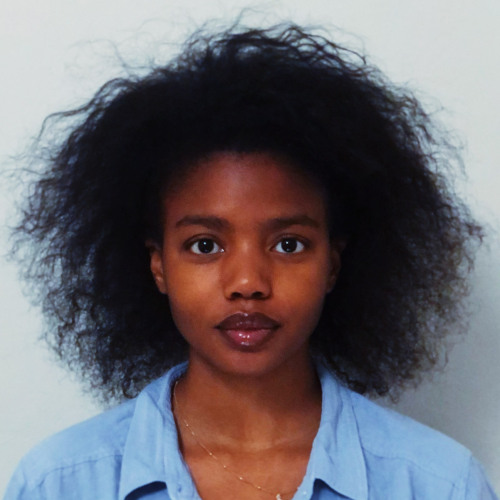
Lindiwe Makgalemele
Collaborative Humanities Fellow, Modern Culture and MediaLindiwe Makgalemele is a third-year doctoral student in the Department of Modern Culture and Media. Her work looks at film, photography, and digital media, seeking to interrogate various idioms of interpretation, particularly as they relate to black aesthetic productions and the ontological a priories through which spectator-spectacle binarisms gain their purchase. This research lies at the intersection of aesthetic theory, critical theory, and film and media studies. In addition to her scholarship, she has a filmmaking practice and is interested in disarticulating the binary between theory and practice. She was a 2021 Sundance Adobe Ignite Fellow and her previous filmic work has been programmed at festivals worldwide including Kurzfilmtage Oberhausen, Encounters Film Festival, BlackStar Film Festival, and the Durban International Film Festival. She holds a B.A. from Harvard University and an M.Sc. from the University of Oxford.
-
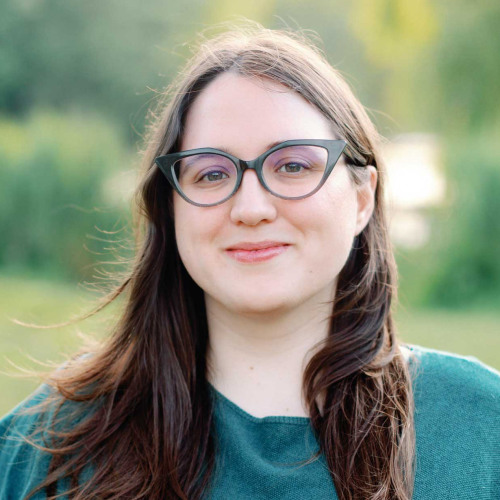
Margaret Masselli
Margaret Masselli is a fourth-year doctoral student in the Department of History of Art and Architecture. Her research on the arts of 18th-century South Asia centers artistic mediums such as ivory and mica as vectors for artists’ engagement with material phenomena alongside their role as commodities in imperial networks. The digital humanities certificate program has supported her development of a database uniting dozens of now physically disparate portraits of eighteenth-century political elites. Bringing these works together has allowed for new subject identifications, while her project directs digital tools toward questions of artistic practice and production. She holds an M.A. in Art History from Columbia University and a B.A. in History from Wesleyan University. More recently, she contributed to the exhibit and catalog for the show Painters, Ports, and Profits: Artists and the East India Company, 1750-1850 at the Yale Center for British Art.
-

Agata Nipitella
Digital Humanities Fellow, Italian StudiesAgata Nipitella is a fifth-year doctoral student in the Department of Italian Studies. Her work seeks to intervene in the way migration histories are traditionally narrated, shifting the focus away from archival dates and numbers toward the more elusive and often neglected, yet foundational, emotional landscapes of the migrant experience. By approaching affect as an epistemological category, she investigates how emotions — considered as historically rooted forces — guide the way individuals and communities relate to shifting ideas of home and belonging across generations. Her current research explores the possibilities of the digital humanities to account for these affective dimensions, specifically through the design of “affective digital archives” that treat voice and silence as meaningful data. Her teaching has spanned topics from Italian language to the cultural politics of the frontier and the construction of “Italianness.” Before arriving at Brown, where she earned an M.A. in Italian Studies, she completed an M.A. in Italian Language and Culture for Foreigners at the University of Bologna and a B.A. in Foreign Languages and Cultures at the University of Catania. Fluent in five languages, she approaches questions of identity through a deeply multilingual, transnational, and transcultural lens.
-
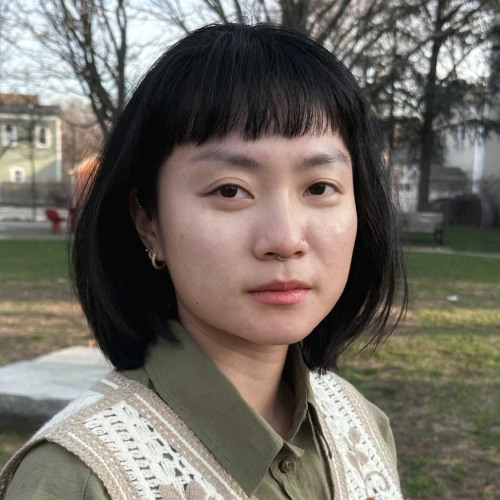
Monica Futong Ren
Collaborative Humanities Fellow, Modern Culture and MediaMonica Futong Ren is a fifth-year doctoral candidate in the Department of Modern Culture and Media at Brown University. Her research and teaching interests include film and media theories, psychoanalysis, design culture, built environments, and science and technology studies. Her dissertation examines how ecological thinking has shaped urban and architectural design, media practices, and theories of the subject from the late 19th century to the present. Drawing on philosophy of technology, psychoanalysis, and urban studies, her project traces the migration of ecological concepts from biology and thermodynamics into mid-20th-century cybernetics, systems theory, and environmental design, asking how the perceptions, fantasies, and knowledge of urban environments anchor or un-situate our orientation in the world. She holds an M.A. in Cinema and Media Studies and a B.A. in Visual Arts and Art History from the University of Chicago.
-
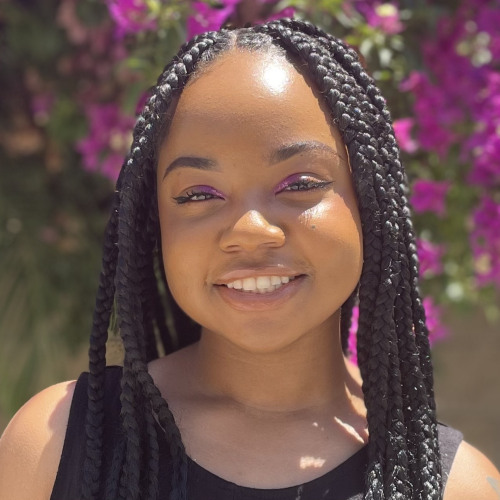
Camille Wise
Digital Humanities Fellow, Africana StudiesCamille Wise is a third-year doctoral student in the Department of Africana Studies. Her research interests include body modification, archival studies, beauty cultures, Black feminisms, digital technologies, and queer studies. She is interested in questions about how members of the Black diaspora use body modification and technology, both together and independently, to shape identities. Through a Black feminist practice, her dissertation is a multigenerational project which interrogates how 20th- and 21st-century Black femmes (dis)engage with makeup to negotiate the visual image of the Black femme in the United States. Before coming to Brown University, she earned a B.A. in Africana Studies and Comparative World Literature from California State University, Long Beach, followed by an M.A. in American Studies from California State University, Fullerton. Her work continues to be shaped and informed by her past experience working in the beauty industry and enrollment in cosmetology school.