Shelley Lee: From the Cogut Institute for the Humanities at Brown University, this is “The Confluence: Ethnic Studies and the Public Good,” a podcast about Ethnic Studies as an insurgent intellectual movement, site of contestation, and driver of transformation. I’m Shelley Lee, Professor of American Studies at Brown.
Gina Pérez: And I’m Gina Pérez, Professor and Chair of Comparative American Studies at Oberlin College. Ethnic Studies is at a crossroads, facing serious challenges about its value and importance, at the same time receiving growing recognition for its role in preparing citizens for our diverse democracy. Through conversations with thinkers and practitioners in and outside of the academy, “The Confluence” explores how Ethnic Studies serves a public good transforming education and our broader world as we grapple with questions of race, migration, identity, and justice.
Shelley Lee: Hello, Gina.
Gina Pérez: Hi, Shelley.
Shelley Lee: So here we are at episode two. In our first episode, we explored the origins and ethos of Ethnic Studies with George Lipsitz and Robin D.G. Kelley, two field-defining scholars who spoke powerfully about honoring struggle and advancing justice, and through their example, modeled solidarity and comradery. We touched on how Ethnic Studies has changed over time, and that’s what brings us to today. For this episode, we’re focusing on a particular generation of scholars, those who went to college in the late ’80s and ’90s, and then entered the academy during a very different moment from the formative ’60s and ’70s.
Gina Pérez: We want to explore what it means to build careers in Ethnic Studies as Gen-Xers. By the late ’80s and ’90s, when our guests were in college, they weren’t fighting to create programs from scratch. They were joining departments that already existed or were being created, navigating institutions, and dealing with tenure requirements. Meanwhile, the country was changing with new waves of immigration, culture wars, budget cuts, debates about multiculturalism, and political correctness. And so we wanted to explore the questions of what does Ethnic Studies become when it’s no longer only about struggle from the outside, but about building and sustaining from within? What happens to the field when the world we’re analyzing keeps shifting? Those are some of the questions we want to explore.
Shelley Lee: So one thing we want to note upfront: In this conversation, you’ll hear from scholars of Asian American, Africana, and Latinx Studies, but not Native American and indigenous Studies, and that reflects a number of factors, which will become clear in the conversation, but it also points to some of the uneven ways that Ethnic Studies and its subfields have developed.
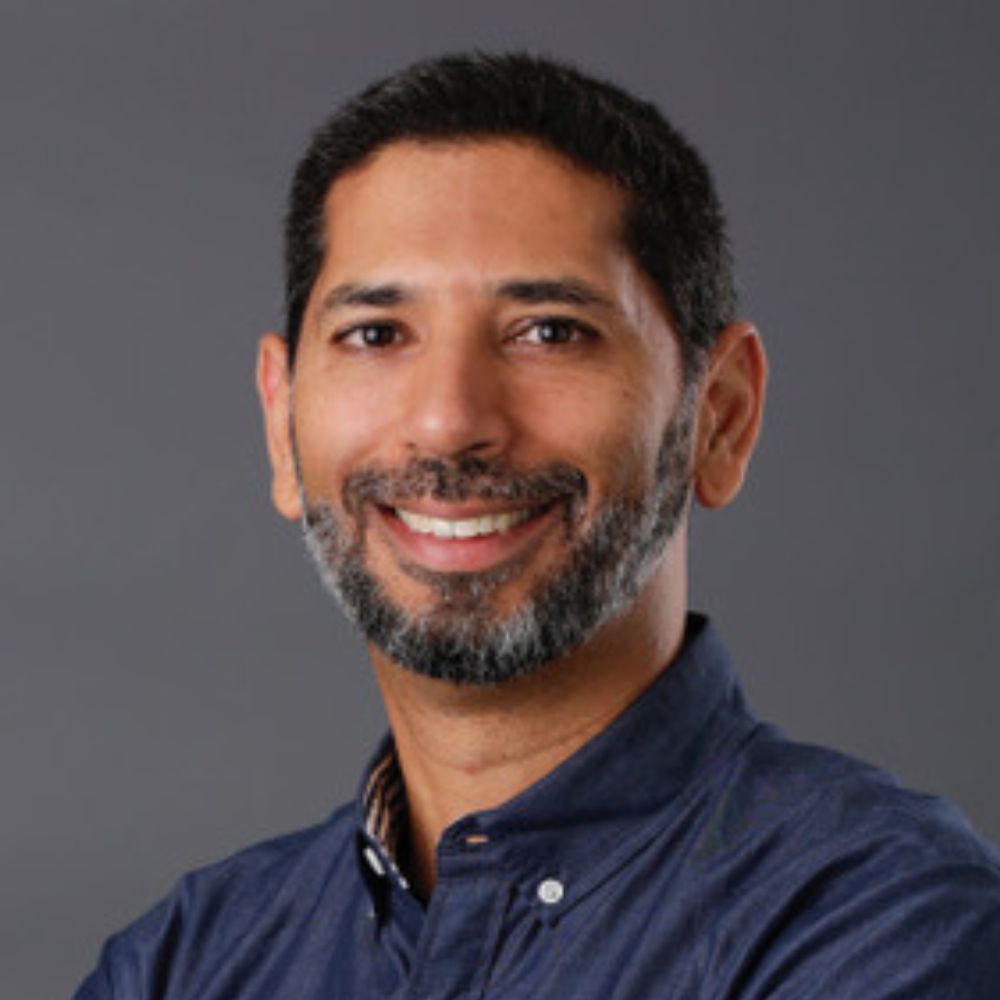
Gina Pérez: We will begin by introducing our guests. Pawan Dhingra is a sociologist and the Vice President of Equity and Inclusion, the Aliki Perroti and Seth Frank ’55 Professor of U.S. Immigration Studies in American Studies, and the Chair of the Asian American and Pacific Islander Studies Program at Amherst College. He’s a multiple award-winning author and a former curator at the Smithsonian. He is a former president of the Board of the Association for Asian American Studies and the South Asian American Digital Archive. He has a forthcoming book called Success Won’t Save Us: How Asian Americans Experience White Supremacy and Can Fight Back.
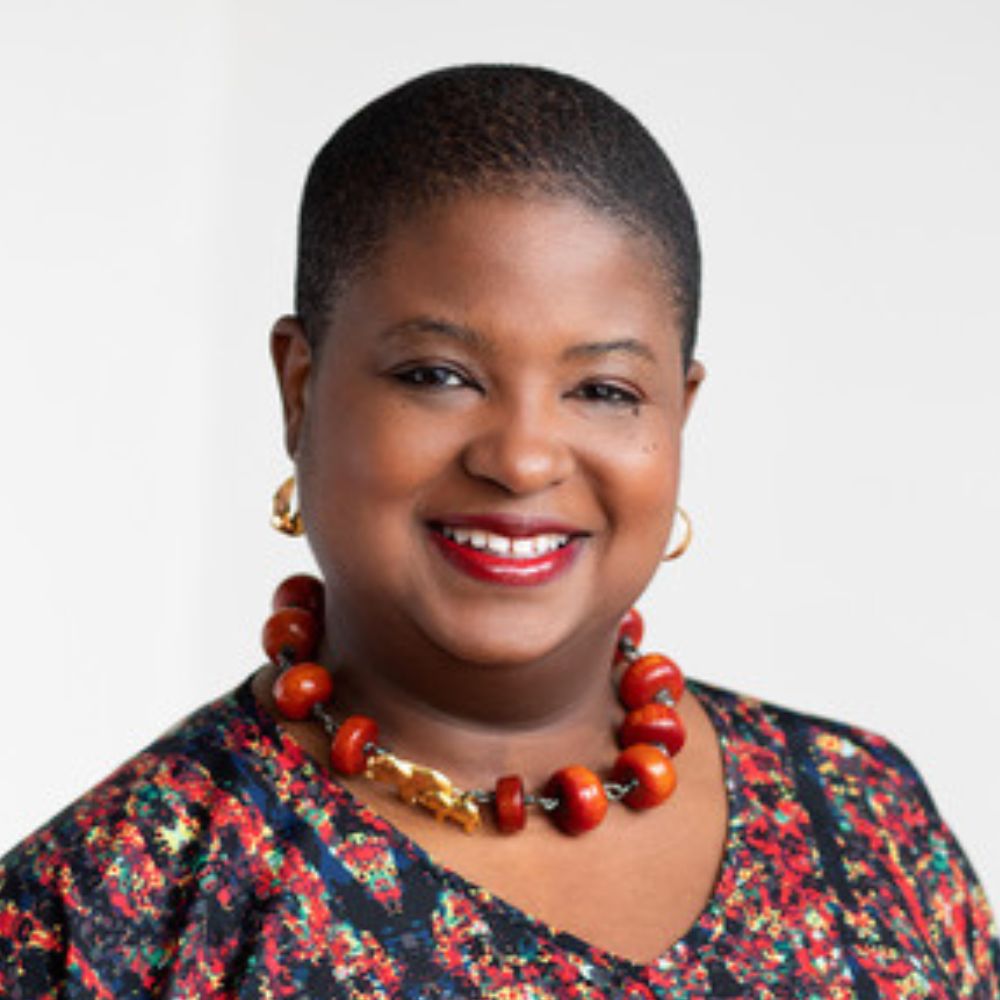
Shelley Lee: We’re also speaking with Meredith Gadsby, Professor of Africana Studies and Comparative American Studies at Oberlin College. She is the author of the book Sucking Salt: Caribbean Women Writers, Migration, and Survival, and her research focuses on migration, identity, and the African diaspora. She is president of the Association of Caribbean Women Writers and Scholars and has served as special assistant to the President for Racial Equity and Diversity at Oberlin. She also serves on the board of the Tony Morrison Society.
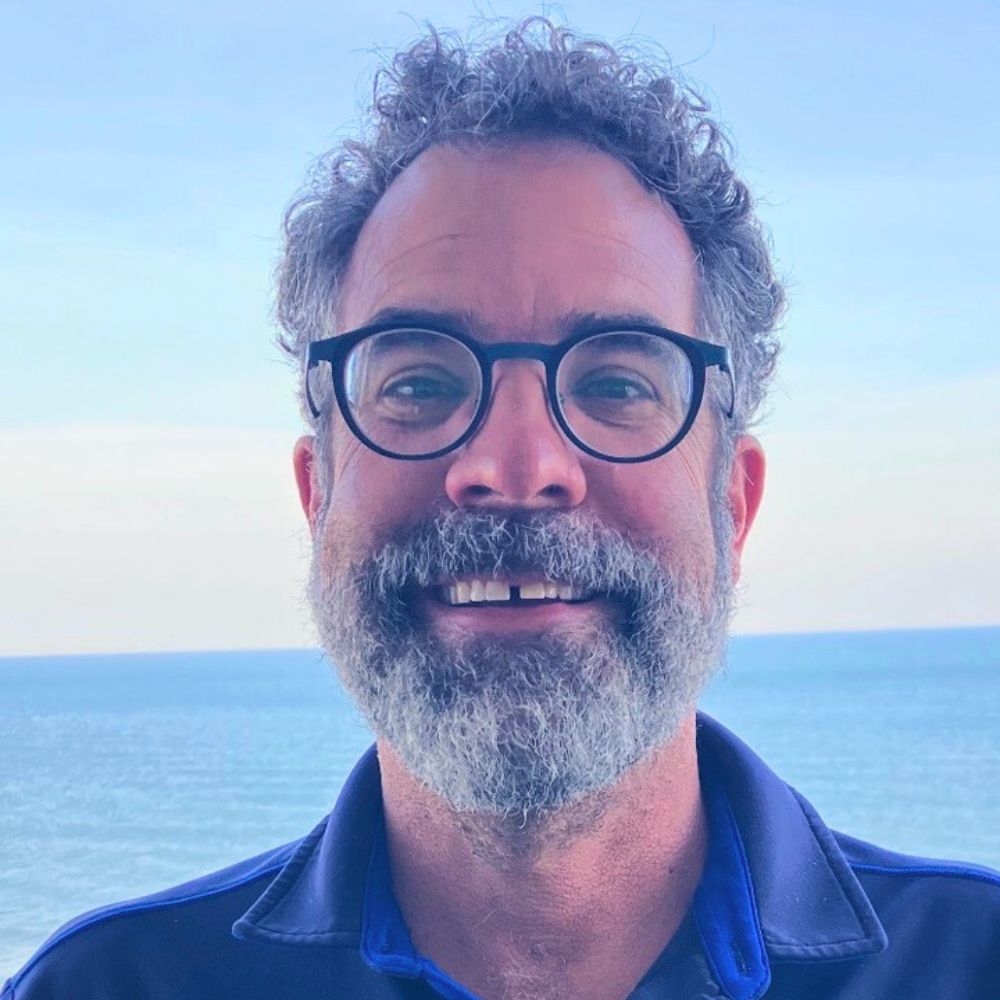
Gina Pérez: And finally we have Pablo Mitchell, a Professor of History and Comparative American Studies at Oberlin and the author of multiple books, most recently History of Latinos Exploring Diverse Roots. He’s also the author of the award-winning book Coyote Nation: Sexuality, Race, and Conquest in Modernizing New Mexico, 1880–1920. In 2008, he was named one of 10 emerging Scholars by the magazine Diverse: Issues in Higher Education.
Shelley Lee: Pawan Dhingra, Meredith Gadsby, Pablo Mitchell, welcome to “The Confluence.”
Meredith Gadsby: Thank you.
Pablo Mitchell: Thanks. Really nice to be here.
Pawan Dhingra: Yes. Pleasure to be here.
Shelley Lee: So today we’re bringing in a generational perspective by speaking with scholars of Asian American, Latinx, and Africana Studies who entered the academy after Ethnic Studies had gained institutional footing. For listeners who are new to the subject, Ethnic Studies emerged from student protests on college campuses in the late ’60s and ’70s that led to the establishment of the first programs in Black Studies, Chicano Studies, Asian American Studies and Native American Studies, sometimes in separate entities, sometimes together under the umbrella of Ethnic Studies. The names of these branches of Ethnic Studies have evolved. New subfields have emerged. And Ethnic Studies can now be found in older discipline-based departments like History and English as well as newer interdisciplinary units. But what I think generally still runs through what we call Ethnic Studies is a critical approach to the study of race, a commitment to understanding experiences from below, and an ethos of challenging racism. So that’s just a short bit of explanation, and there’s more to it. So for further background on Ethnic Studies and the institutional landscape, do see our show notes.
Gina Pérez: So the five of us were colleagues at Oberlin College for many years, and at Oberlin in 1968, there was a program in Afro-American Studies that was created and that predates American Studies at Oberlin, which was established in 2000. That program was established by faculty who voted to create it in response to years of organizing by students and staff and faculty to offer courses in Ethnic Studies and Latino Studies, Asian American Studies, and Native American Studies. And our guests today all contributed to the building of that program, and so that’s one of the reasons why we’re really excited to have everyone here today. To begin our conversation, we’re going to start by talking about your intellectual formation. What was it that led you to the work that you do today? Each of you entered college and graduate school in the 1980s and 1990s when Ethnic Studies had already had an institutional footing and you could train with senior scholars in your various fields. So I’d like to begin by having you tell us about your experiences in undergraduate education, in your undergraduate years, that helped you become a scholar of race. Was there a particular class or a book or an experience or a person who was formative in that experience? And we’re going to begin with you, Pablo.
Pablo Mitchell: I started college — I grew up in New Mexico, and so I went out to Swarthmore College and for my undergraduate. And while I was there, I learned an awful lot. But there was an area I was really interested in, and that was the area around the U.S. West and the borderlands. And I didn’t find a whole lot of stuff about that. And so for me it was formative to have Gloria Anzaldúa’s Borderlands assigned in a class and also to read Leslie Marmon Silko’s Ceremony. And that legitimized for me this area as an important area to study. I was also really interested in being a writer and wanted to be able to write. And so both of those were able to come together with the Mellon Fellowship that then encouraged me to go on to grad school and to be able to then do some writing about that topic — so about the U.S.-Mexico borderlands area, and then how race and sex would intersect. Anzaldúa especially was so important in being able to do that for myself and, I think, for a lot of people.
Gina Pérez: Pawan, do you want to pick up from there and talk about your experiences?
Pawan Dhingra: Like Pablo, I also went to a small liberal arts college akin to Oberlin. But unlike Pablo, there weren’t any seminal texts that resonated with me. And in fact, almost it’s like the opposite. I was a Psychology major, and partly it’s because of the discipline of Psychology and also because of the time — there was a general lack of conversations around Asian America — much less South Asians or Indian Americans. So I often was trying to fill in the gaps of what I was reading and doing independent studies or writing a paper that was inserting the experience of Asian Americans in a topic, in a course that wasn’t there. And that’s what inspired me to — and I had support from faculty there to do so — that’s what inspired me to want to pursue this more when I realized there is both a gap of knowledge that I was interested in learning more about, and people were around me telling me, “This is worth pursuing.” I wasn’t being told, “This is just too parochial,” or anything else. So while there wasn’t anything that captured my imagination, it was a growth despite that in some ways.
Gina Pérez: And how about you, Meredith?
Meredith Gadsby: I realize that there was a lot of overlap between my late undergraduate experience and my early graduate experience, because I entered graduate school in ’93, and there was a period of intense violence against Black people that was happening in New York City. First, there was institutional violence in the experience of who we now call the exonerated five, who were five men who were accused of sexually assaulting a white woman in Central Park. And many years later, DNA evidence made clear that they were falsely accused, and they were also coerced, violently coerced, into confessions during that period. One of the things that stood out for me was that the current president paid for a full page ad in The New York Times calling for the execution of those young men. And then a few years before — and that was in 1989 — that was the year I graduated from high school — a few years before there was the attack on Michael Griffiths in Howard Beach, New York, which was where I went to middle school — called junior high school at the time. And then when I entered my undergraduate institution, which was also a small liberal arts college in upstate New York, there was the controversy around the accusation of sexual assault by Tawana Brawley. In each of those moments, I saw a failure of the state, particularly law enforcement, to properly support and protect Black folks. So I navigated undergrad in the midst of those issues. And then in graduate school, I encountered a network of faculty who were deeply engaged in talking about social justice and who were activists in their own right, who approached this work from an interdisciplinary perspective. I think, in many ways, that’s what shaped my evolution as a scholar interested in all of those related issues.
Shelley Lee: These were helpful personal and intellectual biographies that help us to understand what got you animated and activated about intellectual life and also political life and how that connected with your intellectual life that then led you to pursue a Ph.D. and an academic career, but I’m also wondering, because we wanted to have a generational discussion — we are all people who came of age in the ’80s and ’90s, which is a very different time than the late ’60s and ’70s, when these student activists were calling for Ethnic Studies. In the conversation we had previously for the first episode with Robin Kelley and George Lipsitz, we talked about how the culture and politics of the ’60s and ’70s shaped the kinds of questions that they were asking — so anti-war movement, civil rights, Black power, etc. So thinking about your generational experience, how do you think the culture and politics of your generation, our generation, shaped the questions that you were asking? And do you see those generational concerns as distinct from the scholars that you trained with the students you teach now? What do you think of as distinct about your generational experiences and how that formed you as a scholar? I’m going to ask Pawan.
Pawan Dhingra: That’s a great question. I think, to some degree, in the ’90s, the discourse was still primarily — and I’m happy to hear, Meredith and Pablo, or you both, Gina and Shelley, disagree — discourse was primarily around race and racism as a way to think about marginalization, structural inequalities. I was a sociologist in grad school. There’s a lot — some of the texts that you have to put up with as a Sociology Ph.D. student or in the canon of Sociology have such titles as The Declining Significance of Race. So that’s a debate you’re having to deal with. And in Ethnic Studies — which I had the privilege of working with also in grad school through Gary Okihiro — obviously had different kinds of considerations, but even then, I think it was trying to move beyond that “declining significance of race” kinds of framings, but still focusing on race and racism as the rubric through which to understand the experience of groups, and intersectionality is tied to that, as opposed to, for instance, thinking about white supremacy as a distinct notion than racism, or some other colonialism, for instance. And so if I think about how the ’90s shaped my intellectual growth — I became “a race scholar,” and I identified as such. I think I still, partly — it’s how I see myself. And I think that’s somewhat indicative of the time, at least in the fields that I was learning.
Shelley Lee: So against the backdrop of reading all these things, pronouncing the declining significance of race?
Pawan Dhingra: Right. You’re having to defend the significance of race, in other words. So Ethnic Studies, I think, was a tool to do that, was one of the spaces that was doing that. But I think even Ethnic Studies — the framings that they used back then — Asian American Studies was trying to demonstrate that Asian Americans have a long history here — and, Shelley, you know this better than I do — that they have experienced racialization in certain thematic ways. It ties to how other people have done so, but it’s still around this question of race as the orienting rubric.
Shelley Lee: So kind of a space to push back against some of that other literature.
Pablo Mitchel: I would build on that and, and say, for me, and I think for a lot of people, the importance of someone like Anzaldúa was the analysis of gender and sexuality and that it was impossible really to be able to understand these kind of racial formations, the history of Latinos and Latinas in the U.S. without really taking race, gender, and sexuality seriously. And so I think that was a particular moment that emerged in the ’80s and ’90s, where many of us came out in this intersectional moment. And I think then the programs that we started to want to want to build reflected that and reflected that sense that we needed to understand, say, the history of Chicanos and Chicanas in the U.S., we really needed to understand sexuality in a much more profound way. And so people like Anzaldúa, Cherríe Moraga, and others were the ones who nudged us to be able to do that and then to apply it to our different disciplines — then, for me, History, but then Sociology, obviously Literature, and so on.
Meredith Gadsby: One of the things that stood out to me from what you all were saying is how we leaned into difference. In terms of my own graduate training, it was incredibly — the depth of it for me, as I look back on it, was astounding because we were trained by a network of scholars who encouraged us to lean into difference. “Diversity” was a word that we were using in a number of ways. And we also were pushing back against the idea of multiculturalism that we felt didn’t adequately reflect all of the work and all of the contributions of the people whose work we wanted to elevate. We were committed to working against silencing. And I, as a graduate student, was trained in the midst of the evolution of Cultural Studies. I’m thinking about people like Stuart Hall and Hortense Spillers, Kobena Mercer. I came of age reading Audre Lorde, where difference was identified as a superpower. In my own work, I leaned into difference in relationship to thinking about the diversity of Black cultures, in Black communities. I grew up in New York City in a predominantly Black community that was also, in many ways, in many pockets, predominantly brown. It was Asian American. It was also many people who were Asian who had recently arrived. I grew up in Queens, which is the most diverse borough in New York City. So there wasn’t any conflict for me, for instance, between being Caribbean and American at the same time. And so much of the work that I did involved talking about the diversity in terms of Blackness, and then I was trained in a program in Comp Lit where we leaned into those intersections of identities and also leaned into class really deeply. I also wanted to say that I’m hip hop generation. So the evolution of hip hop in the 1970s and New York City and the Bronx — and of course we know hip hop isn’t exclusively located in that space in the present, existed as a result of intense class politics, a number of absences, inefficient support by the state and local municipal government and so on, and also an incredible amount of creativity that existed in communities of Black people who identified as Black and Latino, Black and African American, Black Caribbean, all at the same time. I think that that experience encouraged me to approach the work that I did in particular types of ways.
Gina Pérez: I want us to talk a little bit about institutionalization in your own careers and how, when you were hired at Oberlin, each of you was hired in a particular department or program within your disciplines — Latino History, African American and Caribbean Literature, and Asian American Sociology. And you had to make different kinds of choices about what to publish and where to publish and what to write about. I would love for you to talk a little bit about what kind of work you were doing in the early stages of your career, how you made choices about what to publish and where to publish, and how that is tied to your understandings about race in America more broadly and about the fields you’re a part of. And maybe we could begin with you with this one, Meredith.
Meredith Gadsby: That’s a great question. Fortunately, being hired in an African American Studies department, I had an incredible amount of latitude. I think if I had been hired into a different type of department, I would’ve felt a lot more confined. But I was in a department that was already interdisciplinary. African American Studies at Oberlin was interdisciplinary from the onset. So I didn’t have to struggle against or struggle with colleagues who didn’t understand the appropriate venues for publishing my work. I will say, though, that I also felt like I needed to publish in particular types of venues, in particular types of university presses, in order to have my work be respected. And the work that I published, particularly the first book and the early articles, did revolve around thinking about Caribbean communities and Caribbean culture and the creation of communities that existed often in hostile landscapes and the resources that people developed within the region and also outside of the Caribbean region.
Pawan Dhingra: I can jump in and say that actually I felt — I was in the Sociology department at Oberlin, and because of a couple of things — one is the people, individuals in the department, but also because of Comparative American Studies being there and having an appointment in the Comparative American Studies, and people in my department being supportive of that new department, I never felt actually a sense of constraint or what I could publish or where I could publish. In fact, I didn’t even realize the constraints some of my colleagues had at other universities. I started talking to them about that and getting a sense from them. So I felt — I published in the Journal of Asian American Studies and other interdisciplinary places. In fact, when I went to a different university, after making the tragic mistake of leaving Oberlin, one of the things that came up in the review of my dossier was the number of articles I had published in mainstream sociology journals. So then I then added to that in my CV, but that was one of the — so I think I had a different than normal experience, but the thing you’re mentioning is very real.
Meredith Gadsby: That’s an interesting point, if I could just interject. What I found is — you know, I’m trained in English and Comparative Literatures — what I found is that joining an Africana Studies or an African American Studies department then made me suspicious to English departments and Literature departments. And the question always became “What specifically is literary about your work?” As opposed to being Africana or African American Studies focused, which was always a very problematic question, which I think also guided the choices that I made in terms of where I submitted my work so that I could be legible in different types of spaces, even though I didn’t feel confined in my existing department.
Pablo Mitchell: I think it’s also really important that for Ethnic Studies at Oberlin and Comparative American Studies that we had these strong and supportive existing programs of African-American Studies and Africana Studies, and then also Gender and Women’s Studies, without that kind of institutional support with senior scholars coming in and saying, “No, this is really important,” and not feeling that it’s going to draw away from their own resources, and their generosity really made that possible.
Shelley Lee: So we actually do want you to tell us more of that story. While at Oberlin, you were all in different departments. I was there, too. Pablo was in History, Pawan in Sociology, Meredith in African-American — now known as Africana — Studies. We all worked together in this new unit called Comparative American Studies, or CAS for short. Gina was one of the first tenure-track hires in Comparative American Studies, CAS. Pablo and Meredith were at Oberlin before CAS was established. So what do you remember about those early conversations and efforts around CAS? Put a story together for us.
Meredith Gadsby: Pablo, feel free to jump in anywhere. I remember an incredible amount of excitement at the time, particularly working with colleagues who were concerned that there wasn’t a place to talk about particularly Latina communities and Asian American communities from a domestic perspective. There were preexisting departments that dealt with, in some ways, the experiences of people from the global South, but there was a frustration, I think, that was growing around the ability to have certain types of conversations here. And I remember members of Africana Studies being really excited about supporting colleagues who wanted to do that work. So there was a collaborative spirit around it. There were senior colleagues that I encountered who were involved with some folks who were visiting and other folks who in other departments — to actually write the proposal, to present the faculty, to advocate for the work. And I remember in that moment that there was not a spirit of competition. I think our department was really excited. I think because our department had, is, had been diasporic from the onset — was excited to see what kind of new opportunities this would provide for the intellectual experience of students, but also our own intellectual experience and community as scholars here at Oberlin. Pablo, I don’t know how you feel about that.
Pablo Mitchell: I think that’s absolutely true. And there were a couple other important contributing factors. A huge one was the role of students. I think the students were pushing forward, had pushed forward for a really long time. One of the things that I’ve always appreciated about being at Oberlin, even though I sometimes chafe against it with some of the things that the students want and say, is that they often really drive institutional change. We tend to listen to the students and when they say, “We want this kind of class” or “We want this person who’s going to talk about this” — that helps us then think about personnel changes and how we shift over. That was absolutely critical, especially then when we were able to hire Gina and Meredith Raimundo to come in, that there was a built-in constituency of students who were really interested in their courses and wanted to take their courses. I’ve seen other contexts where there’s almost a top-down, “build it, they will come” kind of aspect, and I think that that’s not nearly as successful as the motto where we listen to students and take them seriously. There was also a lot of administrative support. The dean at the time, Clayton Koppes, the president of Oberlin, Nancy Dye — both of them were incredibly supportive of that. And so there was various folks who were putting a lot of pressure and bringing it about. And one last thing: I think we were able, because of that institutional support, to hire two people to found the program. It made such a difference, I think. We were also incredibly lucky with the two people that we hired, including Gina.
Pawan Dhingra: I’m curious, Gina and Shelley, since you were in the program primarily and you chaired it, how you felt the support for the program has been at the college. Even though there has been a lot of groundswell support in creating it, that’s different than necessarily being able to keep it sustained and grow. So could you speak to that?
Gina Pérez: That’s a really good question. As one of the first faculty members to be hired in CAS to help build CAS, I think there’s a lot of excitement for all the things that Pablo and Meredith both said about the student support as well as both administrative support but staff as well, people who are working in the residence halls, who are working through the Multicultural Resource Center. It felt like we were all in a shared mission and calling to build Ethnic Studies, to build something distinctive, to build an American Studies that from its inception centered gender, race, and sexuality, and ethnicity at its core. I think that it was obvious to us how there was institutional support for CAS, the fact that they established two tenure track positions and also your line Pawan. Even though you were in Sociology, there was always an understanding how Asian American Studies was central to the work of American Studies and Ethnic Studies. You’re hiring to build out Latino Studies, Asian American Studies — Native Studies was to come — Gender and Sexuality Studies, Africana Studies — but like a lot of departments and programs, that institutional support waxes and wanes. It was hard in those first few years trying to explain to faculty and other departments the value of what we were doing about the intellectual project of Ethnic Studies and of Latino Studies. I remember having a lot of conflicts with some senior faculty who were not particularly supportive of the work that we were doing and trying to reduce what we were doing to identity politics — as if that’s a really terrible thing — and that’s a whole other conversation — and trying to have lots of different conversations with people in some of the traditional departments about how what we were doing was something that is complimentary to the work that they do. It also allows us to interrogate some of the questions from even our own fields of studies. So I’m a cultural anthropologist, and to see this as something that was a shared intellectual project rather than something that was undermining the work that they were doing. And so that was at the level of the faculty, but even institutionally, from the administration. The moment — like, 2008 — comes around when there is retrenchment. Ethnic Studies and CAS was on the chopping block. At one point they cut — they decided they were not going to hire in Asian American history, and we had to fight, to mobilize and organize and make the intellectual case for why Asian American Studies needed to remain in CAS.
Shelley Lee: I feel like I was the beneficiary of all the fighting and organizing and building that you all did, because by the time I was hired at Oberlin, all of you had tenure. Pablo chaired the committee that hired me, and Pawan took me under his wing. I felt like the luckiest person at Oberlin for a while, because I knew that a lot of work and discipline and tenacity went into building CAS, but then saving this position that I got to occupy. And that I think continues the generational story. We’re similar in age, but I also benefited from the advancement that you all achieved individually and collectively, and as a result I felt very supported in my teaching, in my scholarship, in having my time protected. And then after tenure, being appointed to this or that committee, and then chairing the department, then I came really face to face with the hard work of sustaining and protecting this unit and really came to understand, especially in times of austerity in the college, that we can’t take any of it for granted, no matter how good it feels like it’s going.
Pawan Dhingra: I think that’s a really good point about the fact that Shelley — the Asian American history line was actually terminated, and then it had to be brought back in. It wasn’t just discussed for termination. And to Pablo’s and Meredith’s point before, if you don’t build it from the ground up, you’re not going to have the kind of community support to go argue to the deans to maintain something and bring something back. And so this is not a story of a progressive college investing in this and growing it all the time — and that’s not critiquing Oberlin — it’s just a reality that these things ebb and flow, and it takes a lot of groundswell of support to keep them going.
Meredith Gadsby: One of the things that’s beautiful and exhausting about this work is constantly feeling as if you’ve got to argue to folks from different demographics that this — you have to argue with them about the value of this work, the degree to which is valuable, not just to us as colleagues, but also to students. So part of the liberal arts project is supposed to be about preparing students for an ever-changing world, right? Yet the work that we do in our departments provides them often with the intellectual and the cultural competencies to be able to do that work. And you all raise the issue of this generational experience. It’s astounding to me because, Pablo, when we were hired, the shift moved to like 40% junior faculty in that moment, to the extent that we were able to shift even the time that faculty meetings happened from 4:30 to 6:00, which was horrendous, to earlier in the day. So I don’t know if at some point we’ll have an opportunity to talk about the intense intellectual and emotional labor that we engage in in doing this work, and also the ways that we have to be vigilant against the ways in which our usually smaller departments are pitted against each other in relationship to resources, because one of the challenges that we have across the nation in terms of African American Studies departments, Africana Studies departments, and so on, is we’re almost always under-resourced, but then being told that we have enough after a certain point, like you’ve asked for things and you’ve had enough and you’ve got to step back. And then the last issue is then feeling erased. So in the broader discussion of Ethnic Studies, what many of us feel in our departments is that we become erased in the narrative of Ethnic Studies where then institutions become more interested in populations of folk — non-Black populations of folk, if I’m being honest. And then we kind of get relegated to like a back burner because we are no longer as interesting or as sexy as these newer departments who are doing different types of work. And so I just wanted to throw that out, that there’s always this challenge to not fall into the trap of feeling as if we’re in competition with each other as opposed to sharing students in a particular type of intellectual community.
Gina Pérez: Each of you have been department chairs, have been museum curators, equity officers, associate deans, and association presidents. And we’re having this conversation now when Ethnic Studies is facing incredible institutional threats. The past year, for example, 22 states have passed legislation restricting or eliminating DEI programs and Ethnic Studies requirements. In the state of Indiana, for example, they’ve eliminated 70 DEI related programs. And they’re reviewing academic standards tied to Ethnic Studies for language that they deemed “divisive.” So as people who are inside of the field and people who have held leadership roles, I wonder if you could talk a little bit about what are some of the specific kinds of misconceptions that you’ve had to address around Ethnic Studies in your leadership positions, and what are some of the different ways that you’ve responded? And maybe we’ll begin with you, Pawan, since you were talking about your at Amherst and the leadership roles that you have at Amherst College.
Pawan Dhingra: I think this is the defining issue, in some ways, of our moment. At Oberlin — I can’t speak to what it’s like at Oberlin, but I would imagine that we’re somewhat protected there because it’s private, well known reputation. At Amherst — somewhat protected as well. We’re also in a blue state, which helps. But the critiques that are happening right now, not just about divisiveness as a code word, but explicitly on topics of gender and race and transgender are really disrupting what we can do, under the guise of trying to create viewpoint diversity or safe spaces for folks. And what I worry is that people have to make real concessions on what they want to teach and what they can research even, what they can apply for grants on as a result. And even in protective spaces, like some of our colleges, we’re not immune to those kinds of concerns, the fears that people walk into their classrooms with. And one of the things that’s really unfortunate, as you said in the question, Gina, is that somehow DEI is being read as the divider on campus. These spaces, Ethnic Studies spaces, or however you want to describe it are — whether it be student centered or the classroom — are putting people into separate boxes and not letting them connect with each other. And we know that’s not the case. We know that these spaces provide necessary comradery for folks so they can engage in the other spaces that dominate the campus at large. We don’t have the same critiques of athletics for some reason, even though we do it here. And last thing I’ll quickly say is there’s this whole talk now around viewpoint diversity. This is the big code word that people in my work are dealing with. And the idea behind it is that conservative students do not feel they can express themselves in Ethnic Studies classrooms or related kinds of classrooms, and so the syllabi need to be revised so that different forms of thought are incorporated. A couple things about that. One is that notion undermines faculty intelligence, that we actually know the canon and we’ve actually done research and published scholarship that is sound and relevant. Just because you don’t like what it says doesn’t mean it’s not the relevant scholarship. And the other thing about it is, where was this concern for viewpoint diversity 20 years ago when, you know, low income Native American, Latinx students were growing in the academy. No one cared back then. No one said, wait a minute, we have to reconfigure things. I think this is very troubling. And we have to find ways of navigating this and hopefully getting on the other side.
Meredith Gadsby: Pawan, we’ve moved away from a discussion of diversity and inclusion to a discussion of diversity and exclusion, where the folks who are identifying themselves as being excluded are folks who, for generations, had class, gender, and racial privilege that created limitless options for them — to quote an episode of Seinfeld, “an unending stream of green lights” — that allowed them to be able to make very particular types of social, institutional, economic moves, progress, often at the expense of other folks. And I found in my leadership as chair — I’ve chaired Africana Studies twice. I served for two years as co-chair of the Presidential Initiative for Racial Equity and Inclusion here at Oberlin, and one of the things that I was tasked with as the co-chair was to review all of the institution’s business, basically to identify what we are doing well in terms of thinking about diversity work and where there were points of tension. And interestingly the points of tension generally revolved around concerns that would result in some type of litigation launched by people who felt as though they’d been excluded in different ways. And I think that that’s a real challenge because for me as chair, I want to stay true to the mission of the department. The Africana Studies is the first mission-centered department at the institution. And our field, our departments across the nation generally are the first mission-centered ones, right? And so how do we stay true to that mission to serve our students, to serve all students, so that they have access to a useful but also intellectually rigorous intellectual experience whilst navigating the administrative concerns revolving around litigation, particularly in relationship to the current administration. But I want to say that this is not our first time at this party. We are consistently finding ourselves in waves and cycles. That’s a part of the work that we do. We talk about the long journey of this work and how we navigate these experiences. I’ve found it incredibly challenging. One example is that Africana Studies at Oberlin College, in terms of faculty, are all people of African descent. There has never been a moment at which we have not been challenged for that. So the argument is that there must be something exclusionary happening there because we’re all of African descent, as opposed to imagining a world where the best candidates for these positions just happen to be of African descent. It never occurs to folks that that can be an issue. And our argument is always like, “Are you asking other departments that are seemingly homogeneous” — superficially, you know — “if this is an issue there?” So I think that issue of being accused of excluding folks is a real challenge in the classroom. I find one of the things that we do is we make — we’re talking about institutions, and we’re talking about structures. And there are individuals who are embedded in those structures, right? But we’re not singling out anyone. We are talking about human experience writ large. And so how we manage that in terms of our leadership to support particularly our most vulnerable faculty and our students.
Pablo Mitchell: Can I build on, Meredith, your great point about these cycles of crisis that one of the benefits is that we’re used to doing this. I think we have a head start in Ethnic Studies and Africana Studies and Gender and Women’s Studies because we’re used to justifying ourselves. We’re used to coming up with reasons why we should get new lines and being able to say, “Look at how productive our scholars are,” “Look at how many students take our intro classes,” and so on. I know we’re going maybe to talk a little bit about the humanities writ large and so on, but other departments aren’t used to doing that. I love French. I think they should have people teaching French. But if someone comes to them and says, “Why do you need four full faculty lines?” they’re not used to doing that. They’re not used to coming up with the explanations for that. They haven’t built up the enrollments and so on. And — I’m sorry to single them out — that goes around. They’re all around. And so we are actually already ready to do that and ready to mobilize that, whereas a lot of other departments and a lot of other fields aren’t quite ready to do that. I think that’s been part of the success. And I think there’s also a lot of students who — again, in kind of a generational difference, in these younger students, 19 and 20 and 21 year olds — they see the value in it. And so they see it’s important to take a class in Queer Studies and important to take a class in Asian American Sociology and so on, and they’re coming to that. So we’re also able to draw upon what, for me, is really an exciting and fortifying phenomenon, which is that students are voting with their feet, and they’re voting with their feet to come take classes because they see the world around them, and they see how important it is to know something about the history of Black people in this country and the history of immigration in this country and the history of discrimination based on sexuality in this country. And so that, for me — it gives us the ability to make some of these arguments about why our programs are important.
Meredith Gadsby: And we help answer these questions, right? So we might not bring in the big research dollars that other departments might, but when the students ask questions like “Why was George Floyd murdered, despite generations of political movement, despite civil rights, despite Black power, despite — why do these things keep happening over and over again?” “Why were those women murdered in California?” We answer those questions. We help them understand, and we also help them — this is part of the argument that we always make — we also help them become better practitioners in whatever field they end up in, being able to understand, for instance, the history of health disparities among communities of color in the United States. Those of our students who end up in public policy, who end up in medicine — they’re better practitioners. It matters for a doctor who identifies as being African descent, working in predominantly Black communities to walk into a hospital room and approach a patient and address an elder patient by their last name. You know why? Because there are generations of Black people who were addressed using names that weren’t of their choosing. People called them whatever they wanted, and they’re expecting to be disrespected, right? And so for that practitioner to be able to walk into that space and address that person using the honorific that makes sense to them in their communities — it has a profound impact on their ability to do that work. All too often there isn’t recognition of the kind of work, the foundational work, that we do, that actually prepares students for the world, in addition to the other aspects of their intellectual experiences as undergraduates.
Shelley Lee: I think that there’s an irony in our generational experience because Ethnic Studies emerged in the late ’60s and ’70s at a time when I think higher education was still widely seen as a public good, because it creates informed citizens. It helps to create an educated workforce and innovations that benefit everyone. And if there’s a public good case to be made for Ethnic Studies, you could say it provides the type of knowledge that everybody needs to navigate a diverse democracy. But we entered the academy when that framework had already been dismantled. Higher ed as a public good — it no longer holds currency, right? What is higher ed for? It’s transactional. It’s so you can get a credential and then get a high-paying job. It’s how it serves the individual. Is there still a persuasive public good argument to be made about Ethnic Studies? This is a particularly challenging landscape to make it, but I hear you all already making that case. I wanted to focus in on that and hear some more. What is the persuasive case to be made about Ethnic Studies as a public good now that we need to really get out there?
Pawan Dhingra: I think Meredith put it really well. On the one hand, seeing the murders of Black people, everyday Black people, on the streets, by our own police officers, by our own government — seeing ICE detain students for co-authoring an op-ed in a student paper — and then on the other hand — as, Meredith, you also said — taking classes with us makes you better at whatever job you end up in. You’re more aware, not necessarily of the particular group that you studied, but of how power operates in a space, of how difference operates in a space, and to be attentive to difference, and ask questions that might not otherwise be asked — and I that’s one of the best — what do we do in liberal arts colleges? I hope we train students to ask questions, the right kinds of questions. At the same time, if we talk about the public good, the question that comes to my mind, speaking of asking questions, is which public are we talking about? I don’t know to what degree Ethnic Studies by naming militarism or colonialism and white supremacy and the like is going to ever be popular in the public, right? And that’s okay. So I sometimes wonder which public are we trying to speak to, which public are we trying to convince? In other words, I have two minds about our need to be impactful to the public and be considered a public good. I don’t think we’re ever going to — for us to be considered a part of the public good, writ large, it might mean shaping what we say in ways that we’re not all comfortable with. Having said that, the last thing I’ll say is the more that we are writing pieces for public consumption outside of the academy is really valuable.
Meredith Gadsby: I would add, Gina and Shelley, for me, as a colleague, seeing the work that you all do in that vein, Pawan, has been wonderful. I think it, for me, it’s less about what Ethnic Studies can do. It’s less that — it is more about what we as scholars in these fields decide to do with this work. And so the writing of op-eds and publishing in different types of venues — I think about people like Audre Lorde and bell hooks who intentionally wrote works that they made accessible to a much wider audience by doing things like that were risky at the time, by not footnoting, by not including glossaries, by stripping away the more academically — I don’t want to say repulsive — but academically alienating aspects of scholarly work so that it didn’t just appear as if they were in an echo chamber talking to each other, using words and jargon that didn’t make any sense to the vast majority of the population, but pulling their intellectual work outside of the classroom into workshop spaces and so on is really important. So for me, in terms of my leadership, even off campus, being involved in organizations of Black women, being involved in community service that is connected to the scholarship that I do — I write about Caribbean women writers creating new spaces for survival in multiple contexts, but then I also work hard to translate that work in a way that makes sense in different types of spaces, making myself accessible, and then pulling the work in, is really important, and reimagining what intellectual discourse actually looks like. The point I’m making is marrying it with a particular type of activism is important. As someone, for instance, who has approached different opportunities in multiple spaces administratively and has been told that the way I approach the work is a bit too activist — that type of thing helps me to understand that those are not the intellectual spaces that I want to be in, and thinking more broadly about how we do the work.
Pablo Mitchell: I was thinking about the public good from the perspective of students, and especially students of color — and especially Latino and Latina students as students I work the most closely with. I worry about Ethnic Studies as kind of a brain drain, that we have these programs that are set up at elite colleges and universities that are drawing kind of the best and the brightest from some of these communities in Chicago and Houston and LA and Brownsville, all of these different places, to come to places like Oberlin or Brown or Amherst or a variety of different places, and then maybe not go back to some of those spaces. And I see the frustration that the students have sometimes. And we’re providing a space where their experiences are valued, where their histories are valued, and where it’s not only us, but other students are valuing those experiences as well. So I wonder, in terms of the public good, if there’s a way to be able to think more about where community colleges and local education is offering that to some students who are very frustrated because they want to go back and support their communities, sometimes literally during the most difficult times, but then other, more generally, where they want to go back. And I’m not sure how well we’re often training them to do that, how enticing we are to pull them away from that. And so sometimes I do wonder about the public good, how much we are serving, some of these communities that in certain ways we care the most about, drawing out some of their smartest and most talented people and then not necessarily often giving them the tools to be able to go back. And maybe they don’t want to go back, and maybe they would stay and support those communities. So that for me is a different type of understanding the common good and the public good, especially because Ethnic Studies comes out of this activist locally oriented tradition of places like San Francisco State and saying, “Okay, what’s going on in San Francisco?” and so on. So that would be another way I’d be thinking about public good.
Meredith Gadsby: It’s interesting that you say that Pablo, because — maybe we should talk about this more, because what I’m finding is I feel like our students do go back. I feel that even if, when they leave Oberlin, and even if they go on to graduate programs, the scholarly work that they do — there are a number of students I think about — and you shouldn’t name names — like Brian Cabral and so many other students — who their graduate work revolves around those questions, and they start grappling with them here, and then they continue to grapple with them there. And then in their postgraduate work, they end up doing exactly the type of work informed by that research. That makes me really proud. I think of the number of majors, and it’s important to note that we have so many Africana Studies and CAS double majors — I think the proof is in the pudding. That makes me really proud to see that. And those students, if they’re in public policy, they’re doing public policy around access to affordable healthcare. In their legal work, they’re thinking about immigration law and policy. So many of them end up being educators K through 12. I’m always gratified when I see the ways that they make that transition. I think the return, the going back, means different things in different ways, and I’m always encouraged by the ways that they translate their learning here into that work for the common good. So I think it’s interesting that you raise that issue, because I see it in so many wonderful ways, the way they’re actually doing that. And at the end, I feel so gratified that this wasn’t such an alienating experience, and that grad school wasn’t so alienating, that they don’t feel as if they can do that. It’s interesting. I’m glad you raised that.
Pablo Mitchell: I think those are some wonderful examples. I feel a tension from my students that they’re not able to be the kind of activist they want to be, and that some of them then will go on and become that. But then they go on to grad school, and then they go on and get jobs as university professors and teaching Ethic Studies, which is exactly kind of what we want in a certain way. But I don’t think for some of them that that’s addressing some of their more local concerns about what’s going on in their very specific community that they’re caring about.
Gina Pérez: I think this is such an important question, and it’s making me think about this next question I have about just how transformative this scholarship has been in Ethnic Studies for 50 years, because, as each of you have eloquently outlined, part of what students are learning when they come here are these histories of the Ethnic Studies strike in San Francisco State, learning about the Black Panthers and the different kinds of community base as well as intellectual projects that they were a part of. I’m thinking about Asian American liberation struggles in the 1960s and how they were thinking both domestically but also globally and transnationally, thinking about empire and how students are so inspired by these stories. And they want to do the right thing. They want to go back, and they want to be the activists. They want to give back to the communities that they come from. And they’re struggling to figure out how to do that and to make a living, to be able to support themselves. What are the things that our students are learning through Ethnic Studies about the United States and about America that they wouldn’t necessarily know otherwise if they hadn’t taken our classes? And maybe we’ll begin with you, Pawan.
Pawan Dhingra: That’s a hard question to answer because there’s been 50 years of Ethnic Studies. It’s hard for me to even imagine an academy without it, frankly, at this point. So one way of answering, I guess, would be, beyond Ethnic Studies, telling certain histories that would otherwise not be known and then hopefully making those part of the public consciousness. I think one of the values — and then also beyond, as I said before, naming certain types of structural, foundational inequalities that are embedded in the nation, beyond all of that, beyond all the theory, and even beyond some of the content, one of the attributes of Ethnic Studies is that at its foundational element, it said the experiences of people who you normally talk about need to be heard. They have their story they need to tell. And if we’re not hearing from them, then you’re not understanding whatever the situation is. And Ethnic Studies prioritizes that. And I think we’ve gotten to the point now — one of the ways in which we know Ethnic Studies and DEI generally has been so powerful is because they now want to dismantle it, right? That’s an example. That’s a sign of how impactful it’s been. And I know that we don’t conflate DEI and Ethnic Studies. I will say that the attacks — that DEI — maybe because of my own positionality — in my mind, it’s the tip of the spear of these critiques. The attacks on race-conscious admissions, affirmative action, the attacks on DEI spaces on campuses — they’re all connected. And the next step is undermining what we can teach and then who we can hire, all the things. That’s a bit of a side point, but I don’t want to lose sight of how these things are connected, even though in our own little micro universe, microcosm, we see them as distinct.
Pablo Mitchell: I think that’s all very true. I was thinking more on the new knowledge aspect of what Ethnic Studies has done, and I think Ethnic Studies has opened up this incredible new space of creating knowledge about the world that we live in that was fairly constricted 50, 60 years ago. There was a limited world of what we know about this. And because of the way Ethnic Studies folks are constantly looking for new sources about their people’s lives and sometimes drawing them from very limited resources, where they talk some — you know, a line about this person being from Mexico, and suddenly we go in, and we study that more, and we want to understand more about who that person is. And it’s brought to the broader scholarship and the broader world a whole new array of sources that are then available to study and to see as important. And I think, Meredith, your point about hip hop is a great one because now suddenly there’s this broader world that’s available not only to Ethnic Studies folks, and not only to African American Studies folks, but to a broader group of scholars who can take this seriously and have started to take it seriously. So in that way, I think Ethnic Studies has broadened our access to new knowledge by the kind of work that we do and the uncovering and almost archival and excavatory work that we’re doing.
Meredith Gadsby: I would also add to the issue of method — helping students understand the relationship between power and privilege and perspective is really an important intervention that we make in the work, in that there are multiple perspectives from which we can approach cultures and identity, and that actually matters. And also being self-reflective about what we bring as human beings in the world to the work that we do right really matters as well. And I think discussions of power and privilege allow students to be able to think carefully about how they want to intervene in certain discussions and participate in ongoing dialogues. I also appreciate that students — at the end of every semester, I ask them what did they learn. I think I might have borrowed this from Shelley. Like, “What did you learn? What did you want to learn more about?” I asked them, “What made you angry? What did you find confusing?” And one of the things that they always say is that, “I didn’t know about a lot of this, and I just thought that people were being erased. But I didn’t realize that it’s not that people were being erased or that they were invisible. My community’s always been here. It’s just that nobody cared.” And so when scholars care and open a window, what a difference that makes. And it made them think about the difference that they could make. And for me, that’s always gratifying. The illumination, the opening of a window for them, and then illuminating a perspective that they wouldn’t otherwise have explored, but also the introspection to think about how they want to participate in the interest of the common good is really important.
Shelley Lee: So we do have a final question. And, Meredith, your comments set us up perfectly. At the end of class, I would ask students, “What did you learn?” as a way to review, but then also, “What do you want to learn more?” And part of that is to underscore the fact that our learning is never done, right? You finish a class — it doesn’t mean that you know everything there is to know, but hopefully you’re still curious to continue learning. So in the spirit of the liberal arts, which for me is fundamentally about being a constant learner, constantly curious, what are you most motivated to learn or better understand right now?
Pawan Dhingra: There are probably a lot of things that I want to learn, a lot of things I don’t know much about, that’s for sure. My ignorance is vast and deep. But I’ll say that one thing that — and as we were talking about Ethnic Studies for public good, op-eds, I wonder — I’ve written various op-eds and — do they ever make a difference? If people ever read something and then like, “Oh, I now disagree. I now am convinced that what I thought before was wrong, and this is the right way of thinking about it.” Obviously not — well, at least I assume not, despite whatever pride I take in something I’ve published. And so I’m curious about how do we create learning environments for people to take things they believe and have those challenged and actually come to a different realization, a different place there than they were before. I worry that a lot of how we do this is not so much — a lot of what we are doing, and we do well, is presenting cases. I present a case here, and I make an argument there, and I teach this thing there, and my syllabus creates this. But where is the work we’re doing to create learning environments that — not just about taking in new knowledge, but I’m actually able to disagree with what I thought before. I’m actually able to think differently now than I did before. And I think that’s something for us to — if we want to invest in the idea of the public good, then I think that’s part of it.
Pablo Mitchell: I was thinking about a significant portion of this population and this country voted for Donald Trump. As we think about the common good and the public good, that’s an important group of people to be able to bring our content to. And I would like to learn better how to bring some of the lessons that we know in Ethnic Studies and Sexuality Studies and Africana Studies to some of these communities, who seem on the surface at least incredibly resistant to it. I actually believe that deep down there are some commonalities there that are possible, that there are people who believe in immigration and that believe that it’s okay to love who you want to love, and a whole variety of different kinds of things, and have been incredibly upset and disenfranchised by the way our economy has moved in certain ways in the last 20, 30 years. And so I would want to learn how to better come into conversation with those folks and bring some of the lessons of Ethnic Studies to those folks, because I do believe that they will, if not embrace them at first, that they might listen, and I think they would eventually learn from some of those lessons as well.
Meredith Mitchell: My approach is a little bit different. I want to find opportunities — to find the best ways to support communities of folk who are already doing this work, to be able to do the work and stay healthy and whole. Might be a bit controversial, but I’m less interested in doing the persuasive work than I am in the cultivation of communities of care, because I feel as though we’ve had centuries of antagonism, and despite that antagonism, many of the communities that we write about persist and continue to do this work. And it’s exhausting, as we mentioned earlier in our conversation, to have to constantly make these arguments for our right to exist. And at this stage of career — and, I think, also life stage — I really am committed to spaces of affirmation that help us to mobilize, to continue to do this work without frankly sacrificing our physical, our psychological, our emotional health to do it. And I don’t know if that quite answers the question. So at the organizational level, for instance, in terms of the organizations that I’m a part of that aren’t necessarily scholarly — they’re community based — I’m in various organizations committed to service in my leadership. I chair boards and commissions that serve communities in different types of ways. And I’m doing all this reading and leadership to think about ways to better support those communities, and I find that work affirming, I frankly — fighting all the time is exhausting. And I can do it, but I don’t always want to be doing — I don’t want that to be — I find that sometimes to be a distraction from the work that I find most joy filled. Does that make sense? My word for the year is “joy.” Joy, right? And how can I continue to joyfully do the work that I love in supportive communities I hold dear. And how do I marry my scholarship with my activism and my community and civic engagement to do that work? I’d like to know more about how I can do that.
Pablo Mitchell: I really like that. I think it gets to some of the things we’ve been talking about, this generational changes. I think about that a lot and where I am now upper middle career and how we can support then younger scholars and younger community members doing that kind of work, and what our own kind of institutional standing can can provide and can do for that. So I appreciate you saying that and then thinking about that and thinking about how we can provide support and mentorship in a certain way that reflects then where we are career wise.
Meredith Mitchell: Are we old heads now?
Pablo Mitchell: We might just be.
Pawan Dhingra: I’m glad they started with Robin and George as opposed to us.
Meredith Gadsby: I don’t know if we’re mid career, or are we …
Gina Pérez: We are not mid career. We’re senior.
Meredith Gadsby: Oh, so we are all senior colleagues. I wouldn’t — before it was presented as what responsibilities we have, and I don’t see it as in, — I see, like, what type of a mentor and advocate do I want to be? How do I use the privilege that I now have to do good? Because I come from a community of scholars who, when they were senior to me, did an incredible amount of good for me. And how do I continue to do that work?
Gina Pérez: I think it’s really interesting. Each of your responses is just so you. And so I’m once again inspired by being in your presence and hearing all of you speak. So thanks for that.
Meredith Gadsby: Thank you. It’s joyful. I appreciate this work.
Pawan Dhingra: I think you, bringing us together, both of you, is — and how you frame these conversations — is touching and thoughtful. So I appreciate both of you very much.
Shelley Lee: I just wanted to say I read somewhere that Gen X is the best generation, so who cares that we’re old? I will share the article with you. But this has been wonderful. It’s been joyful and affirming to be in conversation with you all. And I have a lot of gratitude for getting to walk my own professional path with you all at some point, sometimes for long or short stretches, because it’s brought a lot of growth and friendship. And it’s been very valuable to have had this opportunity to think generationally with you because it, for me, has brought into sharper relief how Ethnic Studies has changed as the world has changed. So thank you so much, Pawan Dhinga, Meredith Gadsby and Pablo Mitchell. It was great.
All: Thanks. Thank you.
Gina Pérez: That was such a great conversation, Shelley. Hearing Pablo, Meredith, and Pawan talk about how they came to the work that they do in Ethnic Studies was really inspiring, and I thought it really built on some really great insights. From our first conversation with Robin Kelley and George Lipsitz. What were some of your takeaways?
Shelley Lee: For me, the big takeaway was the theme of paradox and how this generation of scholars came of age when Ethnic Studies was gaining ground Institutionally yet racial injustice and resistance to new ideas about race persisted. The guests talked about how they were navigating contradictions, witnessing and trying to understand ongoing injustice, and encountering intellectual blind spots, while also inheriting powerful new frameworks and receiving the encouragement to develop their own.
Gina Pérez: I agree. That was really powerful to hear them talk about that. So we want to thank you all for listening to “The Confluence.” Join us next time as we step outside of the academy to explore how Ethnic Studies is changing public understandings of race in America, particularly how they’re doing so in museums and other spaces of public engagement.