Shelley Lee: From the Cogut Institute for the Humanities at Brown University, this is “The Confluence: Ethnic Studies and the Public Good,” a podcast about Ethnic Studies as an insurgent intellectual movement, site of contestation, and driver of transformation. I’m Shelley Lee, Professor of American Studies at Brown.
Gina Pérez: And I’m Gina Pérez, Professor and Chair of Comparative American Studies at Oberlin College. Ethnic Studies is at a crossroads, facing serious challenges about its value and importance, at the same time receiving growing recognition for its role in preparing citizens for our diverse democracy. Through conversations with thinkers and practitioners in and outside of the academy, “The Confluence” explores how Ethnic Studies serves a public good transforming education and our broader world as we grapple with questions of race, migration, identity, and justice.
Shelley Lee: Hi, Gina. I’m so excited to launch our podcast.
Gina Pérez: Hi, Shelley. So am I.
Shelley Lee: Since this is our first episode, let’s introduce ourselves. I’m Shelley Lee, Professor of American Studies, History, and the Humanities at Brown. I’m a U.S. historian who writes and teaches about Asian Americans, immigration, and cities, and my most recent work is a forthcoming, revised edition of the book A New History of Asian America.
Gina Pérez: And I’m Gina Pérez, Professor and Chair of Comparative American Studies at Oberlin College. I’m a culture anthropologist, and my work focuses on Latino studies. My most recent book is called Sanctuary People, and it focuses on faith-based organizing in Latino communities in Ohio during the Trump years.
Shelley Lee: It is great to be collaborating with you again, Gina, after our 15 years together at Oberlin, where we built an interdisciplinary program and worked on initiatives that drew on our shared interests in the critical examination of race and the role of solidarity in social movements. Those collaborations lead us to this podcast, which is part of a multi-year initiative that I’m directing at Brown’s Cogut Institute called “The Origins and After Lives of Ethnic Studies.” The goals of the initiative include examining Ethnic Studies in multiple dimensions, its origins and social movements, its institutionalization, and its relevance for understanding today’s crises in higher ed and the broader culture wars. We’re especially interested in exploring how Ethnic Studies or critical knowledge about race in America serves a public good, and we’ll unpack what that means throughout the series.
Gina Pérez: And as we were dreaming up who we wanted to have as guests, especially our first guests, two names kept coming up, and those were George Lipsitz and Robin Kelley. These scholars have loomed large in Ethnic Studies and other fields for close to 40 years and have profoundly influenced both academic thought and public discourse about the intersections of race, class, culture, and resistance in American life.
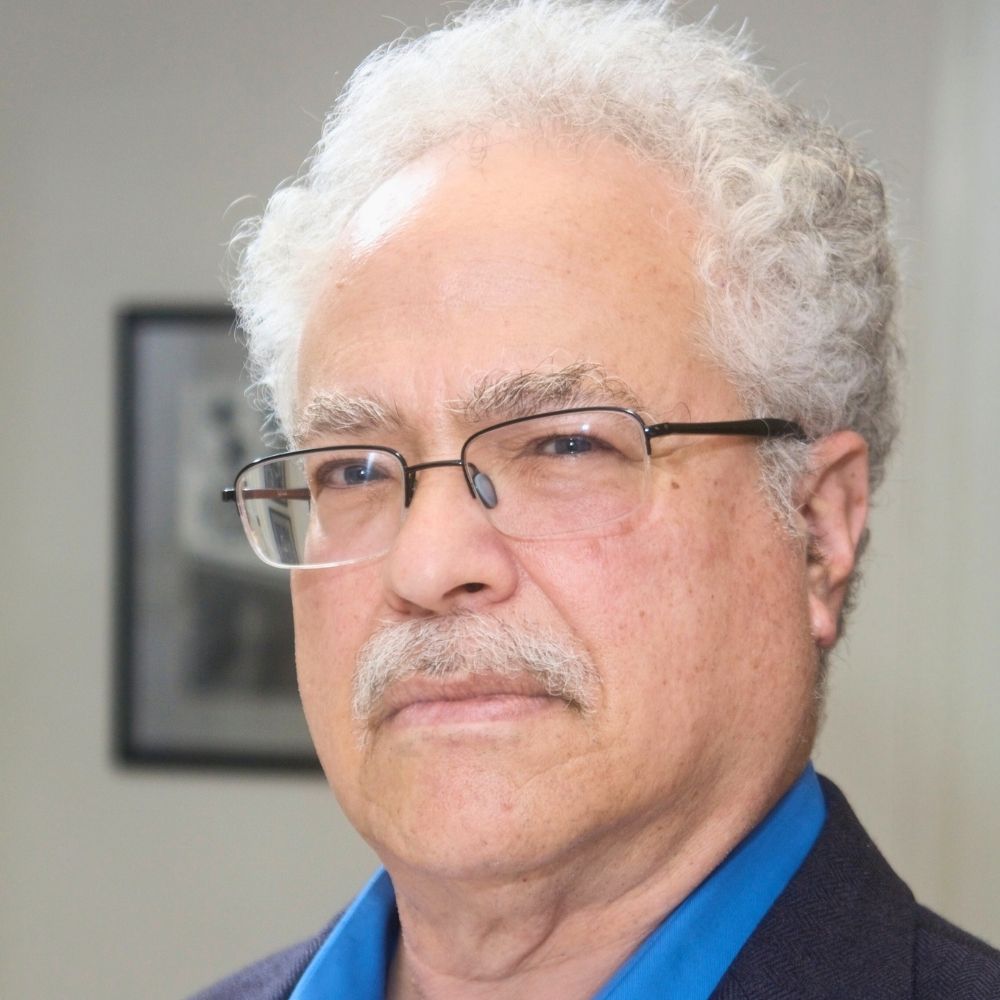
So I’ll begin by talking about George Lipsitz, who is a Professor Emeritus of Black Studies and Sociology at UC, Santa Barbara. He’s perhaps best known for his book The Possessive Investment in Whiteness: How White People Profit from Identity Politics, which remains as relevant today as when it was published back in 1998. He’s also written over a dozen other books exploring how racism operates. And what I really love about George’s work is how he always connects scholarship to organizing and social movements, and we see this in his most recent book, The Danger Zone Is Everywhere, which shows how housing discrimination steals wealth and harms health, as well as in the newest book that he has coming out in May, 2026, with the University of California Press, titled Ethnic Studies at the Crossroads. For me, one of the most influential articles is one that he co-wrote with Barbara Tomlinson called “American Studies as Accompaniment” that truly changes how I think and how I teach about ethical scholarship.
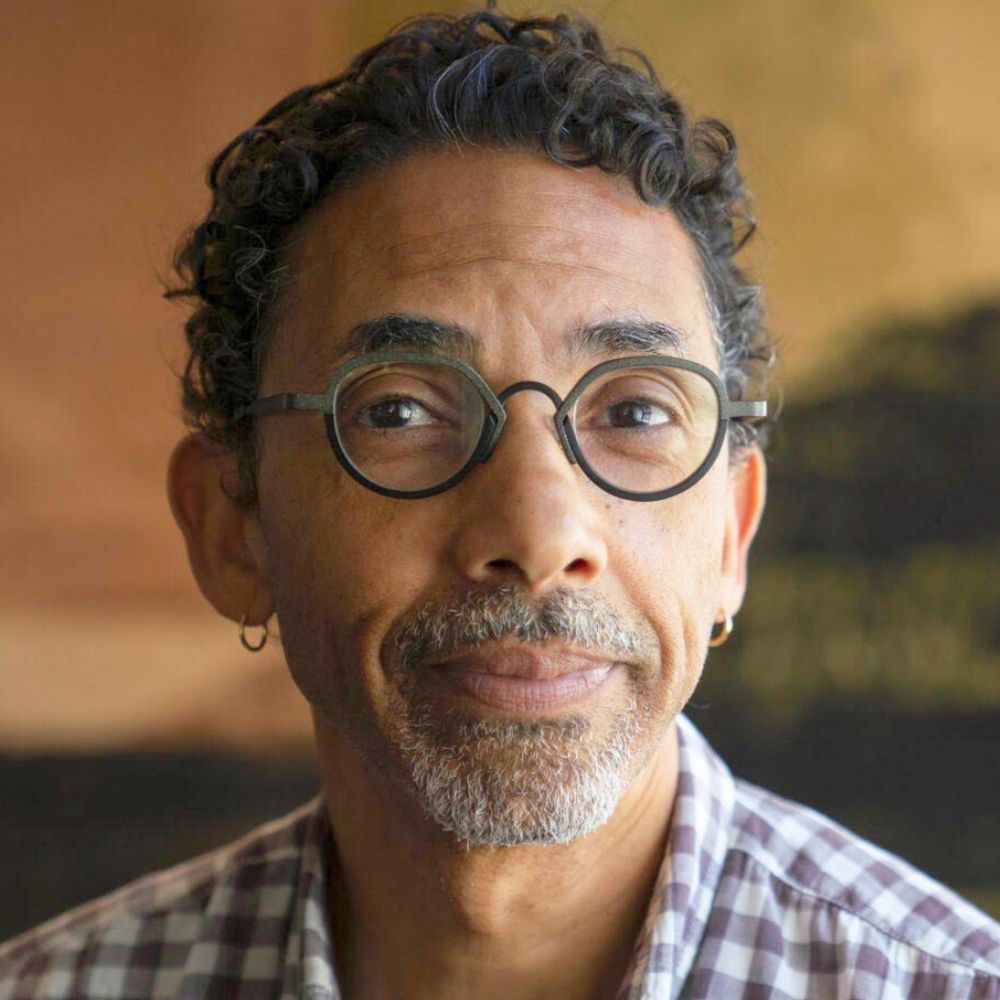
Shelley Lee: And joining the conversation is Robin D.G. Kelley, Distinguished Professor and Gary B. Nash Chair in U.S. History at UCLA. He is the author of such acclaimed books as Freedom Dreams, The Black Radical Imagination, Thelonious Monk: The Life and Times of an American Original, and Hammer and Hoe: Alabama Communists During the Great Depression. Also, his writings have appeared in such venues as The New York Times and the Boston Review. For me, his book, Race Rebels, which I encountered as a young grad student in the late ’90s, was a revelatory read that expanded my understanding of resistance by showing how it appears in seemingly inconsequential and mundane working class arenas of daily life. So I am excited for these two fantastic guests.
Our guests today are Robin D.G Kelley, a Distinguished Professor of History at UCLA, and George Lipsitz, Professor Emeritus of Black Studies and Sociology at UC, Santa Barbara. We’re very excited to welcome you both to “Confluence.” Professors, welcome.
George Lipsitz: Thank you.
Robin D.G. Kelley: Thank you.
Shelley Lee: To get things started, both of you have new works, either just published or forthcoming that really spoke to some of the questions that Gina and I are tackling in this podcast, touching on the history, legacy, and evolution of Ethnic Studies against this current backdrop of attacks on higher education and the rise of authoritarianism. And so the works that we’re talking about are George’s forthcoming book, Ethnic Studies at the Crossroads, which will be published in Spring 2026, and then, Robin, your essay, “The Responsibility of Intellectuals in the Age of Fascism and Genocide” from the Boston Review 50th-anniversary issue from this past summer. And we wanted to use these as a starting point for a conversation where we’ll begin with the university and Ethnic Studies and then move outward to where vital knowledge production happens — in movements, in alternative academies, in communities in struggle. So that’s where we’ll start, and then we’ll go out.
Gina Pérez: So I think we’re going to begin with these two recent publications for both of you. We spent a lot of time thinking about where to begin, and it feels very appropriate to begin with these two — your new book and forthcoming book, George, and then this Boston Review essay, Robin, about the responsibilities of of intellectuals in the age of fascism and genocide — and ask you to talk a little bit about why make these interventions now and what do you want people to know and come away with, with these new writings at this particular moment?
George Lipsitz: Robin always quotes Thelonious Monk saying, “It’s always night, and that’s why we need light.” Ella Baker says, “Give light, and the people will find the way.” So I think we think of our work as intervention. Of course, you try to have complexity. You try to have a knowledge. You try to produce a work that will last. But you really have to be on time for your time and provide what you think is needed. The great Joe Jones, who played the drums in the Count Basie band, used to say his job wasn’t to be a percussionist. His job was to put himself in the kind of shape that he could provide what was needed, when it was needed. And of course, this is what I think Robin and I try to do. We think that the importance of a book, as Robin says, is what people take from it, that connecting scholarship to the needs and aspirations of people on the ground is our obligation. And so I think that’s what we’re doing at this moment.
Robin D.G. Kelley: And if I could jump in — besides our own work — I just have to say this — George and I have 38 years together. So we have the 50th anniversary of Boston Review. That’s only — what? — 12 years? So 38 years together, and I feel like this is such a special moment to be in conversation with you, George, because you are acoplando — I can’t even pronounce it.
Shelley Lee: Acoplando.
Robin D.G. Kelley: The mariachi musician — which is George’s concept for linking and connecting, because I feel like that’s what we’ve been doing. And so when you ask the question “Why now?” — we’ve always been doing this. It’s always been — I mean, Ethnic Studies and struggle has always been at a crossroads. But you have to kind of attend to, as George was saying, what are the needs, the urgent needs and conditions that we’re confronting. And it’s amazing how, of course, nothing repeats itself, but there are certain things that rhyme. There’s elements of a kind of fascist threat that we both have seen. When I first came in contact with George’s work, it was through a mutual friend who has since passed away, George Rawick, who when I was at UCLA as a grad student, he said, you need to read this book Rainbow at Midnight, and it changed everything for me. And that’s a book that’s also about a crossroads, a moment during the Cold War in the post-war period when labor was at the verge of power, significant power in all elements, and faced this kind of rollback, this intense rollback in the name of anti-communism, in the name of all kinds of things. And I think we’re at a point where we have lessons to learn from those moments, but where were those lessons? The lessons that George talked about were lessons that were learned on the shop floor, lessons that were learned in the movie theater, lessons that were learned in the juke joints or in he concert halls, and in the streets. And so in many ways the question is “What is it that we have to confront?” What are we confronting now, and what are the lessons that we can learn in previous struggles?
Shelley Lee: I mean, Rainbow at Midnight was the first George Lipsitz book that I read. And it was for “20th-Century U.S. History” for us graduate students. And the fact that I could learn so much about the history of labor in the 1940s through music was — it was just so eye-opening to me, and it allowed me to imagine what it means to learn history and do history. So in preparing for this conversation, we were struck by several things: just the sheer volume and variety in your work, the way you cite one another, and the generosity with which you’ve written about each other’s work and ideas, and you’re starting to do this in this conversation as well. So can you talk more about your intellectual relationship, how it developed, what it’s meant for your work over time.
Robin D.G. Kelley: George may disagree with me, but George has been my teacher even before I met him. And I don’t do anything — I’ve never done anything without George’s input and influence. It should be pretty clear. And I could tell you when it begins. It began of course with reading Rainbow at Midnight and talking to George Rawick, who is a kind of political link in many ways — and George could talk about Rawick — but when I wrote my dissertation, which became the book Hammer and Hoe, I remember sending George the dissertation and also begging him for a syllabus. I was teaching at Emory, my first job, and he was so generous, both with ideas about teaching, but it was when he published the book on Ivory Perry, Life in the Struggle — that gave me permission in Hammer and Hoe to think, not just theoretically, but to also think about the relationship between consciousness and struggle. And so there’s a chapter in the book, which is really about cultures of opposition, that comes straight from George. That chapter was — it wasn’t there. It became — it wasn’t a dissertation — but it was only there because of my conversations and engagement with George’s work. And so from that point on, we’ve had many adventures together, not as many as I wish we’ve had, but adventures in Vermont — you could talk about that — adventures fighting the right, but fighting white leftists who see the world strictly in terms of class or in terms of arcane notions of culture. And so I feel like we’ve been in these trenches together, and I’ve always looked up to George as the director, the leader, the visionary. And I’ve been spending the last 15, 20 years paying tribute to George’s work. I don’t know if you know this, but I gave a lecture in 2018 called “Ethnic Studies at the Crossroads,” which was dedicated to George, not knowing this book will come out. And it was all because the concept of crossroads out of his brilliant book Dangerous Crossroads was a transformative text for all of us. And I could go on and on and on, but even when George and I don’t see each other for a long time, he’s on my shoulder.
George Lipsitz: Let me jump in here before this gets out of control and say that —
Shelley Lee: I want to hear about some of the adventures, too.
Gina Pérez: So do I.
Shelley Lee: One or two stories.
George Lipsitz: I think I can help you out. First of all, let me say that my entire intellectual, political, scholarly stance in the world can be boiled down to five words. And those five words are “I agree with Robin Kelley,” and everywhere I go I try to carry on the worldwide ministry, the the gospel that Robin has written out for us. And I think, Robin, in some ways, we were together before we were together, before any of these concepts, because you were writing about South Africa and about Alabama in the course of being in struggle, of being in those rooms with working class men and women who were organizing, refusing unlivable destinies, solving problems on their own with no roadmap, with no — nobody invited them to try to reform society. They invited themselves. And I think that when we do get together, that’s what resonates for us. We bring the wisdom of those rooms, the wisdom of those struggles to the writing and the teaching that we do. I’ve never started a class where I didn’t assign Freedom Dreams by Robin Kelley, because it totally transforms the students, and as Woody Guthrie used to say about himself, it tells them something they already know, but has been kept from them, but has been suppressed from them.
And this is where we can come full circle about one of those adventures. Robin and I were in Burlington, Vermont, at a conference on the left, and these were all people who we thought we would agree with. But they had a class essentialist vision of social change. Not only was there no gender and sexuality and race. There was no jubilee. There was no joy. There was no acoplando. There was no connecting. And as Robin says in Freedom Dreams, one of his interventions was when people were saying we need to sit our students down and have them listen to Pete Seger and Phil Ochs, and we have no objection to listening to Pete Seger and Phil Ochs, but Robin said, “I want that. I want social change, but I want Bootsy, too.” Bootsy Collins, Bootsy’s Rubber Band. And one of the first times I taught this, I had a young woman in the class who was a white woman who grew up in the suburbs, who was encountering the Black radical tradition for the first time, and she said — she wrote in her paper, “I agree with Professor Kelley. I want social change, but I want Bootsy, too, and I don’t even know who Bootsy is.” And that was right, because what she grasped is what Robin always — one of Robin’s taglines is that revolutionary dreams erupt out of political engagement. Collective social movements are incubators of new knowledge, and they change everything. They’re not simply about passing one law, winning one election, winning a strike, getting $5 more in your next contract. They’re about having meaningful participation in the decisions that affect your lives, and in the words of the great Oscar Romero, canonized by the Catholic Church, accompanying those in need and having a preferential option for those most likely to be left out. And that’s not an act of charity or generosity from the center. That’s a way of understanding how we’re actually governed and how power works.
The other thing where Robin and I come together is that we’ve met people who are so much more courageous than us and so much more perceptive than us and so willing to give us the resources that we need. When I think of Robin, I also think of Dorie Ladner, who was 22 years old in Natchez, Mississippi, with her sister Joyce, one of the two people willing to stand up to white supremacy in that situation. And Dorie went on to be important in rape crisis and reproductive rights, and Joyce became an important sociologist, wrote the book Death of White Sociology and Tomorrow’s Tomorrow, and was temporarily president of Howard University. But at 20, 18 years old in Natchez, Mississippi, Dorie said, “You either fought, or you surrendered. You survived, or you’re perished. You could choose not to fight and surrender your dignity, but I fought.” And these are the people that compel me and Robin to do the work we do to be accountable to them, to honor their tradition, to learn from it and, and to spread the word.
Robin D.G. Kelley: That is so right. And in terms of George’s legacy, when you think about it, he comes from Patterson, New Jersey, ends up in St. Louis at the beginning of a revolution, and is right there recognizing that the movement is not necessarily at WashU, though a lot’s happening there, but it’s outside. It’s in the community, in North St. Louis, places like that. And so one of the points that I think he makes, and makes it beautifully, in Ethnic Studies at the Crossroads is that the source of Ethnic Studies is the streets, is the community. That’s where it comes from. In other words, we have — there are generations of young people who think, “Okay, I’m going to get this degree and bring my knowledge to the people,” when it’s actually the other way around. It’s not only that knowledge produced out of struggle in communities, aggrieved communities that are facing death on an everyday basis, but they also sacrificed to get us there inside the university, because of the value of education. And so once the pole shifts, once the university or people inside the university, whether Ethnic Studies or whatever, think that they are the center of the universe, that’s when they die intellectually and politically, so I really appreciate the fact when — Katrina: George was there. The uprising in Ferguson: George was there. He had connections to all these folks, and some of the best events that we’ve done together have been him coming back from these places with Sunni Patterson and Tef Poe and organizers and bringing them into spaces so we can have this conversation that really matters. I’m just so fortunate to be able to have had that. People get mad at me because I’m — when I give talks and stuff, I say, “Well, I’m so old.” That’s a flex. When I say I’m old, I’m saying, “Look, I’ve gotten to see and meet and hang out with and be with so many amazing people who are not here with us today.” And I’ve been in those rooms with George when this has happened, you know, and there’s so much wisdom that has been produced, and a lot of that wisdom, knowledge is not necessary stuff that came out of classrooms.
Gina Pérez: I think you’re absolutely right, and I think that’s one of the things that draws not only me and Shelley to your work, but that’s why your work — both of you — continues to resonate with our students. When they read Freedom Dreams, or when they read “American Studies at the Time of Danger” or — one of my favorite articles to teach of yours, George, is the one with Barbara Tomlinson about accompaniment. And so I think hearing about this deep intellectual and very effective kind of relationship that the two of you have is really powerful and important and some — I’m going to ask you to indulge me a little bit longer and maybe talk a little bit about your own your own trajectory of even getting to the academy, getting to these academic careers, and maybe even what was that shift when you realized, as you say, Robin, that you know the source of wisdom comes from the streets, but you were also getting to the academy, like a lot of us. Could you reflect on that — maybe we’ll begin with you, George — about what was your trajectory and when did that shift happen for you?
George Lipsitz: I’m happy to do that, but we also need to get to what Robin details in Freedom Dreams about his mother’s teaching and about fully savoring and engaging yourself in the world. Nobody at his elementary school thought he should be on the way to being a professor, being a scholar. I went to a high school whose class reunions we once said should be held at the Broadway State Penitentiary, and that in fairness to that part of the class that can’t travel from there because we were in a deindustrialized city run by a brutally racist police force that rioted the summer of my graduation from high school. And again, I always feel I shouldn’t be here talking to you. The people who sat in my classes, who wound up in working class jobs, and wound up being disregarded, disrespected, displaced, dispossessed are the ones who should be speaking. But when I — Robin talked about Washington University — I’m a college student. I go to classes. And what I was taught was that America had solved its major problems, that American society was ruled by a consensus, that in fact there was so much affluence the only problem really to be settled was how do we deal with all the leisure time we’re going to have because automation will take care of our jobs. And I’d go to those classes in the morning, and in the afternoon with Pearlie Evans and Percy Green and Ivory Perry, the Core Youth Center at Spring and Cottage in North St. Louis, we’d go door to door and we’d see people living in houses with dirt floors, with slumlords who wouldn’t fix the heating, or the water, women who had to stay up all night with a gun so that rats wouldn’t eat their children, and it discredited academic knowledge for me a little too much. I wish I had seen how much more there was to be gained in there.
But the day I graduated from college, I thought the good thing about this is I’m never gonna have to spend another minute in a college classroom again. Well, I spent 47 out of the next 52 years in college classrooms. I didn’t expect that to happen. But my path was that I immersed myself, myself in the anti-war movement, the Black Freedom Movement, a coalition against lead poisoning, and most importantly an oppositional caucus in Local 688 in the Teamsters Union, and we got smashed. It’s not only that our movement was defeated. People’s lives were ruined. And I expected the companies to be against us. I expected the police Red Squad to be against us. But I didn’t expect the union to be against us, and it was. And I thought if I do nothing else, I want to figure out how did the union, which started out carrying the freedom dreams of working people, wind up being a bureaucratic, disciplinary institution. And so I took night classes at the University of Missouri, St. Louis, and wrote about what the workers told me. They said, “It wasn’t always this way. Back in the ’40s, we had a different kind of union here.” And that was my master’s thesis, my dissertation, my first book, Rainbow at Midnight. But it came from workers explaining to me the difference between the situation they were in in 1973 and what they had learned in the 1930s and ’40s. And I never thought I had to stay in the university. I think I’ve always been half in and half out, and a little uncomfortable in each place, never totally part of the university, never totally part of social movements. I think that back and forth saved me. It gave me a conversation that enabled me to see that the university couldn’t make me good by liking me. It couldn’t make me bad by not liking me. That as long as I’ve slipped a piece of paper to Ivory Perry, to Johnny Otis, to Stan Weir, to Nobuko Miyamoto, and they said yes, this is what our reality was. Nothing that happened in the university could bother me that much.
And similarly, when I saw people who were crushed as part of social movements. I recognized they were doing something much greater than they knew, and I tried to alert them to their connections to a wider world. When I worked with Asian immigrant women advocates in Oakland, our main connection was that we saw these immigrant, limited English–speaking women workers developing Ella Baker politics, and that’s what they called it. They called it Ella Baker politics, finding the long-term capacity for leadership among ordinary working people. And so that’s the pathway, and it’s in the university, but not of it. It’s in the social movements, but not reducible to them. And it’s a valuable contradiction and tension between them. It goes back to this midnight and the darkness that Monk talked about. Dr. King said, “We stand in this life at midnight, always on the verge of a new dawn.” And I think that’s it. We can’t underestimate how brutal, indecent, undemocratic this society is. On the other hand, we can’t abandon the people who are fighting and always building something better.
Robin D.G. Kelley: So let me begin telling this story by — forgive me George, but I have a manuscript version of your book. So I’m going to quote from it — because you may have changed it — but there’s two things that you say that I think are really important in terms of understanding my own trajectory. You talk about how Ethnic Studies scholars testified to the pain of being disrespected, mistreated, and perpetually uncomfortable in the academy, how they often internalize frustration and fear in ways that provoke them to see their unhappiness is almost a personal badge of honor that distinguishes them from others. And people have been taught to fear hope, because it often leads to disappointment. And this is some most profound insights, because I’ve lived a life in which — yes, continually assaulted — when I was in the first grade, as George has talked about how in elementary school and growing up in Harlem, there were those who didn’t think I would do what I do. I had a first grade teacher who made kids stand in the trash can and say “I am garbage” over and over again as punishment, in front of the class. And that happened to me. So what I’m saying is that somehow I’ve been able to realize that that’s not what defines me.
And it’s easy for a lot of Ethnic Studies scholars, especially some Afro pessimists, to fall into the trap of saying, “Oh, woe is me. Life is so abject. Things are so terrible. I can’t transcend.” And I’ve been in conversations — but then you walk into the academy. All you see is mediocre white men running things. You’re like, “Oh my God, I’m a genius.” So this is important, because I feel like I’ve grown up in a world in which many of my teachers didn’t have high expectations. But I had one. My third grade teacher, Jane Andrias, who was one of the co-founders of Central Park East — young teacher at the time, my third grade teacher — she still comes to my talks. She basically told me that I was smart, that I had things to contribute, and that changed the game for me. My mother treated me with such love and respect and was a wise teacher. My older sister was an activist. So I was nurtured, protected, cared for, and raised up. And yet we had no money. In other words, I didn’t need to have all the accoutrements of a kind of middle-class lifestyle to be able to be supported. I was supported by that and living in a moment of revolution in the mid ’60s, late ’60s, early ’70s, when some of the best teachers were the ones on a soapbox on the corner of 157th and Amsterdam, or the judo class, or on the streets. That is important. By the time I got to college, I was deeply Afrocentric, deeply committed to struggle. I was confused about a lot of things, but I ran to Black Studies. Black Studies was my minor. History, my major. In Black Studies, for all of its limitations — and Maulana Karenga was my professor, by the way — for all of its limitations, taught me that we are not at the university just to get a degree. It’s not about success. It’s about what do we do for the community? What’s our obligation? People died to get us there. And what are we going to give to this community and struggle? That doesn’t mean we have to all agree on what that means, but the obligation was there.
So by the time I’m in college, I become a communist — very proud of that — reading Walter Rodney and C.L.R. James and Angela Davis. I get to graduate school, and I decide I’m going write my dissertation, at the time, on the Communist Party in South Africa and the U.S. South. And the South Africa part was out because this is, like, 1985, and of course I wasn’t going to get into the country. But why? Because I wanted to understand. I wasn’t trying to make a name for myself, but I wanted to understand why was it so hard for the Communist Party to recruit Black people and hold them. What was the problem? And it was certainly learning from George and then learning from a colleague of his, Cedric Robinson, who ended up on my dissertation committee, who said, “You know, you’re asking the wrong question. It’s not about what the Communist Party failed to do. It’s what did Black people bring to the movement, even if it was ignored, even if it wasn’t really embraced. What did they bring? What in the culture did they draw from to develop what he was identifying as a Black radical tradition?
And of course, not knowing it at the time — the last thing is to say what I learned in writing that book — a dissertation that everyone, except for Cedric Robinson, said won’t make a book — I remember running to someone on campus saying, “You know, dissertations have to be more than 60 pages. And there’s nothing about the Communist Party in Alabama that you could write.” And I’m like, “Really?” And I turned in 695 pages, which is bigger than the book itself. So my point is that I didn’t choose a topic based on its commercial success, or I wasn’t trying to become the next X. I was trying to answer a political question. As we were trying to organize the Jackson campaign in ’84, as we were involved in the anti-apartheid movement, as we were trying to build something, everything that I wrote was about movement building. And so to be able to learn from Cedric Robinson, to discover George Lipsitz, to sit and have breakfast three times a week with George Rawick, that was like a dream. And he was the one that got me thinking about what he calls working class self activity. That was a concept that he introduced to me. And none of those things happened inside a classroom. None of them.
Shelley Lee: Do you feel like you were an outlier in that regard, not trying to kind of do the next big thing?
Robin D.G. Kelley: I was a total outlier, to the point where I became something of a legend. And let me explain what I mean. So I went to UCLA to study African History. That was my field. I couldn’t get into South Africa, and I was a little bit overzealous, and I was very young, because I finished my BA in three years. I was barely 21 years old. All these people lived their life, and I’m in a graduate seminar and doing things like saying “I’ll do three assignments.” And no, it’s like working on a shop floor in the days of Taylorism and like, “No, I’m working really fast. Shut up. Stop.” But the one thing that I did do, was I had a very racist U.S. History professor on my committee. I won’t mention his name, but people could figure out who it is. And I petitioned to take the U.S. History graduate exam having only taken one U.S. History course. And I passed it, and three people failed. And they changed the rule. The Robin Kelley Rule is that you cannot petition to go into another field if you haven’t taken the requisite courses. Now, why did I pass it? I passed it because I was reading everything I could find, but I also passed it because in African History I got a better foundation, methodological foundation, than what the U.S. historians were getting. They’re trying to be Richard Hofstadter, and I’m reading Walter Rodney. So I got a better education, you see? So that’s how it began for me. And I never left that, because the people who gave to me — I try to give back, to this minute.
Shelley Lee: So if we could shift a bit to return to a topic that’s come up, which is Ethnic Studies, university, and social movements, but specifically the origins and history of it in the university. In my teaching, when I teach Asian American History, the survey, when we get to the late 1960s, the early ’70s, the Asian American movement and campus activism at San Francisco State and UC Berkeley, and the establishment of the College of Ethnic Studies, it’s always this very electric, exciting moment for the students, right? College students get to study other college students who looked like them, who demanded and achieved change, and that they did so in this coalition with Black, Latino, Native American students. It’s a very powerful history for them. This history can get romanticized and simplified, and critical pieces of it can also go missing or unappreciated, right? There’s so many other critical parts of the story, like the fact that there were relationships built between college students, activists, and organizers outside of the university that became a base for a broader transformation and understanding of the interconnectedness of struggles. So I wondered from you, George and Robin, what — well, I guess we’ll start with George, because you wrote the book — what is important for people to know about this history, to understand Ethnic Studies and and related topics to it, whether we’re talking about activism and social movements, knowledge making, institutionalization.
George Lipsitz: Well, one of the things that Robin and I learned in those social movement meetings, in study groups, in the course of struggle, was that everything that enables also inhibits, that the world is filled with contradictions. There’s no perfect slogan. There’s no perfect institution. There’s no perfect set of demands that can free us. And if you do something good and important, they’ll come after you, and they’ll either beat you or join you. Malcolm used to say, “If they can’t beat you, they’ll join you. And when they join you, you head in a direction you never intended to go.” But you wind up then dealing with a world you didn’t make, trying to make meaning for yourself with the tools you have in the arenas that are open to you.
I think we ought to see that academic Ethnic Studies had two origins, and one was the insurgent knowledges in the streets that you and Robin and Gina have talked about. When the Young Lords started, one of their obligations was that everybody had to carry a book with them. You had to read a book a week, and you, when you, when you went to the supermarket or you were on the bus, you needed to have a book with you, because they saw that they needed to know things. The 10 point program of I Wor Kuen, of the Panthers, of the Brown Berets — every one of them said, “We need to know our true history. We need to know our true state in the world.” And people, of course, were already getting that in Sunday School, in Danza Azteca, in stories told within families’ discussions, when you opened up the photo album and you saw where your grandparents came from. That knowledge was already going on, and it was a great victory to bring it to the academy, to have institutions. They have departments. They have courses. They have programs. They’ve done an enormous amount. They’re one of the few places in American society where you’re able to talk about how difference gets turned into domination, one of the few places in American society where many different ways of knowing, not just the established and dominant ways of knowing, are honored. One scholar said, “The only reason why I teach is to be less alone in this knowing and this wanting to know.” So it’s not just about race and social justice. It’s also about people as developmental beings, understanding who they can be and what they need to know to function in the world and what their obligations are to other people.
That was one current, but once you succeed, there’s also a way in which people say, “Well, how can we smooth off the rough edges? How can we incorporate this? How can we recognize difference but not domination?” And there was a huge effort by philanthropic foundations, by universities, by government appointees, to say, “Well, okay, we’ll put a few dark faces in high places. We’ll let you discuss difference as long as you don’t talk about domination. And we’ll cultivate a comprador elite of leaders from aggrieved communities. We’ll tell them that they’re exceptional.” And honoring their exceptionality covers over the disposability of the communities from which they come. We’d say it’s a Faustian bargain, but it’s much worse than that. But on the other hand, you’d be silly to walk away from institutions where important work can be done. You just have to recognize their limits. This has happened to every oppositional social group. The abolition movement wound up producing Jim Crow segregation and sharecropping. The labor movement of the 1930s wound up producing a bureaucratized labor management system, which took power away from the shop floor. The Civil Rights Movement produced a group of bureaucrats and authoritarians who spoke for, but not from aggrieved communities. And it’s not that they didn’t do some good, because people were changed by those movements and demanded more, and they won incremental gains. But no bureaucracy reforms itself. No dominant group challenges its fundamental reason for being.
And so the heyday of Ethnic Studies was that it was a place to which people flocked when the labor movement and the Civil Rights Movement could no longer provide those opportunities. And it may be now that the people in power don’t want to keep that bargain. They may not see it as useful to present a multicultural veneer. Of course it was always tokenist. It was always symbolic. It mattered, and it still matters. But they may decide it costs them more than it’s worth, and that means the energy will go somewhere else. We need to think about how to preserve the best of Ethnic Studies, but not at the expense of people who are being ripped off the streets by masked thugs and families being disrupted. We ought to preserve Ethnic Studies, but not at the expense of children who are put in cages at the border. We ought to preserve Ethnic Studies, but not by sacrificing the trans people who are being vilified and demonized and denied decent care. We ought to understand that the predatory policing that led to what Robin refers to as the Black Spring of 2020 is still going on. It’s relentlessly murdering Black people and saying that their lives don’t matter. We have to understand that the hate crimes, the five Asian women murdered in Atlanta by a fundamentalist who found their presence intolerable, that he stands for a much broader anti-Asian hatred. And we need to be willing to stand up against that.
So the fate of Ethnic Studies is the fate of ethnic peoples that it represents, and to the extent that the institution can serve that cause, we need to use it. But if it proves an obstacle, then we have to invent something else. Part of what Robin referred to earlier was there was a time where we realized — we thought that Marxism was a vehicle to liberate the working class, and we found that a lot of Marxists thought the working class was just an instrument to advance Marxism. And I think there’s similar things that happen with Ethnic Studies, that if it’s there to advance the liberation of people, then we have to support it, but if it becomes an obstacle, we have to find something else.
Gina Pérez: You say this beautifully. I want to hear from you about this, Robin, because I think that what gives me hope in this moment of darkness is precisely because students still feel that way. Our students in Ethnic Studies truly believe that what we’re learning in the classroom is a way of combating what they’re seeing in their communities in Chicago, in LA, in Houston, in Portland. And I think that they’re trying to hold our institutions accountable and to try to organize in such a way to be effective to make our universities and our spaces responsive and to do that work. So what are the lessons from all of these different paths that you both have referred to, that young students today on campuses who are committed to seeing what the work that they do and the work on the streets is inextricably linked — what lessons can you offer them from the past?
Robin D.G. Kelley: And I would add to that Palestine, Sudan, Haiti, Congo — in fact, what’s interesting is how important Gaza was and the genocide in terms of activating students, many of whom come out of Ethnic Studies. But what happened, and I think this is also one of the key lessons when, when George talks about Ethnic Studies at the crossroad, is that some of those figures who were part of the institutionalization of Ethnic Studies ended up on the other side. And this is not the first time students in Ethnic Studies have been up against faculty and administrators, some of whom come out of Ethnic Studies, really high level administrators. And so one of the things that we’re facing, not just at UCLA, but there at Brown University, and I can’t say about Oberlin — I don’t really know as much — but where some of the leaders in self-proclaimed Ethnic Studies have been the problem, have been kind of participating in the repression of students who are doing exactly what you just said, what George was saying. You go into class. You’re trying to understand the world. You’re applying theory. You’re trying to engage in praxis, to apply that theory to actual real conditions. And you go out and you do something that’s not even that radical. You have an encampment. You might have a strike. And you get suspended from school. I never heard of college students being suspended before, until after October 7, 2023.
So when we talk about Black Studies or Ethnic Studies in a moment of danger, they are choices that they have to make — leadership has to make about where they’re going to stand vis-a-vis the university. This is something that George does a beautiful job covering in the book, when you have people like Lorgia García Peña, for example. George talks about her tenure case and her contribution scholarship. She is the model that we’re all trying to emulate, and yet she’s punished for that work. Just like the case of genocide, there will come a time when every administrator and every colleague who voted against her tenure is going to say, “Yes, I was there. Yes, I defended her. She’s our hero.” They’re going to write great reviews of her, and yet have to pay this price. So I do think Ethnic Studies is constantly having to kind of remake itself, revitalize itself in relationship to its institutional foundations. That’s not to say that we shouldn’t be in the university. It’s not even to say that there are not benefits to be permanent, to have tenure track positions and things like that. But it’s like, I’m reading Jeff Chang’s amazing book on Bruce Lee. It’s a beautiful book, and Bruce Lee has this whole thing about, you know, you’ve got to constantly change. You’ve got to constantly respond to the moment you’re in and not get stuck in old ways. And that’s the beautiful thing about Ethnic Studies.
I like the fact that you mention in the lead-up to the question you asked George how easy it is to romanticize that moment in 1967, or ’68, ’69, forgetting like how much work was involved and what solidarity entailed, how hard that is, because we think it’s natural. There’s a whole group of young people that, of course, we’re supposed to have solidarity because look, we’re the same. But we’re not the same. And solidarity is hard work, and solidarity sometimes means people who look like you are not on your side. And that’s the beauty. That’s what Ethnic Studies tries to teach us, if we’re willing to really engage.
Shelley Lee: Right, and that was the vision of Ethnic Studies at its origins, that it was about something much bigger than the university. And I think when it has taken this course where, for some, Ethnic Studies is only significant in so far as it’s an academic unit that employs people, that gives people jobs, that it has safety within the university, and that’s what matters most about it, then something’s been lost.
Gina Pérez: I appreciate what you were saying, Robin, right now about how solidarity work is hard and how, looking back at the 1960s, for our students it can smooth over how hard that was. In one of my classes — it’s a class called “Sanctuary in Solidarity” — I’ve had students read a lot of texts, but we just watched The First Rainbow Coalition, and for them to observe those conversations between the Young Patriots and Fred Hampton and the Black Panthers, and Cha Cha Jiménez and the Young Lords in Chicago — that’s eye opening. And I think it’s a real model, because students, especially around the encampment, there was a lot of internal struggle and a lot of internal contestation. And for some students they’re trying to figure out how do we do the hard work of solidarity? And again I think that there are ways that we can direct their attention. Going back to your point, George, about Oscar Romero and then a deep tradition in Latin American liberation theology and a focus on accompaniment — that’s not easy, when you’re accompanying people in the face of brutal U.S.-backed wars in Central America, and at the point of risking your life. I think that the corollary today is you have students who are taking some pretty brave positions and risking scholarships, risking being able to remain in college, facing the power of the state as well as the university in really brutal ways. Which kind of brings me back to your recent essay, Robin, about — you keep on drawing our attention to the 1930s, and you also mentioned this too, George, but I’m really wondering if you could talk a little bit more about what is it about the 1930s, maybe more so than the McCarthyists, McCarthyism, and the post-war era, that can be a revealing framework for our students as they’re thinking about what we’re all up against right now.
Robin D.G. Kelley: There’s so many things. And also just to acknowledge that George does a beautiful thing about the ’30s in terms of both the origins of American Studies, but also Ethnic Studies, in terms of the struggles that came out. But what I was interested in was something I learned certainly from reading Cedric Robinson, and that is the Black radical tradition of anti-fascism. One: a reminder that fascism doesn’t begin in the ’30s. In Europe, it begins in the ’20s, or early ’20s. In the United States, it begins really with the reaction to Reconstruction, and Du Bois makes this pretty clear. But in the ’30s, it was a time of possibility at the lowest point economically, the Great Depression, the global depression. That was a moment in which, even given the attacks on labor, there’s a resurgence of socialists, communists, and labor struggles. And they were able to, through struggle, not through charity, convince the U.S. state, the federal government, to pass legislation and create institutions that actually protect workers. But that same state had certain fascist elements.
I had a — I won’t say a debate, but a conversation with Vivian Gornick, the great writer, at one of our events, and she was saying how, “You all are just so alarmist about fascism in the United States. It’s never going to happen. It’s just never going to happen. And look in the ’30s, every place went fascist, but we had the New Deal. And I’m like, well, fascism is not something that is always universal. It is differential in terms of who’s impacted. People in Italy and Germany lived very good lives and didn’t have to experience those who were thrown in camps or denied basic needs or were just killed and obliterated. And so the same Roosevelt administration is the same one that interned Japanese. If that’s not fascism — I mean it’s the New Deal state. The New Deal state created the Civilian Conservation Corps and work camps to get so-called able-bodied men to work. It created a system of unemployment insurance that came out the pockets of workers, as opposed to taxing the rich and providing unemployment insurance that way.
So my point is that the ’30s was this moment of possibility. And so many Black intellectuals and activists kind of committed class suicide as it were, and decided to choose anti-fascism as their raison d’être. And it shaped the scholarship. It shaped the thinking. It created, to me — the ’30s is the origins of radical Black intellectual flowering or Renaissance. It was the decade that produced the Black Jacobins and Black Reconstruction and the writings of Richard Wright and Claudia Jones. And there’s so many people who produce analyses that are foundational to today’s thinking, and that analysis is inseparable from its anti-fascist origins. There would be no Black Reconstruction without fascism because part of what Du Bois was writing against was trying to understand where did fascism come from? Why is it that elements of the working class would support a dictatorship that doesn’t seem to interest them? And he finds the answer in that moment of reconstruction.
Gina Pérez: George, do you want to respond? Because, as Robin said, your American Studies in a Moment of Danger — it’s all about the 1930s, too.
George Lipsitz: So much of that comes from Hammer and Hoe, when the contradictions that Robin just talked about are played out beautifully in that book. You have Black workers in Alabama who are unable to overthrow Jim Crow segregation, but they can fight in Spain against fascism. And they see it as the same battle. And it’s not because they’re moving away from Alabama. It’s because they see it as a connected struggle. And I think this is, for all the co-optation and watering down of anti-fascism — it has enduring effects to this day. Michael Denning says that the age of the CIO produced the laboring of American culture, the honoring of ethnic difference, the honoring of working people and anti-elitism, that even the elitists now have to pretend that they agree with because it’s so deep in American culture. I always point people toward the 1934 waterfront strike in San Francisco. The workers really didn’t win that strike. But the day when it ended, they produced the low man out system. They ended the shape-up where workers had to congregate and bribe the boss and beg to work, and they created a job sharing system that they ran for 25 years. And it was so effective that in fact it couldn’t be defeated except by automation, that the government and the unions had to come in from the outside and destroy the infrastructure that made the low man out system possible.
And I think this is whatever happens to Ethnic Studies as an institution, there’s a similar thing. There’s an expectation that people have that people are different kinds of people. And in some ways, Gina, I think it’s like what you outlined for us in Sanctuary People, that you may not be able to provide sanctuary for this or that individual, but you can commit yourself to being a sanctuary person, to being somebody who doesn’t knuckle under, who doesn’t kowtow, who doesn’t give in. And that has ramifications not only for immigrants, but for every element and every aspect of your life.
Shelley Lee: I just wanted to comment on the focus on the 1930s, because I thought it was also a meaningful shift in frame because it moves our focus from repression to to fighting against fascism. And I understand why the comparisons to McCarthyism are so prevalent and interesting to folks. But it does draw our attention to certain types of history.
A final question: You have expressed the idea that creating a better world requires constant learning, not just from scholarship, but also from organizing, from creative work, from communities and struggle. So in the spirit of being constant learners, what is motivating your learning right now? What do you feel most driven to understand better? What conversations are you seeking out?
Robin D.G. Kelley: I have to say I’m learning from my students, but I’ve always learned from my students, but especially now, and not just students in the classroom, but the encampment. UCLA experienced extreme violence and repression, and I had students who have faced serious injuries. I spent time in the hospital with them. But they are teaching me, not just courage and perseverance, but a depth of analysis. They’re asking questions that we take for granted. Like, why is it that liberalism is so bankrupt? These are the questions they’re asking, and forcing me to give better answers.
And finally, I’m also learning from the movements that never really died. There’s a tendency on the part of lots of journalists and some to say, “This is the end of the Black Lives Matter Matter era. This is the end of Trans Rights Matter.” These movements never end. They may be forced underground. They may shrink in size and expand, but — George knows, and he’s taught me this — size doesn’t always matter when it comes to movements. Sometimes it’s determination, the depth of knowledge, the analysis that continues to exist and flow, irrespective of what we identify as success. And so those movements, even the ones that are considered to be disappeared or failures, I keep learning from, because I keep becoming connected to them.
George Lipsitz: That’s a wonderful way of phrasing it. Bobby Blue Bland, the blue singer, says, “It’s an up and down world.” You might be up today and down tomorrow. For a lot of people, being down is a shock. It comes as a surprise to them. They want to go back to what was normal. At a moment like this, the people who’ve known that normal was the problem all along have a special ability to perceive what needs to be done. As the great Sunny Patterson says, “We know this place. We’ve been here before.” And I think that I see so many people for whom the current terror only disqualifies dominant knowledge and dominant power. It basically discredits them rather than emphasizes them. That’s why they have to use the state. That’s why they have to be brutal, because they’re no longer seen as legitimate, and that’s something that we can build off of. Nobody can do everything. Everybody can do something. Many people are standing up, and we’re blessed to be among them.
Robin D.G. Kelley: Amen.
Gina Pérez: Thank you so much. This is amazing. Thank you so very much.
Robin D.G. Kelley: Thank you.
Shelley Lee: Amen. So, on that note, this was great. I just want to thank Robin Kelley and George Lipsitz for taking the time to talk to us and for all the work that you’ve done and are doing and will continue to do. It was an honor.
George Lipsitz: Same here.
Robin D.G. Kelley: Yeah, definitely an honor.
Shelley Lee: All right. Well, that concludes our first episode of “The Confluence: Ethnic Studies and the Public Good.” We’re grateful to George Lipsitz and Robin D.G. Kelley for joining us. We also want to thank others who have been really critical in launching this podcast. First, we have to thank the Cogut’s communications manager, Gregory Kimbrell, who has worked with and prepared us at every step and has done so much behind the scenes. We also want to thank the rest of the outstanding staff at the Cogut, as well as the institute’s director, Amanda Anderson, for their support.
Gina Pérez: I also want to thank Baron Pineda, who is a Professor in the Department of Anthropology at Oberlin College, for making our theme music. I love how he captured the sound of water, to capture the ethos of the confluence of something that’s dynamic and that’s movement and that’s life giving and that reflects what we’re trying to do in this podcast. So deep thanks to Baron for doing this work, too.
Shelley Lee: So George and Robin were dropping quotes, titles, and authors like crazy, so please do check out the podcast website, which contains notes and links to some of that information and the titles that they were referring to.
So as we end, Gina, I wondered if you had any parting thoughts or reflections? For me, I think I’m left thinking about and appreciating the mantra that Robin discusses in his piece “Black Study, Black Struggle” in the Boston Review — and that will be in the notes — and the mantra is “Love, study, struggle.” He said he keeps those words taped in his desk, and I found it to be so simple, yet profound, and a way for all of us to check ourselves, because it reminds us to ask, “Are we doing work that’s grounded in love? Whether our community or a greater humanity, are we studying seriously and thinking deeply? And are these efforts contributing to creating a better, fairer, more just world? And are we resisting stagnation?” I really appreciated the opportunity to benefit from those insights because, for me, it was quite profound.
Gina Pérez: Absolutely. I couldn’t agree more. Along those lines, I want to share a quotation that comes from George’s recent book that’s forthcoming about Ethnic Studies at the crossroads. And near the end in the conclusion, he sums it up so beautifully in a way that resonates with what you just shared about Robin’s mantra. And he writes, “Ethnic Studies and related projects and formations are expressions of love — love of the people, and love for the people. There is no way to gauge accurately its prospects for longevity, but whatever comes or goes, our love is here to stay.” So this captures both their love of popular music, but also what animates and guides their work. And also it was so beautiful to see how they talked about their own relationship, their intellectual, personal relationship. And if that’s not love, I don’t know what is. That was really beautiful.
Shelley Lee: I think those are perfect words to end on. So thank you for listening to the first episode of “The Confluence,” and thank you to you, Gina, for being a part of this. We look forward to bringing you another conversation soon.