Under Amanda Anderson’s directorship (2015–2026), the Cogut Institute has transformed the work of scholars across campus. Learn more through a video interview and a retrospective of some of the institute’s biggest achievements.
Cogut Institute for the Humanities
More Than a Decade of Growth in the Humanities
More Than a Decade of Growth in the Humanities
https://www.youtube.com/embed/WIpy7AXKS9I
Director Interview
Amanda Anderson reflects on her 11 years as director of the institute, highlighting its tremendous growth and its significance at Brown.
Communities of Humanities Research
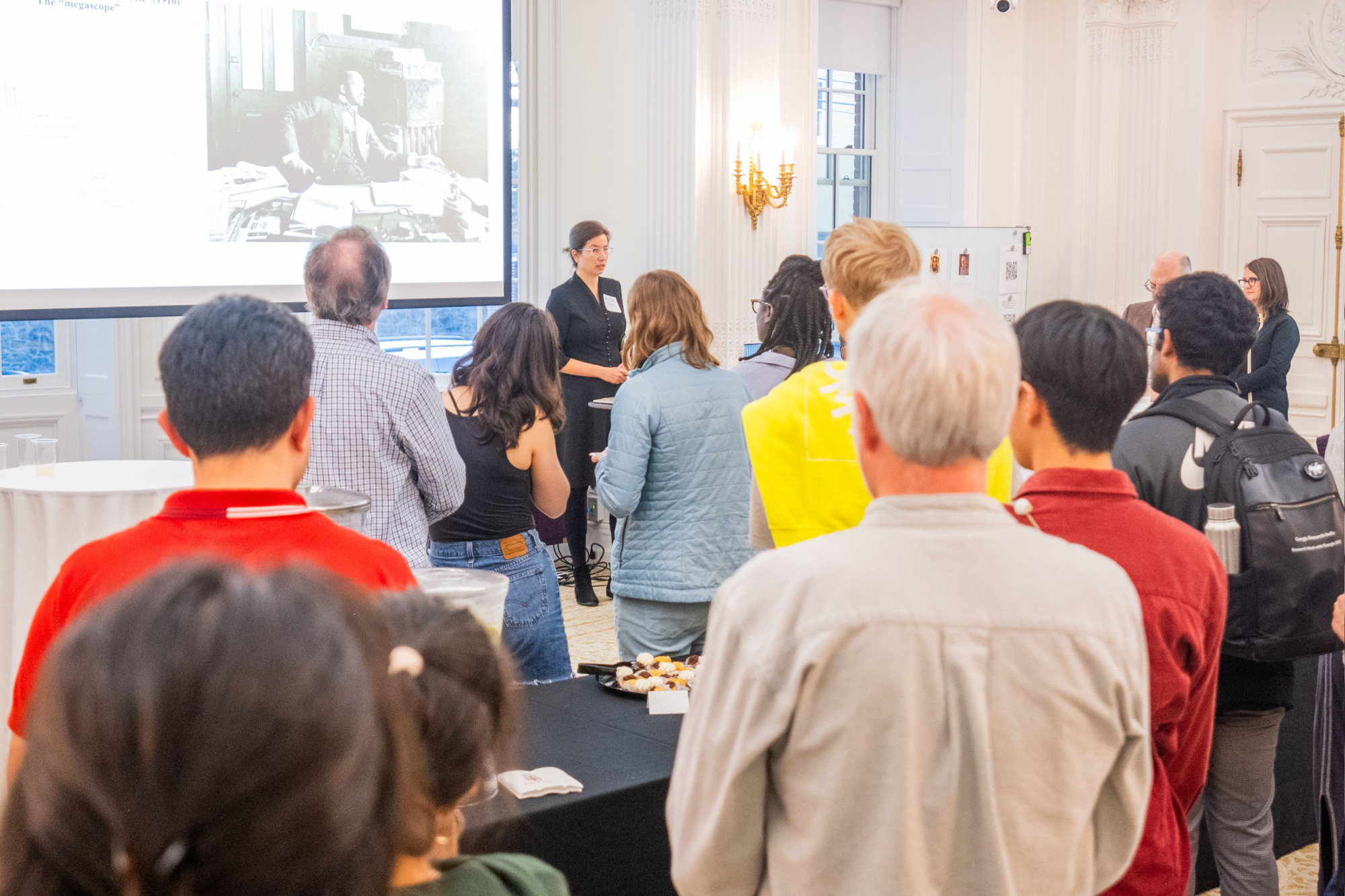
Since 2015, the institute has complemented its foundational support of individual scholarship with a concentrated effort to expand collaborative and interdisciplinary research at Brown. This aim has been accomplished by formalizing a number of faculty-led initiatives that provide platforms for cutting-edge research on campus. The Humanities Initiative Scholar role, originally established to support external senior faculty appointments, was augmented to include leadership of a named initiative, and the Humanities Initiative Scholar program itself was expanded to include term positions for faculty currently at Brown. Present initiatives include “Economies of Aesthetics,” directed by Peter Szendy (Comparative Literature), “Humanities in the World,” directed by Leela Gandhi (English, Pembroke Center for Teaching and Research on Women), and “Origins and Afterlives of Ethnic Studies,” directed by Shelley Lee (American Studies, History).
Since being elevated from a center to an institute in 2017, the institute has added two major centers and a humanities lab program under its umbrella. In 2019, the institute became home to the Center for the Study of the Early Modern World, currently under the leadership of Humanities Initiative Scholar Andrew Laird (Classics, Hispanic Studies). In 2024, the Center for Environmental Humanities at Brown (CEHAB) was established, formalizing an existing grassroots initiative that had been supported by the institute since 2018. Its inaugural director is Macarena Gómez-Barris (Modern Culture and Media, Brown Arts Institute). Joining this ecosystem of initiatives and centers is the first Collaborative Humanities Lab, “Models-Scale-Context: AI and the Humanities,” led by Holly Case (History) and Suresh Venkatasubramanian (Computer Science, Data Science).
The institute supports additional research-based programming spearheaded by faculty, postdocs, and students. These include, at present, “Political Concepts,” directed by Adi M. Ophir (Middle East Studies); “Film-Thinking,” directed by Timothy Bewes (English); the Disability Studies Working Group, directed by Leon Hilton (Theatre Arts and Performance Studies) and Alani Hicks-Bartlett (Comparative Literature, French and Francophone Studies, Hispanic Studies); and the undergraduate-led Brown Journal of Medical Humanities.
Expanding the Humanities Curriculum
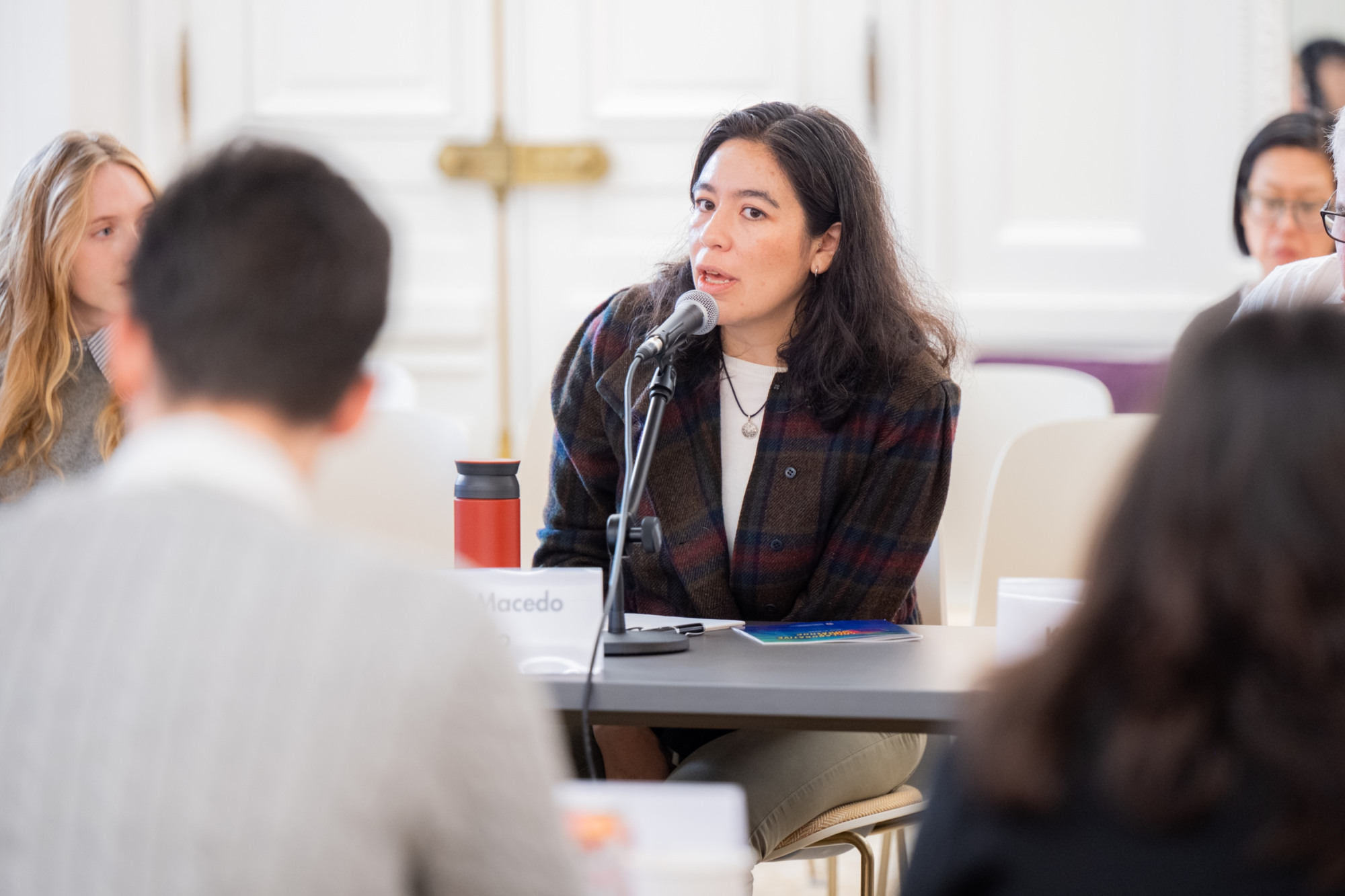
Over the past decade, the Cogut Institute has developed major new opportunities for student learning that complement the dedicated teaching at the department level.
Three doctoral certificates now offer graduate students pursuing Ph.D.s supplementary training and qualifications: the Doctoral Certificate in Collaborative Humanities; the Doctoral Certificate in Digital Humanities (in partnership with the Center for Digital Scholarship); and the newly launched Doctoral Certificate in Environmental Humanities. Through the Collaborative Humanities Course Award and the Collaborative Humanities Lab, 11 courses were designed for undergraduates by humanities faculty who partnered with colleagues in the sciences.
These opportunities emphasize collaborative and interdisciplinary methods and fields. They put students in dialogue with faculty and students outside their home departments, help them to communicate across disciplines and to a broader audience, and prepare them for further studies or careers in diverse professional and intellectual environments. They also create opportunities for faculty to partner in ways that have proven to catalyze their own research and publications.
These teaching programs complement the changing roster of 16 to 20 undergraduate courses offered each year by faculty and postdoctoral research associates on topics directly informed by new and ongoing humanities research.
A Physical Hub for the Humanities
In 2024, the Cogut Institute moved from its longtime home of Pembroke Hall, which it shared with the Pembroke Center for Teaching and Research on Women, to a dedicated space of its own: Andrews House. Andrews House was thoughtfully chosen and renovated to create the spaces necessary for hosting our programs and courses and cultivating the forms of community deeply meaningful to scholars at Brown. This historic and beautiful building has come alive, serving as a home away from home for our fellows, and is now synonymous with the institute.