Fiction writer Manuel Muñoz and literary scholar Ralph E. Rodriguez have known each other for decades, one writing the stories and the other teaching and writing about them. In this conversation, they trace how each found their way into literature, the mentors who shaped them (above all the novelist Helena María Viramontes), and how Latino literature has grown and changed since the 1990s. They talk about fiction and truth in the classroom, why the 1970s and ’80s and California’s Central Valley keep drawing Muñoz back, what it means to work in Ethnic Studies amid renewed political attacks, and what each of them is learning now.
Cogut Institute for the Humanities
6. It Wasn’t Published, but It Was There: Latino Literature Then and Now
Hosts Shelley Lee (Brown University) and Gina Pérez (Oberlin College) in conversations examining how Ethnic Studies serves a public good, transforming education and our broader world as we grapple with questions of race, migration, identity, and justice.
6. It Wasn’t Published, but It Was There: Latino Literature Then and Now
Shelley Lee: From the Cogut Institute for the Humanities at Brown University, this is “The Confluence: Ethnic Studies and the Public Good,” a podcast about Ethnic Studies as an insurgent intellectual movement, site of contestation, and driver of transformation. I’m Shelley Lee, Professor of American Studies at Brown.
Gina Pérez: And I’m Gina Pérez, Professor and Chair of Comparative American Studies at Oberlin College. Ethnic Studies is at a crossroads, facing serious challenges about its value and importance, at the same time receiving growing recognition for its role in preparing citizens for our diverse democracy. Through conversations with thinkers and practitioners in and outside of the academy, “The Confluence” explores how Ethnic Studies serves a public good transforming education and our broader world as we grapple with questions of race, migration, identity, and justice.
Shelley Lee: Hi, Gina.
Gina Pérez: Hey, Shelly. How are you?
Shelley Lee: I’m good. Nice to see you. So let’s talk about literature. For many people, literature is their first way into Ethnic Studies, say a short story in an anthology, a novel assigned in high school. What was the case for you, Gina?
Gina Pérez: So I was thinking about this a lot as we were preparing for this episode, and I think you and I both have a similar answer about how memoirs were some of our first introductions to Ethnic Studies. And for me, I remember as a young girl reading the memoir of Wilma Rudolph, the Olympic track star who at age four had polio and she wasn't able to walk, and then eventually she is able not only to walk but becomes this incredible runner. And the book really made this impression on me because not only of how she was able to overcome those obstacles, but also it talked about her experiences growing up as a young Black girl in Tennessee and the racism and sexism she experienced, and it made a real impression on me at a very young age. How about for you?
Shelley Lee: For me, it was also a memoir that served as an entryway into Ethnic Studies, and for me it was a book about the Japanese internment during World War II, Farewell to Manzanar, which I read in high school. And it helps me to reflect on how the kind of empirical research that you and I do as an anthropologist and historian often isn’t what first hooks people. A novel or a memoir is just as likely, maybe more likely, to do that because the emotional punch and the vivid storytelling spark a curiosity that can lead people into the scholarship.
Gina Pérez: I think you’re totally right, and this is something you and I have been talking about for a long time, and I think this is why we wanted to hear from both sides of the page, both the writer as well as the critic. And after lots of great conversations this summer, we decided that Manuel Muñoz, who is a fiction writer and professor of English at the University of Arizona, would be a really great person to invite on the show. His books include Zigzagger, The Faith Healer of Olive Avenue — which are both short story collections — and the novel What You See in the Dark. And then most recently he published another short story collection called The Consequences. And much of his work is set in California’s Central Valley, a place that means a lot to both me and you, Shelley. And he was named a MacArthur — the MacArthur Genius Award — in 2023.
Shelley Lee: And we decided to pair him with Ralph Rodriguez, who’s my colleague here at Brown. Ralph is a literary critic and professor of American Studies. He’s the author of Brown Gumshoes, which is a book on Chicana/Chicano detective fiction, and Latinx Literature Unbound, which asks what we gain and lose when we read literature through ethnic categories. He’s now writing a book on Latinx memoir.
Gina Pérez: And he teaches a class at Brown, right, on Latinx memoir, which is really exciting. I think one thing that we learned from last year is that when we do pairings of people for the show, that it’s always very generative when people know and respect each other. And so Manuel and Ralph have been friends and readers of each other’s work for a really long time. And we talked with them about how they each found their way to literature, to the mentors who shaped them, and what fiction can and can’t tell us about the world around us.
Shelley Lee: Great. So here’s our conversation. Manuel Muñoz and Ralph Rodriguez, welcome to “The Confluence.”
Ralph Rodriguez: Thank you for having me.
Manuel Muñoz: Thank you so much.
Shelley Lee: It’s great to have you both. So you are both associated with the field of Latino literature, one of you as a fiction writer and the other as a literary critic and scholar. And we can talk about how you feel about being categorized as such, but I thought to begin, I want to ask you to first tell us how you each found your way into literature and academia. Manuel, would you start?
Manuel Muñoz: Sure. I suppose I could start with myself as a fiction writer trying to work my way through Harvard. Harvard didn’t have a creative writing track of any kind, so I had to be an English major in the honors track paying attention to literature with the kind of detail that I wasn’t necessarily always excited about. But I did find my way through that to Cornell, where I did my MFA in fiction with the Chicana novelist and short story writer Helena María Viramontes. The longer story is that I went into publishing, and I’m now a professor at the University of Arizona, where I teach creative writing focusing on fiction.
Ralph Rodriguez: Wait. I’m going to want to know more about the publishing part, because I don’t think I know that part, but that can be down the road.
Shelley Lee: Tell us your story, Ralph.
Ralph Rodriguez: So there’s a long version, and I’ll give you the short version. The short version was I was a lost punk rock kid who was running a lot, and all the punk rock kids were passing books around ourselves, and I fell in love with reading, and I fell in love with Goethe and Hesse, and I was going to learn German. And then I got to grad school, and I was going to work on one of two things, Germany and Mexico, or once I got to Texas and I met José Limón and the grad students there, I knew I was going to work on what we were then calling Chicano and Chicana literature. And then that was my passion. I knew I was going to get my Ph.D. the minute I stepped into undergrad, and I did. And had I talked to anybody who was realistic, they probably would’ve told me all of the hard things about becoming an academic. But it all worked out, and I’m very grateful.
Gina Pérez: We’ll go on to the next question because I think this gets to the question about genealogies and how Ethnic Studies has changed over time, and that’s one of the things that we’re really interested in in this podcast, is how a field that has existed for 50 years looks a lot different now than it did 50 years ago, or maybe that’s a debatable point. It’s something we can talk about. But I’m interested in having you talk a little bit more, Manuel, and also you, Ralph, about how you see yourselves in this genealogy. You’ve already mentioned two greats in the field, Helena Maria Viramontes and José Limón, two very different kinds of trailblazing scholars, but it sounds like that is part of your genealogy, and I was wondering if maybe we could begin with you, Ralph, to talk a little bit about your genealogy within Latino literature and the people that you come from and how you see yourself in that.
Ralph Rodriguez: That’s a great question, Gina. When I got to Texas and was working with José, at that point this is the early ’90s, it’s mainly Chicana/Chicano, Nuyorican, Puerto Rican, and Cuban American. And in Texas, you are regional, and we were doing Chicano and Chicana without batting an eye or thinking about it and were very proud to do it. And then I moved to a job at Oregon State, and the main population there was Mexican American, and we could stay in that. And the field, still at that point — I could read absolutely everything and be confident that I had an encyclopedic knowledge of everything that was out. That has changed dramatically. Trying to keep up with both the scholarship and the literature — incredibly hard now. And then say you stumble on something like a book called Zigzagger, and you know from that moment on you’re following everything that an author named Manuel Muñoz writes. It’s just like this is it. This is great Chicana/Chicano fiction. It’s great American fiction. It’s great queer fiction. And you get excited about that. But then I move to Penn State, and I find myself in a geographic region that isn’t dominantly Mexican American, both in terms of the larger state of Pennsylvania, and then of course at state college, it’s just the campus community. But I start to feel a responsibility, and at that point we’re still calling it Latina/Latino literature, and need to be more diverse and representative in my classes. I can still offer my Chicanx literature class, but I also want to offer a Latinx one. And that continues through now. And I’ll pause there.
Gina Pérez: Okay.
Shelley Lee: If I could jump in... We do want to talk about place later because of how much the Central Valley figures into Manuel’s writing, but when you were talking, Ralph, about your just geographic trajectory into Texas which is not where you grew up, but where you went to study Chicano literature because it was, at the time, like really the place to do it, and then you embarked on this career that took you to Oregon, Pennsylvania, and now Rhode Island — it could be an interesting way to also reflect on how Latino literature has evolved and spread geographically. I just wonder how geography figures into how you think about the field.
Ralph Rodriguez: I have, in our earlier conversation, talked about José David Saldivar — and I think José David, if he hears this, will agree that it’s his phrase — talked about the lifting of the “tortilla curtain” when a number of New York agents start getting big contracts for Sandra Cisneros, Viramontes, Cristina García, Ana Castillo, and then it’s no longer a niche group, not that it ever was, but you need a big press. I love Arte Público, I love Bilingual Press, but it’s something different to be published by Vintage. And Sandra Cisneros in the ’80s broke on the scene. But what’s interesting now is right now I’m teaching a new class called “Forming Latinx Literature,” and it’s small, so this is not a representative sample. They hadn’t read “Bien Pretty,” which is a story in Woman Hollering Creek. They hadn’t read Carmen Maria Machado. I just taught “The Husband Stitch,” and I was just so shocked. I feel like there was a moment where you couldn’t not know it, and now given their age, it to them is almost like when I hadn’t read Faulkner or I hadn’t read Hemingway. It’s history to them. The geography in Rhode Island is super interesting when I got here because when I came, and I think it’s still the case, it’s a majority minority city. And I think I have it right, the three biggest populations are Mexican American, Dominican, and it’s either Guatemalan or Puerto Rican. I think it’s Guatemalan American.
Shelley Lee: Whereas in the West it was called Chicano Studies. And then as you move eastward the terms change, the groups change.
Manuel Muñoz: Ralph, your description of the student sounds like me in Helena’s office in 1995.
Gina Pérez: Oh, wow.
Ralph Rodriguez: What do you mean by that?
Manuel Muñoz: Again, this is mid-’90s. Helena had just started at Cornell. It was a lucky coincidence — la divina providencia — coming together. I applied in that cycle, and it was her first turn as a professor looking at admissions. Not that she plucked my application. She anticipated a fight. She tells a great story about it. She tells a very great story about it, going in and saying, “I want this kid to come in,” and only to realize that everybody on the committee was unanimous on the app. She told me that story to boost me up. Anytime there was even just a shading of imposter syndrome, she would remind me. She said, “No, no, no. You’ve earned your place here, and you need to get to work.” But that first meeting with her, she was scoping out what I knew and didn’t know, and was alarmed by what Harvard had given me, which was mostly a training in Renaissance drama. That’s where I picked up all my credits. She gave me a list of Chicano texts from the ’70s and ’80s and just went off one by one, “Have you read this? Have you read this? Have you read this?” And when the answer was no to each one, she said, “What did they do to you?” And so that was our trajectory, where I’m in a whole other geographic place. I had not really thought about what it meant to have a faculty member who would be very aligned with my background and would know my cultural history without asking. Nor did she make assumptions. So I got very, very lucky in that regard. She knew exactly what to put in front of me.
Gina Pérez: That’s a really vulnerable moment. You’re coming from Harvard, you’re starting your graduate program, your advisor is both encouraging you, but also pointing out that you’re not prepared in the way that she would’ve anticipated, but what an incredible moment. And so can you talk a little bit about of all those books that she gave you, what were some of the ones that drew you in the way that, Ralph, you were describing a few minutes ago? Were there themes or approaches or a writer in particular who really captured your literary imagination at the time?
Manuel Muñoz: Oh, at that point I had not read Ana Castillo. I had read Sandra, but as I said, not Ana Castillo. I had not read the poetry of Alberto Ríos. I had not read Arturo Islas. I mean, there were names that were — there were going to be surprises to me, as she told me, “What’s going to happen is that you’ll push back against some of these things. You’ll find them dated. But the point is this is the history. And it’s a relatively recent history that’s already getting erased or obscured, and it’s your job as a writer to keep tabs on what has come before you and acknowledge how you are going to enter this slipstream of voices. You need to know what they are.” It was a really great education. It is a moment of vulnerability, but it was also a moment of empowerment. Sometimes as writers, we hear that it’s not a serious discipline. It’s not academic even. But she was really insisting, “No, it is. This is where you dovetail with lots of things that you need to know: literature, history, philosophy even.” It can go deep if you want it to.
Ralph Rodriguez: You’re probably going to your MFA when I’m in grad school or starting roughly the same time. And at that point I didn’t know “And the Earth Did Not Devour Him.” I didn’t know Klail City. I didn’t know the group that had predated me, but you could not not know Sandra Cisneros at that point. Everybody was teaching her in high school, and that’s what I meant in class — I think something has happened where Cisneros has maybe faded, and I’m wondering if they’re looking for the new Latino writer to teach, like maybe Justin Torres, but they don’t know him either. So it’s super rewarding when they find it, and their eyes light up because I’m teaching a short story, and they’re like, “Oh, this is from a book. I’m going to go buy that book.” Or they’ve read “Monkey, Sí,” which I have taught numerous times, which comes from Manuel’s Zigzagger, they run to that. Or when I teach from The Consequences now, “Anyone Can Do It.” Do I have that right?
Manuel Muñoz: “Anyone Can Do It.” Right?
Ralph Rodriguez: What I love about Manuel’s work is you don’t settle for easy characters. They’re complicated in the inside, they’re complicated on the outside. You can’t just say, “Oh, this figure lives a X identity,” whatever that happens to be, a queer identity, a Latino identity, “and therefore they’re going to act this way.” You do not allow that to happen.
Shelley Lee: And my background — I’m a historian, so I usually meet my subjects in documents, and they rarely talk back. And if they do, that’s scary. But here we have a fiction writer, a literary critic who are contemporaries, who’ve known one another for a long time, and appear to be friends. Ralph, we went back and read some of your work as well, and you describe Manuel in a 2016 essay as being at the forefront of a new generation of Chicano writers, and we just heard Ralph talk a bit about Manuel’s work. So I’m wondering, Manuel, what is it like for you to read a serious critical essay about your own story from a person like Ralph, and also just hearing what he has to say right now?
Manuel Muñoz: It’s empowering and enlightening, and it’s also an affirmation of what Helena had prepared me for and where she was pushing her strongest encouragement. We talked about anthologies a lot. What she helped me acknowledge was the difficulty of writers in our community getting published in the first place and maintaining relationships with academics who know how to read our work. Publishers don’t know. They don’t know how to market it. They don’t know how to talk about it. They don’t know why it would be appropriate for an audience or not. But the academics do. They’re finding the new pathways. So we talked about anthologies a lot, and I remember a story that I had drafted. It was the title story of Zigzagger. I gave her an early copy, and she had lots of notes and suggestions about it. At the end of our conversation, she said, “This is the one I really want you to work on, because this is the one that will land in an anthology, and that is how our work circulates” — absent of a book, of course. But keep that in mind because our communities operate much differently than the market, essentially because the market doesn’t allow it. So we have to find our own ways and build our own communities and conversations in order to get our work out there.
Shelley Lee: Ralph, you look like you might want to say something.
Ralph Rodriguez: Can I tell two stories? One’s about Manuel, and one’s about Helena. So it’s ’97 when I start my job at Oregon State, and I’ve written an essay that’s not part of the dissertation. And I don’t know how I get the courage to do this, because email is relatively new still. I email Helena and ask if she will read an essay of mine, and I think I even had to put it in an envelope and mail it to her, and she mailed it back. It was very nice. She’s an incredibly generous reader, but she basically said, “Ralph, you need to write this so people can read it.” And I think I’m a fairly jargon-free critic, but that was a wake-up call because I want to reach lots of people. The Manuel story is one of my favorite stories too. I’ve had a lot of different moments where I’ve almost left the academy. I was going to be a lawyer, and I wanted to be a fiction writer in this particular story, and I was going to go get my MFA. Manuel and I had a friendship already. We were exchanging emails, and I told Manuel this, and he said, “When was the last time you were in a workshop?” And I said, “Probably not since undergrad.” He goes, “Well, you might want to see if you like workshops before you go commit to an MFA, and there’s a really great writing center up by you called GrubStreet.” And so I took his advice, and I went to GrubStreet. I took classes. And that’s about me aspiring to be a fiction writer with only one story out there in the world and trying to get other things published.
Gina Pérez: This is so interesting because you have such different trajectories, but you have found each other. I love hearing you talk about the way you both need each other and the ways at different points in your careers, you’ve intersected to bounce ideas off of each other, but also to think about your careers and what it might look like for you. I have a question, but I want to return to Helena, who turns out to be much more important in this podcast than maybe we had anticipated, because she plays an important role for both of you. And I really love what you had to say, Ralph, about the generosity and honest feedback that she gave you. I remember in our pre-conversation, Manuel, you also talked about advice and things that Helena said to you about what your trajectory should look like about either going into the academy or not. And so I was wondering if you could talk a little bit about how she mentored you to make the different kinds of choices that have allowed you to be at a place like University of Arizona now.
Manuel Muñoz: Yeah, I’m not a fan always of the phrase “gave me permission.” There’s something that strikes me about that phrase, yet I want to use it in thinking about her, because she was the person who taught me how to place the writing above everything. In order for it to get out in the world, you have to make time to do it, and it is very hard work. And that might mean that you have to consider that if you want to go into the academy. She was very clear about the amount of time it takes to attend to students. She was a big believer in knowing that there’s a difference between having a teaching job and actually teaching. It takes a lot of time. It takes a lot of commitment, and if writing is the priority, you will have to choose. As she will always say, in both fiction and in real life, people first. People first. So when it came time to consider the job offer at Arizona, she had me reconsider the question again and said, “Look, if you’re going to do this, you’re going to have to commit and be responsible to the people who will be under your care. They’re there to learn, and they’re going to grow by leaps and bounds based on the level of commitment that you give.” And I realize that that’s exactly how I learned from her. There were so many people asking for her attention and her expertise, as Ralph just said, sometimes from outside the university, and she always said yes. And that’s a huge lesson for me to learn and to employ in my ethics in the classroom and in my writing.
Ralph Rodriguez: I just love that story. I mean, it becomes a hard thing to balance getting the work done and people, and you do have to be there for the people.
Gina Pérez: I guess this raises another question, shifting to the work that both of you do in the academy. For so many people, their first exposure to Ethnic Studies is through literature and through the anthologies. I thought that was really interesting what you were saying about how important it is to kind of be placed in those anthologies, because that is the entrance for a lot of people to think about Ethnic Studies and whether it’s reading Sandra Cisneros or others, and they’re clearly reading those kinds of texts before they’re reading work by historians or social scientists in Ethnic Studies, for example. But there’s also the challenge that sometimes this idea that people read these stories because they’re looking for truth. I would love for you — maybe we’ll begin with you, Manuel, and then Ralph — to talk about how you both think about and help get your students to think about the relationship between fiction and truth. Why is it important for these stories to get out there, and how do you help your students think through that both as students but also as potential writers themselves?
Manuel Muñoz: I think one of the first questions that I have my students think about quite seriously comes from a workshop response that they will tend to use frequently, which is “I can relate to this text,” which is a good starting base. We can recognize elements. We see a story that is like ourselves. But very often for people from our communities, literature doesn’t work that way. Art doesn’t work that way, at least the art that gets past all of the gates. It doesn’t look like anything we know, and so we have to develop another way to consider how art works and how we have it apply to our world and our making, and that’s, again, what Helena taught me. It’s, like, find a way to recognize yourself, but there’s going to be this other step that you’re going to need to take, because you’re essentially working from a truly blank page. Not entirely, but going back to that list of books that she gave me, there will be things in there that you will reject. It’s your job to fill in the blank space. What’s missing? So that’s been the training or the building blocks that I try to give to my students as they’re trying to shape their way through literature and art making.
Gina Pérez: How does that play for you, Ralph?
Ralph Rodriguez: I think you have to think about it in steps and in layers, because it’s super complicated. The first thing is the excitement. I have a student who’s first year and queer in my class, and we’ve read Achy Obejas, and they got so excited about that, and I want that excitement. We read “We Came All the Way from Cuba So You Could Dress Like This?” and loved it. I get that, and I want that. And the Puerto Rican kid who discovers Justin Torres for the first time, they’re in love with Justin Torres. But I also want them to then — I think the personal is a good jumping off point, but it’s not criticism per se, and so how do you get them to the next step? How do you teach them to be close readers is what’s on my mind. And I think one of the great things in addition is that really good fiction, really good art invokes two of my favorite words: curiosity and wonder. So I wouldn’t read “We Came All the Way from Cuba So You Could Dress Like This?” and think, “Oh, I know what that first generation felt like when they left Cuba and came here.” I would think, “Oh, now I’m curious. Now I need to read about the Mariel boatlifts. Now I need to read about Castro.” So it might be the jumping off point to get me to read history. And I try not to allow them to treat it sociologically, even though there is a trend in the field to the sociology of literature.
Gina Pérez: I totally agree, and maybe this is where it becomes really interesting. As an anthropologist and someone who loves reading Latino literature, I don’t know how to teach literature. It actually terrifies me when I have to teach a novel or a short story, but I absolutely love it. But you should also take classes from people who are literary scholars and who are writers and who can take you to a different place and to understand these pieces of writing in a totally different way than what I do, right?
Manuel Muñoz: Listening to the conversation in the past few minutes, it got me to a question that I haven’t been able to figure out for myself. I get asked many times why do I write about the ’70s and the ’80s mostly — I rarely name it, but it’s that time period. And the easy answer is it was formative. Many experiences that inform the stories are there. But it goes back to something that, again, Helena reminded me about, is that history is full of untold stories. So that’s one way to look at it. We have a record, but then we also, for those of us who remember particular eras, we know what might get left out. What I mean by that is — I came out very late, but I came out to Helena. She was one of the people that I had the conversation with. And she made a note about a story that I gave to her not long after, and she said, “Something freed up in you. You’re being a lot more honest in the emotional currents on the page.” I made some sort of comment about not seeing a lot of queer voices in our literature, and she was very quick to remind me, “Manuel, remember, just because something wasn’t published doesn’t mean it wasn’t there.” And she told me great stories. She says, “Remember, I was in East LA in the ’70s and ’80s, and none of us had books, but we were reading in the corners of cafes.” And so any of those writers who were reading their poems who later succumbed to the AIDS crisis, wherever those poems ended up, in a garage somewhere in LA, is part of the way that we should think about not only how writers get out there, but how they too are part of history. So it’s been a very — it’s something that I ruminate on a lot and think about why do I write about my own era in that way and what am I leaving out? So that’s one way that I start to think about what’s true, what’s part of our history.
Shelley Lee: Plus the ’70s and ’80s are a fascinating, very rich period. Maybe we’re generationally biased, but I think it’s true. So there’s the question of why do you write about the ’70s and ’80s? Why do you write about California Central Valley? There was a really striking quote that you had in an interview where you said that the Central Valley is “a place that is never thought of to begin with.” Now I’m also thinking about how you set your stories in the Central Valley and whether your own journey across the country, leaving California to go to college back East and then back to the West, if that has informed the way you write about the Central Valley and the way you just hold the importance of Central Valley as a location.
Manuel Muñoz: I guess I somewhat surprised myself wanting to write about the Valley as consistently as I do, because it was a place I wanted to leave, I wanted to forget. As a queer kid who had not come out, it was not an easy place to grow up in.
Shelley Lee: Do you want to describe it a little bit for folks who may not be familiar?
Manuel Muñoz: For those who don’t know the Central Valley, it’s north of LA and southeast of San Francisco. It’s sort of like the elbow of California. It’s a place you pass through rather than stay. And it’s very conservative. It will be 60/40 when it comes to election time. It’s not even close, and those values are very much tied to religion. It’s a place filled with small towns with lots of churches, and organization around community. So again, for a queer kid, it’s not an easy place. But I think the distance from it and the fact that my family remains there to this day — I’m actually going in a couple days to visit my family — I keep revisiting it, and I keep exposing myself again to those feelings of feeling like an outsider, but also very much loving the place and appreciating the upbringing that I had. So there’s something about acknowledging, as Helena kept encouraging me to do, which is figure out the fact that you know this place that others do not and describe as much as you can so that we can get to know it through what you put on the page. So that’s what I keep trying to do. I have to wrap my head around what it means that so many stories can actually take place there and not limit myself to feeling that this is a place where nothing happens, when in fact everything does.
Shelley Lee: It’s also a place that Gina and I both have connections to. It’s this really large swath of the state, and it’s all called the Central Valley. I was reading The Consequences. There isn’t a ton of action. It’s set in rural California, but there are these quiet tragedies that take place in every single one, and the part of the Central Valley that I spent time in is Tracy, and it kind of feels like Tracy.
Manuel Muñoz: It is Tracy.
Gina Pérez: And Stockton and all of those places that we’re connected to. But I think what I was really struck by what you were saying, Manuel, is that it’s not an easy place, but it’s a place you keep on coming back to. And that makes me think about what you were saying a few minutes ago, Ralph, about what your goal in teaching is, which is to have students read something and for that to spark curiosity and wonder. One of the things that I think you are really clear and offering important insight about is this idea of unbinding Latinx literature or Latino literature from the political parts of Ethnic Studies. I was wondering if you could talk about this political context and the politics of Ethnic Studies and literature and how you see your role as a literary critic and as a professor in that.
Ralph Rodriguez: So Latinx Lit Unbound — I recognize that the broad umbrella term Latinx has important social and political use, and I was just asking if it was the most efficacious way to group a body of literature together, and that there have been great works done that way, there will continue to be great works, but we might think of other ways that open it up to do more comparative things. It’s so complicated now because of the attacks coming out of the current administration on DEI, on Ethnic Studies, that I don’t want to dare give any ammunition, let us say, because they are fighting a war against it. And at the same time, it’s a complicated label now to have Ethnic Studies, because I feel like it doesn’t resonate with our students as easily. And to go back to Shelley talking about the ’70s and ’80s and how influential those were in our lives and how important they are, yes, that term worked then. But even to my ears now, for somebody of my age, it sounds a little dated. But all the work that gets done under that label I am 100% behind and will remain behind because of the attacks and because people don’t know about the farm workers in the Central Valley, and one place to know that is through this department. Another great story about that is Ben Sáenz — may his soul rest in peace, he passed recently — “Cebolleros,” which is a great story about onion pickers, and that really does create curiosity and wonder when I teach that with my students about La Migra the Border Patrol and ICE, and that’s timely. But at the same time, I want them to be able to think socially, politically, and aesthetically. And I don’t want them to do things too easily. And I think this is, for me growing up in a Catholic education, I don’t like being asked to accept things chapter and verse, because I was asked to accept things chapter and verse. I can still remember, and I will shorten this, very quickly — in confirmation class, you’re being what? Thirteen or 14. You’re being asked to accept God as an adult. And my best friend and I in confirmation class with the pastor of the church, where my grandmother cooked for them and my mom taught at their school, we asked, “How do we know that God exists?” That seems to me a fair question. Oh, my word. It went right back to my grandma, my mom. Dinner that night with my parents was tense. And so now when people ask me to accept chapter and verse around politics, I don’t. You’ve got to persuade me, and I’ve got to persuade you, and I think that’s the only way forward.
Shelley Lee: I don’t know if this is connecting with what you said, Ralph, but this is what it makes me think. Ethnic Studies was born in a particular political and social moment. The world that we’re in now has changed a lot. So we have to account for the way the world has changed, and some of us don’t necessarily think about their work as political, while others do think about their work as explicitly political with political aims. But interestingly in this moment the politics is coming for us regardless of how we think of the work that we’re doing. And I was reminded of the whole Arizona Ethnic Studies ban in the 2010s. They passed a law in 2010, and, Manuel, Zigzagger, your 2003 short story collection, was among the books that was pulled from the classrooms in Tucson in 2012. So I feel like that’s another example of the politics coming for the work regardless of what the work is supposed to represent and what the author intends for it to be. It feels like a preview of where we are now, and I wonder did that experience leave you with any lessons or insights about writers, education, censorship, politics? Has it affected the way you read the landscape today?
Manuel Muñoz: Well, SB 1070, that era in Arizona politics, at least in my view, was the moment where Arizona started to change politically because there was a lot of blowback. It was a national story. There was a lot of outrage here in the state. But personally it made me realize how isolated I had been from national discourse. I was in the cocoon of New York City where I’m writing about California, but the place is 3,000 miles away. It’s quite different to stay there, as I knew when I would visit my family for a week or so and started to feel a very particular kind of way. I was despondent when I moved here. I thought, “What did I do?” I don’t want to live in a place where I feel so threatened. But it also made me realize the whole nation feels this way. The communities I write about feel this way. So in some ways it actually got me firmer in the bedrock of my own work to realize that this freedom that I have to create and the pathways that have been carved out for me could easily be stopped. And it’s my job to keep creating against that and to work, to work around the roadblocks.
Gina Pérez: I think that critically interrogating even the labels that we use like Latino, Latinx, all those things, I think those are really healthy. And that’s part of how we’ve been able to persist over 50 years especially in the face of all these different kinds of attacks and bans. What we saw in 2010 is just a preview for what we see now. I do want to spend the last couple of minutes seeing if you have any questions for each other. Maybe we’ll begin with you, Ralph, because you have a big smile on your face.
Ralph Rodriguez: I do because I have two, and you can pick, Manuel. I’m curious about what you had said up front about your life in the publishing world. I’m wondering about that. And then the other one is I’m totally curious about what doors the MacArthur opened up for you. What was exciting about it? What were you working on then? Because I’m ready for the next one.
Shelley Lee: Manuel got a MacArthur Fellowship in 2023, by the way, which officially makes him a genius.
Ralph Rodriguez: I knew it already.
Manuel Muñoz: The MacArthur was a major surprise, and there was something very destabilizing about it, as you might imagine, from getting a bolt of lightning out of the sky, because at that point I had sort of slowed down. I had lost a lot of confidence in what I was doing because I was turning to the short story, and I think the messages about what short stories could do in the world of fiction — no one in the market wants them. It’s a hard thing to try to pursue, and yet I felt that’s where my voice was. So when the MacArthur happened, it made me sit down with myself and say, “Hey, you can keep working on these and not worry necessarily about what the publishing world will or won’t think about them.” I have a very good home at Graywolf Press, which is an independent nonprofit press, and they have given me extraordinary editorial support. I don’t have a contract for the next book. It’s just getting started, but I’m sending signals to them that I want to stay. I don’t want to go back to New York publishing in any capacity. I want to be edited well. I want my stories to be taken care of and to be entering into a community that is ready to receive them.
Shelley Lee: Manuel, what do you want to ask Ralph?
Manuel Muñoz: Ralph, are you still writing fiction?
Ralph Rodriguez: I am still writing fiction, and I have a very generous agent, Julia Masnik, and she is shopping a collection of stories called The Music Inside You, and shopping the novel that I wrote called The Thing with Feathers. We hope that it’s going to work out. Right now it’s been a bit of a... I’m patient. I am waiting.
Shelley Lee: We’re, we’re waiting, too, with bated breath, Ralph.
Gina Pérez: We are. We totally need it.
Ralph Rodriguez: And I’m totally going to tell her about this podcast. She’s going to be very excited because she also loves your work.
Shelley Lee: We like to end by reminding ourselves that even though we’re educators, we’re all learners. We’re always in a constant process of learning. So in that spirit, what are you currently most motivated to learn or deepen your understanding of?
Manuel Muñoz: Well, it’s history. Not just because of this conversation, but a couple of days ago, I caught a podcast with Min Jin Lee talking about the novel that they are planning to write that involves Koreans who emigrated to Europe during the ’60s and ’70s and sent remittances back to their communities, and I was instantly fascinated. I already can’t wait because I realize once that book comes out, it gives me a chance to think about how that very same process worked in my family history and my community history with Central Valley and Mexico, and those connections remain to this day. So I love just thinking about how history can be very specific, but it can also translate almost word for word and experience for experience across the world.
Shelley Lee: I mean, history of Latinos in Central Valley needs to be done by you!
Gina Pérez: How about you, Ralph?
Ralph Rodriguez: I’m curious about a few things now. I’m working on a new book on Latinx memoir, so I’m reading that genre from A to Z. I’m learning Italian, because I think the more languages you know, the better reader you are, period. And then finally thinking about the new generation that I’m teaching and trying to be a better educator and trying to think about what they don’t know and what I can’t take for granted and how do I reach them and get them to read longer and longer things in a moment where attention is a very precious commodity.
Shelley Lee: Well, this has been a delight and an honor, and I’m so glad that I got to be a fly on the wall for much of this conversation. So Manuel Muñoz and Ralph Rodriguez, thank you so much for joining us on “The Confluence.”
Gina Pérez: Thank you both very much.
Ralph Rodriguez: No, thank you two.
Manuel Muñoz: Thank you.
Gina Pérez: So that was Manuel Muñoz and Ralph Rodriguez. Shelley, we didn’t plan for Elena Viramontes to be the third person in that conversation, but she definitely felt like an important presence and guest on the show today.
Shelley Lee: She was, and she turned out to be another common link between Manuel and Ralph. One line of hers via Manuel really stays with me, and that’s the line, “Just because something wasn’t published doesn’t mean it wasn’t there.” And I think that stayed with me because that’s a historian’s problem as much as a writer’s.
Gina Pérez: That’s one of many powerful points that they made in the podcast, and I think the one that really resonated with me is very similar, and it’s when Manuel said that history is filled with untold stories. And as an ethnographer and someone who really likes to hear people’s stories, that is a sentiment that really spoke to me.
Shelley Lee: So next time we will be joined by Arlene Davila of the Latinx Project at NYU, and Yomaira Figueroa-Vásquez, the Director of the Center for Puerto Rican Studies, to talk about Puerto Rican Studies, art, and community. How do you see that conversation, Gina, building on this one or others that we’ve had?
Gina Pérez: I’m really excited about this conversation because both Yomaira and Arlene are incredibly brilliant and charismatic people, which I think will become very evident when we talk with them, and also they’re two people who have dedicated their careers to a theme that came out in this podcast with Manuel and Ralph, which is they’re telling untold stories, and they’re doing so through art, but by centering art, community, and culture as a way to break down these bridges, I think, or these barriers between the academy and the broader communities where we come from and do so by really elevating the arts and putting them in conversation with scholarship, and I’m really excited about having both of them with us later this season.
Shelley Lee: Me too. I’m looking forward to it. So thank you, and until next time.
Gina Pérez: Okay. Thanks, Shelley. Bye.
Notes
- Cisneros, Sandra. “Bien Pretty,” in Woman Hollering Creek and Other Stories. 1991.
- Hinojosa, Rolando. Klail City. 1987. First published in Spanish as Klail City y sus alrededores, 1976.
- Machado, Carmen Maria. “The Husband Stitch,” in Her Body and Other Parties. 2017. First published in Granta, 2014. https://granta.com/the-husband-stitch/
- Muñoz, Manuel. “Anyone Can Do It,” in The Consequences. 2022. First published in ZYZZYVA, no. 113, 2018. https://www.zyzzyva.org/2021/05/20/anyone-can-do-it/
- Muñoz, Manuel. “Monkey, Sí,” in Zigzagger. 2003. First published in Boston Review, 2001. https://www.bostonreview.net/articles/manuel-munoz-monkey-si/
- Muñoz, Manuel. Zigzagger. 2003.
- Obejas, Achy. “We Came All the Way from Cuba So You Could Dress Like This?” in We Came All the Way from Cuba So You Could Dress Like This? 1994.
- Rivera, Tomás. …y no se lo tragó la tierra / …And the Earth Did Not Devour Him. 1971.
- Rodriguez, Ralph E. “I Digress: Reading Chicano Narrative and Manuel Muñoz’s ‘Monkey, Sí,’” in Bridges, Borders, and Breaks: History, Narrative, and Nation in Twenty-First-Century Chicana/o Literary Criticism, edited by William Orchard and Yolanda Padilla. 2016.
- Rodriguez, Ralph E. Latinx Literature Unbound: Undoing Ethnic Expectation. 2018.
- Rodriguez, Ralph E. The Music Inside You and The Thing With Feathers. Forthcoming.
- Sáenz, Benjamin Alire. “Cebolleros,” in Flowers for the Broken. 1992.
- Walters, Wendy S. A Dead White: An Argument Against White Paint. 2026.
- Ana Castillo, Chicana novelist, poet, and essayist, author of So Far from God and The Mixquiahuala Letters
- Sandra Cisneros, Chicana writer, author of The House on Mango Street and Woman Hollering Creek and Other Stories
- Cristina García, Cuban American novelist, author of Dreaming in Cuban
- Johann Wolfgang von Goethe, German poet, novelist and playwright, author of Faust and The Sorrows of Young Werther
- Hermann Hesse, German-born novelist, author of Siddhartha and Steppenwolf, winner of the 1946 Nobel Prize in Literature
- Arturo Islas, Chicano novelist and Stanford professor, author of The Rain God and Migrant Souls
- Min Jin Lee, Korean American novelist, author of Pachinko and Free Food for Millionaires
- José E. Limón, scholar of Mexican American literature and culture, longtime professor at the University of Texas at Austin, and Rodriguez’s graduate mentor
- Alberto Ríos, poet and fiction writer, Arizona’s first state poet laureate
- José David Saldívar, scholar of Chicano/a and American studies at Stanford and author of Border Matters: Remapping American Cultural Studies, whose phrase “the lifting of the tortilla curtain” Rodriguez cites
- Justin Torres, novelist, author of We the Animals and Blackouts, winner of the 2023 National Book Award for Fiction
- Helena María Viramontes, Chicana fiction writer and Cornell professor, author of The Moths and Other Stories and Under the Feet of Jesus, Muñoz’s MFA mentor
- Wendy S. Walters, poet and essayist, Columbia University professor, author of A Dead White: An Argument Against White Paint
- Arte Público Press, publisher of contemporary and recovered Latino literature, based at the University of Houston since 1980
- Bilingual Press/Editorial Bilingüe, publisher of Latino literature and scholarship in English, Spanish and bilingual editions, based at Arizona State University since 1973
- Graywolf Press, independent nonprofit literary publisher in Minneapolis, and Muñoz’s publisher
- Grub Street, nonprofit creative writing center in Boston
- Vintage, paperback imprint of Penguin Random House
About the Guests
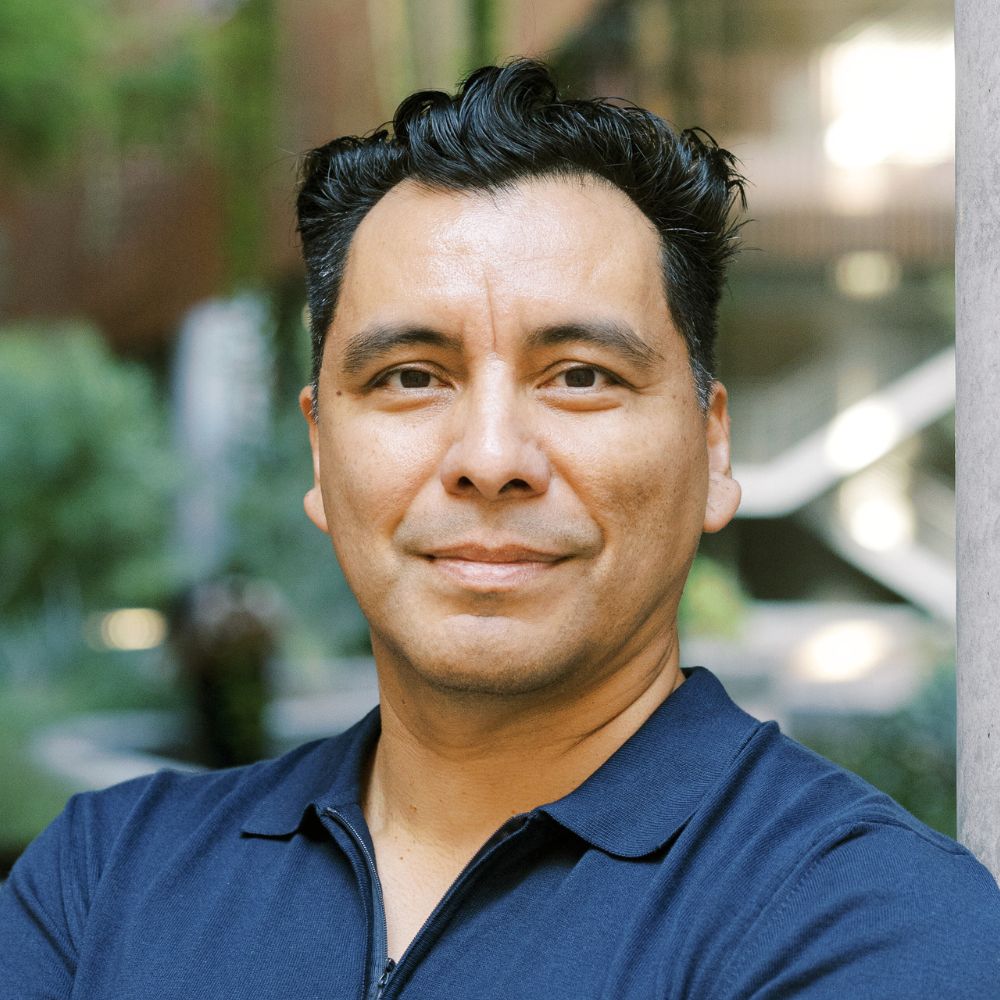
Manuel Muñoz is a fiction writer and Professor of English at the University of Arizona, where he teaches creative writing. He is the author of four books of fiction, including The Consequences (Graywolf Press, 2022). He has been recognized with a Whiting Award, three O. Henry Awards, the Joyce Carol Oates Prize, two selections in Best American Short Stories, and, most recently, a MacArthur Fellowship. He lives and works in Tucson, Arizona.
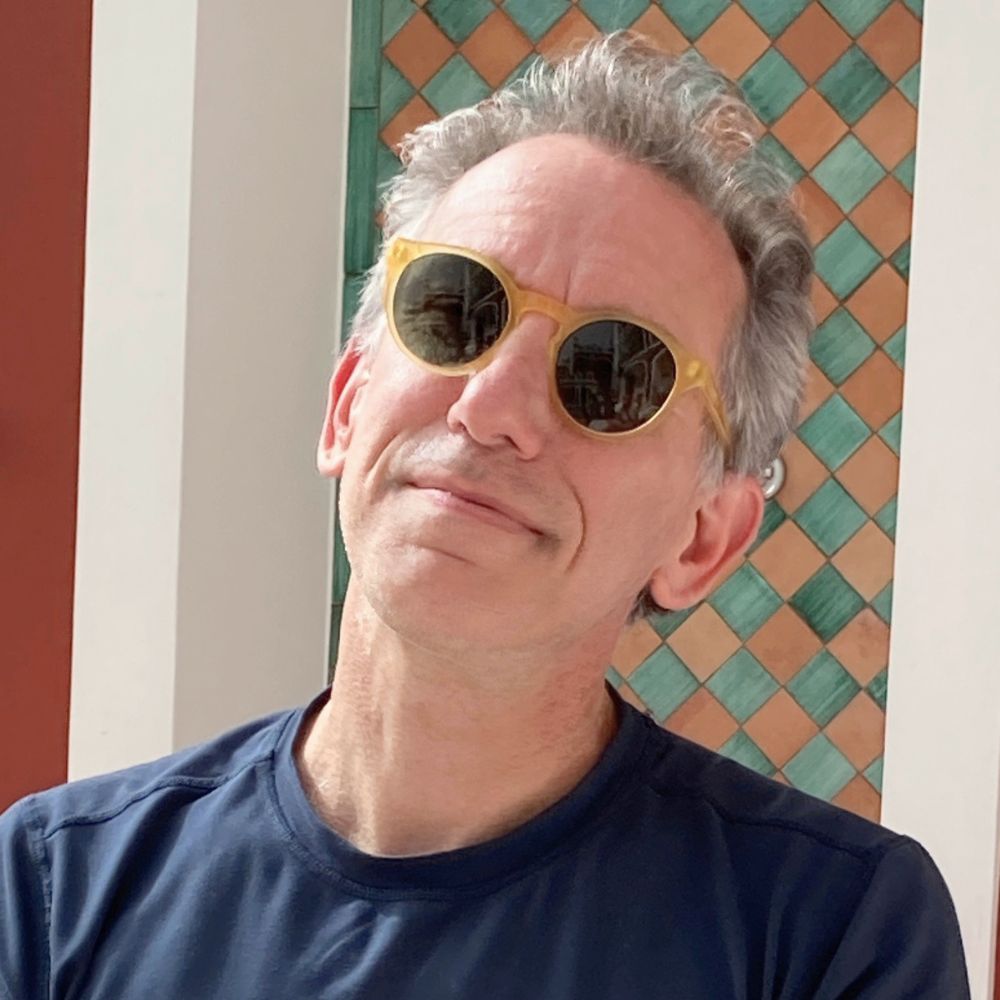
Ralph E. Rodriguez is Professor of American Studies and English at Brown University, where he teaches Latinx literature, creative nonfiction, contemporary fiction and literary theory. He is the author of Brown Gumshoes: Detective Fiction and the Search for Chicana/o Identity (University of Texas Press, 2005), winner of the MLA Prize in United States Latina and Latino and Chicana and Chicano Literary and Cultural Studies, and Latinx Literature Unbound: Undoing Ethnic Expectation (Fordham University Press, 2018). He is now writing a book on Latinx memoir. He earned his Ph.D. at the University of Texas at Austin, studying with José Limón, and taught at Oregon State University and Pennsylvania State University before joining Brown.
Credits and Acknowledgments
Theme Music: Baron Pineda (Anthropology | Oberlin College)
Sound Editing: Jacob Sokolov-Gonzalez (Music and Multimedia Composition | Brown University)
Production: Gregory Kimbrell (Cogut Institute for the Humanities | Brown University)
Special thanks to the staff of the institute for their support in launching this podcast.
Hosts Shelley Lee (Brown University) and Gina Pérez (Oberlin College) in conversations examining how Ethnic Studies serves a public good, transforming education and our broader world as we grapple with questions of race, migration, identity, and justice.