In the fourth and final episode of season one, host Shelley Lee sits down with Amanda Anderson, Andrew W. Mellon Professor of Humanities and English and outgoing Director of the Cogut Institute for the Humanities at Brown University. Their conversation ranges across the definition and defense of the humanities, the concept of “value clarification” as the distinct work of humanistic inquiry, and the challenges posed by AI and shrinking attention spans to the conditions necessary for deep thinking. They also take up Amanda’s forthcoming book on rumination, the politics of viewpoint diversity, and the interconnected fates of the humanities, the university, and democracy. Gregory Kimbrell, Communications Manager at the Cogut Institute and producer of “The Confluence,” joins Shelley for the episode introduction and outro.
4. Stop Ruminating (Or Don’t)
Hosts Shelley Lee (Brown University) and Gina Pérez (Oberlin College) in conversations examining how Ethnic Studies serves a public good, transforming education and our broader world as we grapple with questions of race, migration, identity, and justice.
4. Stop Ruminating (Or Don’t)
Shelley Lee: From the Cogut Institute for the Humanities at Brown University, this is “The Confluence: Ethnic Studies and the Public Good,” a podcast about Ethnic Studies as an insurgent intellectual movement, site of contestation, and driver of transformation. I’m Shelley Lee, Professor of American Studies at Brown.
Gina Pérez: And I’m Gina Pérez, Professor and Chair of Comparative American Studies at Oberlin College. Ethnic Studies is at a crossroads, facing serious challenges about its value and importance, at the same time receiving growing recognition for its role in preparing citizens for our diverse democracy. Through conversations with thinkers and practitioners in and outside of the academy, “The Confluence” explores how Ethnic Studies serves a public good transforming education and our broader world as we grapple with questions of race, migration, identity, and justice.
Shelley Lee: Hi, Gregory.
Gregory Kimbrell: Hi, Shelley.
Shelley Lee: Gina is wrapping up her semester at Oberlin, so she’s not with us today, which is why you’re joining me. But let me give you a proper introduction. Gregory Kimbrell, you are the Communications Manager at the Cogut Institute at Brown. And you’re also the producer extraordinaire, without whom there would be no “Confluence.”
Gregory Kimbrell: Thanks, Shelley. Helping launch the podcast has been really the high point of my year, and it’s a real pleasure to be here today. And yes, I have been with the Cogut Institute for about five years now. Much of my career at the Cogut Institute and before has been dedicated to cultivating intellectually and culturally voracious community around humanity scholarship and the arts broadly. I’m also a poet, so this sort of community is especially dear to me, and I’m very grateful in times such as these to be a part of it.
Shelley Lee: Well, I’m very grateful as well. Gregory, how long have you been writing poetry?
Gregory Kimbrell: Let’s see. About 15 years or more.
Shelley Lee: Wow. Can people check it out somewhere?
Gregory Kimbrell: Indeed, yes. Gregorykimbrell.com.
Shelley Lee: Okay. Excellent. We can put it in the episode notes.
Gregory Kimbrell: Perfect.
Shelley Lee: So let me set things up. This is the fourth and final episode of season one. In the first three episodes, we covered the political origins and commitments of Ethnic Studies, the institutionalization and generational succession, and how the knowledge and approaches of Ethnic Studies travel outside of academia, specifically in museums and public history. For this episode, we discuss humanities more generally with Amanda Anderson, the Director of the Cogut. And I think in academia, we see Ethnic Studies’ impact most clearly in the humanities, so the two are very linked. I think if you care about Ethnic Studies, you have to care about the humanities. So for those and other reasons, I wanted to have a conversation with someone with a bird’s eye view of the humanities. And as a longtime center director, a longtime institute director, I thought Amanda would be a great guest. Now, Gregory, you work closely with Amanda, right?
Gregory Kimbrell: Yes, indeed. And I’m really looking forward to this conversation between the two of you. Amanda has an enormously wide-ranging set of academic investments. I’ve had the pleasure of working with her actually on another podcast series, “Meeting Street: Conversations in the Humanities,” where she brought on scholars to discuss many different subjects — for example, humanities scholarship on AI, university reform, and research on happiness. So I think this should be a really great conversation today.
Shelley Lee: “Meeting Street” helped to inspire “The Confluence,” and I look forward to the conversation as well. And I just wanted to say it’s really remarkable what the Cogut has accomplished and grown into, and how it’s expanded its footprint at Brown. Gregory, I wonder, would you like to do the honors of introducing our guest?
Gregory Kimbrell: Sure. So Amanda Anderson is the Andrew W. Mellon Professor of Humanities and English and Director of the Cogut Institute for the Humanities. She is a literary scholar and theorist who has written or edited nine books, including the newly released Humanities Theory with Simon During; Psyche and Ethos: Moral Life After Psychology, which came out in 2018; and Bleak Liberalism, which came out in 2016. She also has a forthcoming book on rumination, which I’m excited about. From 2008 to 2014, she served as the Director of the School of Criticism and Theory, an interdisciplinary summer institute hosted by Cornell University. She serves on the boards of the School of Criticism and Theory as an Honorary Senior Fellow and the International Consortium of Humanities Centers and Institutes. Prior to joining Brown in 2012, she was Caroline Donovan Professor of English Literature at Johns Hopkins University.
Shelley Lee: Amanda Anderson, welcome to “The Confluence.”
Amanda Anderson: Thank you so much for having me.
Shelley Lee: Thank you for being here. So, Amanda, you have directed the Cogut Institute for just over a decade. You’re also a professor of English and humanities, and you have an extensive record of scholarship in 19th- and 20th-century literature on questions of moral life, character, political theory and other topics. The focus of this conversation, though, takes up another strand of your work which concerns the humanities and contemporary debates about them, and these have certainly intensified recently. But I want to start from the beginning and ask you to say a bit about what drew you to literature and a career in academia.
Amanda Anderson: Okay, wow. Looking back, it was not anything that I envisioned myself doing from a young age. So it wasn’t one of those situations where I knew I wanted to study literature. In fact, in both high school and college, at the beginning of college, I was more oriented towards the STEM disciplines, but I always loved philosophy courses and literature courses. And so I gradually started to shift my focus and realize essentially that it was more sustaining for me at some deep level. I also have to say I was in awe of certain humanities professors. I thought that the way of life that they modeled was really, really powerful and compelling. I think that had a lot to do with it — was seeing that kind of modeling. So I majored in literature, but then it wasn’t as though I immediately thought, “Okay, I’m going to go get a Ph.D. and become a professor.” I worked for three years, mostly in publishing. And I thought about law school. And then eventually in publishing, I thought, “Okay, this is interesting. But I’m right next to the life of the mind, and I would like to be within it." So I applied to graduate school and went to Cornell, and I have to say, within weeks of arriving at Cornell, I thought I had landed in utopia. And I’ve never looked back.
Shelley Lee: Thank you for that. I also thought about law school. And I think that that is a common theme that you see, that it’s not just being drawn to the life of the mind and finding aspects of it very rewarding. It’s another step entirely to envision a career and a profession devoted to it. If we could talk about the Cogut Institute now. Certainly some of the skills and experience, expertise you develop as a faculty member are relevant, right? You build upon them as you move into a position like directing an institute, but they’re very different roles. So I’m wondering, what led you to decide to take on the directorship of the Cogut? Because you have had — were having — a very prolific career as a scholar. And has serving that position changed anything about your understanding of the humanities and higher education?
Amanda Anderson: I’ve never been monastic. So I am not a scholar who sits quietly in her study and works assiduously all day long. So as soon as there were sort of opportunities, leadership opportunities in my career, I jumped at them and greatly enjoyed them and realized pretty immediately that I’m an institutional activist, that I like a field of action. I like to think about changing things. I like to think I’m improving things, making people’s lives better. So I had chaired the English department at Hopkins, greatly enjoyed that. Then I directed the School of Criticism and Theory at Cornell, which is a summer institute at Cornell that specializes in offering curricula on theory across the disciplines. Loved that, and I think at that point, I realized how much I enjoyed interdisciplinary spaces. And so when the opportunity arose at Brown, I leapt at it because I — first of all, I knew that Brown had a really strong history of support for the humanities, distinction in the humanities. I also could see that Brown was building up a really interesting ecosystem of centers and institutes to complement and strengthen the work of departments, to partner with departments, and so I knew that there was a real opportunity to increase impact.
Shelley Lee: And you have thrived in that role. Okay, so before we move into more questions about the bigger landscape of the humanities, I did want to ask you about your current scholarship, because you have a book coming out on rumination, which I’m very intrigued by for a number of reasons, including the fact that our culture today tends to treat rumination as a problem. It’s a form of thinking that’s unproductive, that has us stuck. I can’t tell you how many times I’ve been told, “Stop ruminating.” So why did you write a book on rumination, and what are some things that you want us to understand about it?
Amanda Anderson: Right. It is so interesting. The New York Times I think every, like, several weeks reruns a piece that’s titled “How to Stop Ruminating.” And it’s one of these default positions that is rarely interrogated. It’s really quite amusing. And you’re absolutely correct that it’s associated with a form of thinking that is repetitive, caught in a loop, non-productive, typically also involved in a kind of comparing oneself to an unachievable standard or feeling bad about oneself, and not moving on, not progressing in some way. And so there were a number of things that got me interested in this topic. I did notice the use of the word, and it struck me because it is a beautiful word. And I thought why has psychology appropriated this word? Surely this does not capture the whole of it. I think there were a couple of precursors or influences that brought me to the topic. The first is my own work. So my work historically has been interested in the normative dimensions of theoretical and scholarly frameworks. So what are the underlying moral and political principles that are assumed in any given framework? I’ve always been fascinated by that, especially in cases where there’s a strong emphasis on critiquing what exists, but without thinking carefully through what might be. So that’s one aspect, is I was always interested in the moral questions. Second was sort of intellectual serendipity. I was co-teaching in our collaborative humanities program with a political theorist named Bonnie Honig, and we found ourselves — the course was on precariousness and resilience — and we found ourselves often debating one another vehemently over, in her case, a psychological interpretation of a literary text and, in my case, a moral, a fundamentally moral, interpretation. So I started to become fascinated by the relationship between moral understanding and psychological explanation and how there was a tension in the culture where psychology was displacing moral understanding, such as “He’s a narcissist” rather than “He just did something deeply wrong.” So I started thinking about that, and that led to a shorter book I wrote called Psyche and Ethos, which was about that tension. And then the third influence was life itself. There was a period in my life around that time where I was experiencing significant challenges in my personal life, and I was really interested in questions of loss, grief, injury, and regret. And I was reading a lot of psychology. And I just didn’t agree that my own ruminations were something that needed to stop. I thought that they were profound forms of moral processing, and that they were about commitments to certain values and ways of making life meaningful. And I came to see it in an entirely different way. Then I started seeing it in literature and realizing that it was a form of moral thinking that had not been captured in any truly comprehensive way — in any discipline, to be quite honest. So I became fascinated by it and wrote this book. I will say one more thing, which is it was a little bit of a turn in my work, because in previous work I’ve very much emphasized deliberative rationality, communicative rationality, argument. And this is a much more complex, half-lit, ongoing way of thinking.
Shelley Lee: Right. I can’t wait to see how you approach that, because I — and I’m glad that you said that it’s a beautiful word, because you’re right. It is. It’s a really nice word to say, but it’s a thing that we are told not to do. On the other hand, it’s important for us to think things through and process them in order to move forward, which is why we’re told to stop ruminating. But I think where the line is between the processing — like, how do you know when you’re stuck in the loop and sort of moving out of it? As I think about it, we’re told very plainly, “Don’t do it,” but at the same time, “Stop. Process. Think it through.” And the line maybe has never really been made clear.
Amanda Anderson: I think it’s really important for me to acknowledge that I do think that there are unproductive forms of thinking, of rumination. And a lot of authors point to unproductive forms just as they might point to productive forms. I think, first of all, it’s important to recognize that there are different forms. And not every type of rumination is engaging in nursing an ego wound, for example. I don’t like the word “stuck.” So William James has a beautiful chapter in The Principles of Psychology called “The Stream of Thought.” And in it, he basically says, “You can never step in the same thought stream twice,” which is invoking Heraclitus. But basically what he argues — he’s not talking about rumination, he’s just talking about thinking — but he’s saying that you actually can’t be in a loop, because if you think about something a second, third, fourth time, you’re in a different time, and conditions have changed. And I think I can’t give you an answer to where the line is, but I think just recognizing that and accepting that and seeing that as a miracle is something that just helps depathologize this whole arena.
Shelley Lee: Right. I mean, we’re always changing, so stuckness is kind of at odds with that other reality that we’re always changing. I’m very intrigued by the subject.
Amanda Anderson: Thank you. I appreciate it.
Shelley Lee: So as director of the Cogut, you’ve been a steward and public advocate for the humanities, which puts you in an interesting position. For many, the humanities conjures a narrow set of images — the great books, philosophy, poetry — and then if we look at recent headlines about the humanities, we’ll see things like — this is from The New York Times this year — “Humanities endowment awarding millions to Western civilization programs.” And here’s one from The Chronicle of Higher Ed, “How humanists wrecked the humanities.” Another one from The Chronicle, “Does social justice control the humanities?” So all of these and other recent headlines — it’s a way of showing the scrutiny and stakes around humanities are very intense. But I think it’s important to start with basic definitions and be clear on what we mean when we’re having these very intense debates of the humanities. I imagine you have been asked this question a lot, and when you are, what do you say? What are the humanities?
Amanda Anderson: That’s such a complicated set of questions. First of all, just to answer directly your final question, I would say that most generally the humanities is the study, the exploration of human experience, human culture, and human creative expression. I think that, in some ways, is the broadest way to characterize it. Now, if you think about the divisions of the university, typically the divisions of the university — and let’s just say the humanities, the social sciences, and the sciences — are defined by their method and their object of inquiry. So in the case of the humanities, there are disciplines that are oriented towards objects — so literatures of many languages, philosophy, history, history of art, media and culture, etc. I probably left something out, but that’s sort of the general constellation. The method is probably the most — the simplest way to explain the method is to say that it is interpretive. It is often said that the humanities or the human sciences are interpretive, and the sciences are explanatory. So what does that mean? That means that this is a kind of ongoing project of examining various objects — archives, historical events, texts — and attempting to put forward either a coherent summary analysis of their features or some sort of interpretation of what they are trying to show or convey. I think that’s just a basic answer to what the humanities are. In terms of trying to talk about the humanities in a public arena where the rhetorical battle lines are quite intense, I think there’s a couple of things. One, one wants to correct misperceptions whenever one can. There is often a tendency to take a single aspect of the current landscape — let’s just say social justice projects — and imagine that they are governing the whole of the field. This is simply not true. It is fractionally true. Just as claims that the humanities have become inaccessible, abstruse, hermetic — to some extent, yes, but again fractionally true. So there’s a kind of willful disregard of the pluralistic landscape of the humanities. Defending the humanities is tough because, as I have argued in Humanities Theory, the humanities are, at some level, not given authority as a cultural speaker. I can’t tell you how many situations I’ve been in — conferences, meetings — where people say, “We’re not doing a good enough job explaining what we do.” And I simply don’t think that is the issue. I think we do a great job explaining what we do. It’s like we’re just not accorded authority. It’s like when you have — I mean, you see this in gendered instances all the time in a seminar room, where certain people with certain identities are accorded authority and others aren’t — and so, as I’ve said, I think the humanities is gaslighted quite frequently, as a kind of general cultural fact. One way I think it’s really important to address this is to simply exemplify the humanities, which is to say do the humanities. Often if I’m asked to speak to a group — let’s say of alumni — that’s what I will concentrate on. I may say a few words about what the humanities are, but I just feel like people are very interested in the actual content. And this explains something else, which is to say that the humanities are vibrantly alive across the culture — book clubs, movie reviews, etc. — podcasts. Podcasts are huge, and many of them are on humanities topics. And people aren’t connecting the dots, because what’s going on is that what’s really being attacked or undermined is the notion that a humanities degree is not going to get you a job, is not going to get you a high-paying job, and is therefore useless. And that has to do with how the culture perceives value overwhelmingly in economic terms.
Shelley Lee: Right. And I agree — speaking only defensively or in response to attacks or in this reactionary way doesn’t really allow us to showcase our work, to speak directly to what is happening in the humanities, what is the work of the humanities doing and contributing. But then you also identify this problem of the humanities lacking cultural authority. So right alongside this problem of gaslighting, of others trying to frame the debate for us and then compelling us to just respond, there is maybe this other problem of authority that is worth dwelling on. But I actually want to return to the work of the humanities. What are we doing and, and what is distinct about it. What’s important about it, and what’s exciting and enriching about it? And this brings me to ask you about another book, one that’s recently out from 2025, Humanities Theory, that you co-authored with Simon During, where you offer a theory of the humanities, which — I don’t know that anyone’s done a theory of the humanities. Anyways, I appreciated that. So you offer a theory of the humanities, and you say that humanities scholars engage in a practice of value clarification, which you spoke to a little bit already. “Humanities scholars engage in a practice of” what you call “value clarification, and they address questions of meaning and value, even when such dimensions remain at the implicit level.” And I think that that’s helpful because, again, that’s not a way of responding to the characterizations and accusations — “Humanities is impractical,” blah-di-blah. But I think it’s really trying to get at the heart of what humanities work is doing. So can you elaborate on this, to clarify the distinct work of the humanities when you say we’re engaging in a practice of value clarification?
Amanda Anderson: Thank you so much for that question. I’m going to have to make a certain number of distinctions as I go along because I want to say quickly at the outset to say that the humanities engages in value clarification does not mean that individual scholars, or even collectivities or even certain advocacy fields, don’t hold strong values consistently that they apply without feeling like they need to ongoingly clarify them. So when I talk about value clarification, I’m envisioning the field of the humanities, and I’m thinking there are lots of different projects going on. In those projects, there are scholars who hold values very strongly, but that as a whole — and I think fundamentally if you’re thinking about pedagogy or any comprehensive academic unit, it’s really important to think about the whole project as one of value clarification. So let me give you an example, a basic example. Let’s say that in my field, in Literary Studies, let’s say in a classroom, we’re looking at the novel Middlemarch by George Eliot. Now, I’m going to use an old-fashioned term, but when you’re studying novels or any manner of aesthetic object, you are often trying to think about what is the perspective of the person who created this object. In the case of a novel, it’s often what is the worldview of the author? And as you reconstruct that or try to think through what that is, considering the novel as a whole, it’s very clear that Eliot puts forward an idealized heroine who exemplifies a form of sympathetic understanding that is linked to moral action. Which is to say that she’s always trying to act in the best interests of the moral wellbeing of others, and also to enact modes of sympathetic understanding. Now, somebody might say, “That’s great, but that does not even begin to address larger systemic issues, socioeconomic issues.” And then one can say, “Well, let’s look at the novel more broadly and see if that’s really true.” I mean, this is the heroine, so that’s a privileged character and carries a certain weight. But another character, Will Ladislaw, goes into politics, and Dorothea and Will get married, so what’s that meant to suggest? That maybe we need ethics and politics. I mean, there’s a whole variety of ways in which one can talk about it, but then in thinking about that, people who study the humanities naturally start to clarify their own values. You know, do they like Eliot’s worldview? Do they not? George Orwell famously thought that Dickens was one of the most insightful critics of systemic injustice, but that he tended to end his novels with a sort of celebration of moral character and that that was somehow, for Orwell, disappointing. So that’s a super interesting critical insight that you can think about in relation to all sorts of different examples. That’s one thing that I mean by it, and I think it also — in thinking about that, it gets you away from the idea of the humanities as imparting value directly. So it’s not like you must read this great book because of the moral vision of the author so that you may learn that moral vision, but rather, let’s look at a whole range of different ways of looking at the world and see what we think of them. I would also say by way of of my own own clarification, that I think it’s super important to have that value — no one can be value neutral — but to aspire to a kind of value neutrality in the classroom. I deeply believe this, but that does not mean that you’re doing that in your own work or at certain higher levels of collaborative work.
Shelley Lee: I think that’s a nice way of capturing the, as you say, pluralism of the humanities, that there are some scholars who are trying to impart values. But I think what you say certainly resonates with how I think of what I’m doing as an historian, which is it’s interpretive, it’s subjective, and I think there’s room for creativity because because we’re telling stories. We’re putting stories together, and in addition to explaining what happened, we’re explaining what does it mean, what is the meaning of what happened. And so that’s a discovery of, or interrogation into, values. And in that process, the scholar clarifies their own values or what they want to say about a given topic, but also just how they view the world. So this connection between understanding the underlying values of the subject that you are studying and then the values of you as the scholar and the thinker are deeply connected, but are also different things, right?
Amanda Anderson: Yeah, I love the way you put that. Yeah, absolutely.
Shelley Lee: On that though, because not all historians consider themselves humanists — and I don’t see such a divide between empiricism and humanistic work. Like, when people separate the two I actually get confused. But at its heart, I think doing history — it’s an interpretive endeavor. And a seemingly straightforward question like “Why were Japanese Americans interned during World War II?” is actually a very live question because there isn’t one answer. It changes over time. If you ask somebody that in 1950 versus now, you’ll probably get very different answers, and it also depends on whose perspective you’re, you’re working from. Like, are we talking about internment as a wartime strategy or internment as a policy that’s embedded in a longer history of racism? So these seemingly straightforward questions turn out not to be straightforward at all, and that for me is what makes being a scholar and historian so exciting as well as important, but this can also be a barrier, the interpretive nature of the work. So if we’re not working towards a definitive or correct answer or truth, then the question might get raised “Well, what are we doing?” And I sometimes get this from students. Like, “Isn’t there a right answer? Isn’t there a more correct answer? Why were Japanese Americans interned?” for example. So that’s part of my work with students, is to get them to think more expansively about these questions, and to let go of the need for a definitive truth or answer. And I wonder if you have your own thoughts on that from your particular disciplinary position as a humanist.
Amanda Anderson: These are amazing questions.
Shelley Lee: This is the conversation I wanted to have with you all year, Amanda.
Amanda Anderson: Well, thank you so much. This is a tricky one. I mean, and yet maybe not so tricky. I think that there are, I want to say, provisional truths that we are constantly coming at, which is to say that I think we make judgments as scholars in our respective fields about whether and to what extent any given account or interpretation is persuasive based on the evidence and the force of the argument, what it illuminates. I think there can be a couple of truths that one can recognize as equally compelling. Let’s say, you could give a Marxist interpretation of Great Expectations. You could give a psychoanalytic one. And in various ways, each would have its own kind of forms of illumination. Can you wed them and have a higher truth? Maybe, maybe not. I don’t think that matters terribly, and I think part of what’s at play here too is what we talked about a little while ago, which is that humans exist in time, so that the horizon of interpretations is constantly changing. So things that were not visible in one era become more visible in another, and we are always working between — I’m here invoking Gadamer — we’re always working between our own horizon and the horizon of whatever we’re looking at. So just to give an example from the humanities, there’s a very vibrant, newer field called Disability Studies. Folks who are working in Disability Studies and looking at older texts — Shakespeare, novels from the 19th century — are identifying what they’re calling forms of disability and making various claims about them, what they symbolize. Sometimes they symbolize something tragic or morally deformed. Sometimes they seem really crucial to the narrative dynamic, so there might be a formal analysis. This would not have been visible some decades ago. It’s visible now. And I think that that’s precisely because there’s historical change ongoing, and is that a greater truth? I don’t think I would say it’s a greater truth and that the people before were benighted. I wouldn’t make that claim. But I think we, again, have to adjust to the interpretive conditions of what we do. And another thing I will say is this is absolutely true in particularly the theoretical sciences. It’s not like scientists are out there saying, “We have just discovered the truth about X.” I mean, there’s a lot of disputes. There’s a lot of, you know, waves, particles. So I think it’s really important not to caricature other divisions when we’re accepting the conditions, the sublunary conditions of human knowledge.
Shelley Lee: That’s a good point. No answers are truly settled or definitive. So I want to now move to a topic that you’ve been thinking and writing a lot about recently, and that’s AI. But let me set it up first. So earlier we talked about your forthcoming book on rumination, and I wanted to pick up on that thread because it brings our attention again to thinking, the interior life, and connects to some larger problems that I think are being widely recognized, having to do with shrinking attention spans, our impoverished inner lives, what have you. And this is something that you take up in Humanities Theory as well. You say that humanistic work requires “attunement and slow time.” I was very interested in that phrasing, “attunement and slow time.” And I personally feel this very acutely, the necessity of attunement and deep work, slow time, slow thinking. I understand the necessity of it. I can’t do my work if I’m incapable of summoning those things. It’s also really hard to protect and maintain sometimes. How do you protect those conditions, and do also find it harder?
Amanda Anderson: Oh, absolutely. I think everybody’s finding it harder. I remember I was at a dinner party some months ago, and it was with faculty, and they were talking about how students can’t read, they can’t read long form in the way that they used to be able to, and that one has to assign fewer pages, etc. And I asked, “Well, are you having problems reading?” And there was a moment of — a little bit of discomfort, and everybody actually said yes. We have all been affected by the screen life and the ways in which our attention is constantly being hailed in different ways. I think this is a major cultural shift and challenge. So what to do about it? I actually think that the people who — you know, you read articles in the newspaper, or people share with you certain approaches that they’re using are all worth listening to — the digital Sabbath, the idea of saying, “Okay, I’m going to take one day of the week, and I’m not going to use my phone at all,” or, “I’m only going to look for phone calls twice,” or something like that, right? I know I try to do what little I can. I mean, one thing I do is I always start the day with a reading session before I look at anything. Make a cup of tea, read for 45 minutes, and then I’m ahead of the game.
Shelley Lee: That’s great. That’s a good tip.
Amanda Anderson: I think what we’re going to have to do as scholars and teachers is try to create conditions in our own arena where we’re promoting that attunement and slow time, whether that means that we start to add reading labs to regular courses, where the professor meets with the students separate from class time for an hour or two where there’s some collective reading and discussion — I think things like that could go a long way. I think we’re really going to have to try to create situations where people actually forget about the fact that they’re not looking at their phone.
Shelley Lee: And I appreciate a practice of yours, having been in a seminar that you led with the Cogut fellows, and that was the no device rule. We can’t even read the papers on our devices. The hard copies are made available. And I experienced the seminar with you once a week for two hours, and it means that we all are focused on the subject at hand, which is the work being discussed that week. And it’s not only beneficial for all of us seminar members, but the person presenting their work gets so much more out of it. And it’s such a simple step, but I can imagine — I wonder if you receive resistance to it because it’s just so unthinkable for folks that are just accustomed to having their device on hand and they just need to check it constantly. I think sitting through that seminar made me realize how much our devices rob us of this critical need for attunement in order to learn.
Amanda Anderson: I think the more practices like that we can establish, the better. It sort of feels like the new church, you know? I mean, once a week you go in and you gather yourself and are quiet and think. I think the more we can do that, the better. Interestingly, I have not gotten pushback. On occasion, there may be a disability issue where somebody requires a certain kind of tablet or something like that, and that of course is fine. There’ve been a couple situations where somebody was — there was some kind of emergency in their life and wanted to keep their phone on and nearby. That was fine. That’s all fine. But I think it makes a big difference.
Shelley Lee: Right, and to be sure, these seminar fellows are a self-selected group. They want to be there, and they’re really committed to life of the mind, their advanced research. It might be a challenge requiring this of undergrads, but I think I’m going to require it of all of my classes moving forward. Because even if they don’t get it initially, what it gives you in return for making that sacrifice is —
Amanda Anderson: I entirely agree that it’s absolutely worth doing. I think more and more people are doing it. I wish they — I think they do this at certain universities. They should block the internet in all the classrooms. They can do that — I think, I’m sure they can — and that would help a lot. Because if somebody is using a laptop and you know that they’re, you know, reading their email and shopping and doing all sorts of things, it’s crazy-making for the professor. It’s really demoralizing. So I think we’re going to have to really think about strategies and enact them.
Shelley Lee: And it’s like you don’t have to look up the thing right then. We can just have seminar for two hours. It’s okay. You can look it up later. So in Humanities Theory, I think it comes very close after the line about attunement and slow time, there was a line where I feel like you’re bringing it all home. And it stopped me in my tracks because you say, “The conditions necessary to sustain and promote the humanities and the university and democracy itself are one and the same.” So this is bigger than habits of personal focus. It’s bigger than looking out for and trying to defend our fields. So can you walk us through that — humanities, university, democracy — and convince me it’s not hopeless, Amanda.
Amanda Anderson: I believe that’s the last line of the book. You know, one kind of pulls out the stops. But I believe every word of it. That is drawing on — and you’re absolutely right, it’s a different point than the point about attunement, though they’re related. I mean, by cultivating those practices you’re also putting yourself in a good position to engage in reflective debate with others. And I think that’s what I have in mind there. I have in mind that if we recognize the plurality of approaches, frameworks, and methods in the humanities — and I would contradistinguish this from viewpoints, which we may want to take up in a separate moment — if you recognize that and seek to cultivate that and seek to cultivate value clarification, then you’re basically doing the crucial work of civic education all the time. So I think one of — this new trend of establishing civics centers which are meant to somehow address the problem of what is seen as ideological bias or tilt, that is something that the self-description of those centers is really no different from what I am trying to advocate for, though with a less stark conception of what it means to hold a particular view.
Shelley Lee: And I want to ask you about this issue of viewpoint diversity in a second, but first I did want to talk about AI because I know that’s been a topic of much interest for you. And it’s the thing that everyone’s talking about, their particular discussions and anxieties and concerns within higher ed and education more broadly about it, including “Is writing going to be a relevant skill?” “Is teaching going to be done by robots?” “How is it going to change the very enterprise of doing scholarship?” Etc. You have a forthcoming essay about AI and the future of the humanities, and I’ll paraphrase part of it, but you say that we don’t know what AI will leave untouched. And that’s the current anxiety that it’s going to touch everything. It’s going to take away all of our jobs. So we don’t know what AI will leave untouched, but that “we can recognize and lean into the human aspects of our caring and thinking.” So I thought that was a really interesting sentence and maybe a response from academics that we don’t often see. You’re saying we should lean into the human aspects of our caring and thinking. What does that leaning in look like for you?
Amanda Anderson: I think this connects up with the kind of emphasis that I’ve been making in real-life engagement, which is to say making sure that we protect, preserve, extend embodied interactions among students and faculty, among faculty and among students, so that we retain the university as a live environment of shared inquiry and exchange. I think that’s really important. I think we cannot take for granted right now that the standard format of university life is going to remain exactly the same, and by that I mean the semester, the course across the semester, the single faculty member leading the course. All of these things — I think, there’s some threat of gigification of the university — unlikely to occur in an elite private R1 university like Brown anytime soon. But you can see versions of it with the mini courses in between semesters and things like that, the certificates. Certificates are wonderful — I mean, we have three certificates at the Cogut Institute for the Humanities, and they bring people together in the ways that I’m advocating for. At the same time, there’s a real concern that we will lose the experience of, and the assumed experience of, that encounter with, engagement with, that living beside, I will just say, an exemplary scholar or mentor. As I said in my first answer to you, looking at the professors when I was in college had a huge effect on me because I thought they were amazing. I thought they were very cool. And I couldn’t believe that their whole life was dedicated to thinking and teaching and study. And I thought that it conveyed a really powerful form of life. And even if not everybody is going to adopt that form of life, it’s very good for them to be in the presence of it as they think about whatever vocation or form of life they want to pursue. So these are things that I think are forms of caring and presence. And it does seem to me — you know, Robert Reich, who was a labor secretary under Clinton and taught at Berkeley for a long time, put out a blog piece where he distinguished among three types of jobs — making, thinking, caring — and argued that the caring jobs are the safest. And we’ll see, because robots may be coming to bring me my morning tea.
Shelley Lee: Well, okay. So a robot could bring you your morning tea, but what can it not do? What else is there to caring?
Amanda Anderson: I don’t think it can talk to me about why I like the novel I’m reading, for example, or what it means to me. One thing I’ve been interested in just of late — you know, these things are all fast-changing — but one thing I’ve been really interested in of late is the idea that AI cannot listen. It cannot truly listen. I mean, it can process whatever you put into it and give you an answer, but the act of listening in the presence of another person — this is why some people don’t like Zoom therapy, because actually there’s a difference between being in the presence of somebody who’s listening to you and having the flatness of the screen mitigate all sorts of aspects of that experience. So that’s fascinating to me right now. We’ll see what happens, but I don’t think that AI can listen like a human. And I also — there’s a whole range of aspects of human experience that it’s not going to be able to replicate. And I think we’re going to need to think carefully about that.
Shelley Lee: It cannot ruminate. It can stay stuck in a loop.
Amanda Anderson: It can unproductively ruminate. It’s very, very interesting. Actually Gemini Pro, I’ve noticed, if you give it a dilemma that you’re trying to work through, it likes to try to move you away from it. So it’s got anti-ruminative aspect to its programming. But no, it can’t ruminate. And that’s going to be really important. It will be able to describe rumination, though. Especially after my book comes out. But seriously, it’s going to be able to describe things that it cannot do. And I think that that’s going to be really important for us to kind of be able to make that distinction.
Shelley Lee: Absolutely. And that’s maybe something that humanistic scholars, thinkers might be in a position to help us think through. So let’s switch topics here. This is a podcast about Ethnic Studies and the academy, and I want to note for listeners that the Cogut Institute, which you have been director of for over a decade now, is sponsoring the initiative of which this podcast is a part. And we’ve explored this in the earlier episodes, but Ethnic Studies, it emerged from demands for the university to reckon with things like race, discrimination, whose histories and voices count, and the kinds of changes that Ethnic Studies brought into the academy and the broader movement that Ethnic Studies was a part of. The changes include more diverse curricula, more diverse student bodies and faculty, but also DEI initiatives. And those have since become flashpoints in the ongoing political fights and culture wars. And against all of that, one of the remedies that critics have been calling for is viewpoint diversity. Viewpoint diversity is needed ostensibly because universities have become too ideologically homogeneous, they’re captured by the left, it needs to be balanced. That’s the charge anyways. So you have written about this matter of viewpoint diversity. And if I’m summarizing you correctly, you’ve argued that this demand for viewpoint diversity is actually a demand for conformity and not a defense of openness as it purports to be. So can you break that down for us and explain what you mean by that?
Amanda Anderson: Sure. Interestingly, I argue for pluralism, and the way in which I think it’s most useful to think about pluralism in the humanities is to focus on method so as to disable a too direct connection between identity and position. What I would say is that viewpoint diversity, as it has been articulated by the Trump administration and others, is a form of identity politics. And what it’s doing is it’s imagining that people’s viewpoint, first of all, can be identified and that it’s stable across time and that it is fundamentally ideological, which is to say it is a viewpoint that one can place on an ideological spectrum. For certain disciplines or sectors of the university, it’s a little easier to see how this might work. So government departments, law schools — in that arena, it kind of is the case that people’s scholarship is often rather legible in terms of its ideological commitments or interests. So, sure, if you have no conservative scholars in a law school, that might be seen as a problem. I don’t think that is a problem in most law schools. But once you move away from certain sectors of the university, it makes absolutely no sense, and it starts to — it reifies people. It imagines you could have a search for a scholar in which you make them announce their viewpoint and then hold to it, what, for the rest of their career? It makes no sense. This is a little separate from the claim that the faculty, the professoriate leans Democratic in terms of political party. That’s a very different thing, and some people are obsessed with that. But studies have shown actually that faculties are dominantly moderate. So there’s problems with that underlying claim as well. So that’s my critique of it, and I just think it’s too reifying and that it’s replicative of the worst aspects of identity politics.
Shelley Lee: Right. And I think that is a really important point that those calling for viewpoint diversity are practicing identity politics, which they also condemn. But this question of how do you even operationalize viewpoint diversity — when you sit down and think about it, you realize, as you say, it doesn’t make any sense. So there’s something else at work here.
Amanda Anderson: Absolutely.
Shelley Lee: Okay, Amanda, so we’re approaching the end of this conversation, and we covered a lot. This episode will be up at some point in the future. I don’t know exactly when, but I do want to acknowledge something before we end, and it’s — Amanda, you will be ending an 11-year run as director of the Cogut with the end of this academic year. You will go on a well-earned sabbatical, and I will step into your shoes, follow in your footsteps, receive the baton, what have you. But I can’t tell you, for the last few weeks, how many people have been talking about your shoes to me. They’re big shoes to fill. You have very big shoes to fill, and now I think about Amanda and her shoes when I talk to you. So your shoes, your footsteps, whatever — I’ll be succeeding someone with a tremendous legacy. So I just want to express my gratitude for all your work and your leadership and congratulate you on a stellar run whose legacy will endure. So the final question is one that we’ve been asking everyone, all of our guests, and this is in the spirit of being constant learners, always changing, always growing, always curious. In the spirit of being constant learners, what are you right now most motivated to learn about?
Amanda Anderson: That’s a great question. Before I answer it, let me just say thank you for those kind words, and I am really excited to see what you do with the place. I’m thrilled that you were appointed to the position. I think you’re doing this fascinating initiative already and, with the launch of the podcast, showing enormous creativity and depth. And I really look forward to seeing the institute continue to thrive.
Shelley Lee: Thank you.
Amanda Anderson: So I think the short answer to your question is political psychology. I’m obsessed with psychology. I’ve always been interested in moral and political theory. I think it goes without saying that a lot of what we’re facing right now is a kind of challenging situation of political partisanship, but also political and social, I want to say, behavior that is alarming, the shattering of certain norms, etc. And I want to extend the work that I’ve been doing on psychology into the political arena.
Shelley Lee: Well, I look forward to seeing what you uncover for us there. So I think this is a good note to end on. Amanda Anderson, thank you so much.
Amanda Anderson: It was an absolute pleasure, Shelley. Thanks so much.
Shelley Lee: Well, that was a nice conversation. And I’m left thinking about many things because we covered many things, but especially the values clarification role of the humanities, how the purpose of doing the humanities is not to tell people what to value but rather to develop the capacity to examine values, the values embedded in what we study as well as our own as scholars that shape how we study what we do. I found that to be a really refreshing and comparative way of approaching the explanation of the humanities, because it’s really attuned to the work, as opposed to justifying what it can do for people or explaining it defensively. What about you, Gregory?
Gregory Kimbrell: I found that also extremely compelling. Working for the Cogut Institute, I’ve had to do a lot of thinking about how we factor into life at Brown, and life beyond Brown, especially in the climate that we’re in now. And defending the humanities can be an exhausting and sometimes seemingly fruitless endeavor.
Shelley Lee: Right, right.
Gregory Kimbrell: I also was particularly struck by Amanda’s thoughts on rumination and, I believe, the related notion of slow time. My whole life I’ve been told, “Stop ruminating,” and there’s all this negative language that people bring to that sort of exhortation such as “brooding” and “indecision.” I certainly don’t want to justify every thought pattern I’ve ever had, but I’m thrilled to see someone champion a form of thinking that isn’t strictly linear and that doesn’t necessarily follow explicitly logical forms. And then slow time, it seems to me, is this parallel phenomenon in which the brain, rather than just flitting from one stimulus to another, as it’s wont to do these days, can immerse itself in one thing. And it’s certainly the case for me that when I am thinking about something, especially something troubling like we’re seeing a lot of these days, a part of my thought process is shutting the world out temporarily and diving into a book. And whether that’s a novel or nonfiction or poetry, somehow that act of reading then informs my thinking about whatever it is.
Shelley Lee: That’s really nicely put and, I think, illustrates how this conversation gave us so much to think about. I am also a person who’s been told to stop ruminating. I tell myself to stop ruminating.
Gregory Kimbrell: Indeed. Yes, I do the same.
Shelley Lee: So I was excited at this opportunity to rethink rumination. As we close, I want to give a list of thank-yous. I want to thank Gina Pérez, my co-host who will be back for season two. There are many people who’ve contributed to making this first season possible: Baron Pineda for the jingle, Jacob Sokolov-Gonzalez and Andrew Chong who have helped with editing, the entire staff at the Cogut, Amanda Anderson, and, of course you, Gregory Kimbrell. And as a tease for what we are working on for season two — season one was about setting the stage. Season two will go deeper, specifically into the histories of the four original pillars or subfields of Ethnic Studies: African American Studies, Latino Studies, Asian American Studies, and Native American Studies. We’ll have discussions that trace how these fields have changed — growing pains, intellectual and institutional struggles, and their relationships to each other. So I will leave it there. But, Gregory, I wanted to thank you for riding shotgun with me on episode four, and I look forward to season two.
Gregory Kimbrell: Very much looking forward to it.
Notes
- Anderson, Amanda. Bleak Liberalism. University of Chicago Press, 2016.
- Anderson, Amanda. Psyche and Ethos: Moral Life after Psychology. Harvard University Press, 2018.
- Anderson, Amanda, and Simon During. Humanities Theory. 2025.
- Eliot, George. Middlemarch. 1874.
- “How to Stop Ruminating.” The New York Times, February 1, 2023. https://www.nytimes.com/2023/02/01/well/mind/stop-rumination-worry.html
- James, William. The Principles of Psychology. 1890.
- Reich, Robert. “How Your Kids Will Make Money in a World of A.I.” Robert Reich’s Substack, 2025. https://robertreich.substack.com/p/how-your-kids-will-make-money
- Simon During: Scholar; co-author of Humanities Theory with Amanda Anderson
- George Eliot: 19th-century novelist; author of Middlemarch, discussed as an example of humanistic value clarification
- Hans-Georg Gadamer: 20th-century philosopher; invoked in relation to interpretive horizons in humanistic inquiry
- Heraclitus: Ancient Greek philosopher; referenced via William James’s concept of the stream of thought
- Bonnie Honig: Political theorist at Brown University; co-taught a collaborative humanities course on precariousness and resilience with Amanda Anderson
- William James: 19th- and 20th-century philosopher and psychologist; author of The Principles of Psychology
- George Orwell: 20th-century writer and critic; discussed in relation to his reading of Dickens and systemic injustice
- Robert Reich: Economist and former U.S. Secretary of Labor under President Clinton; professor at UC Berkeley; wrote on the future of labor in relation to AI
- “Meeting Street: Conversations in the Humanities”: Podcast series hosted by Amanda Anderson at the Cogut Institute
- School of Criticism and Theory: Interdisciplinary summer institute hosted by Cornell University; directed by Amanda Anderson from 2008 to 2014; specializes in offering curricula on theory across the disciplines
About the Guest
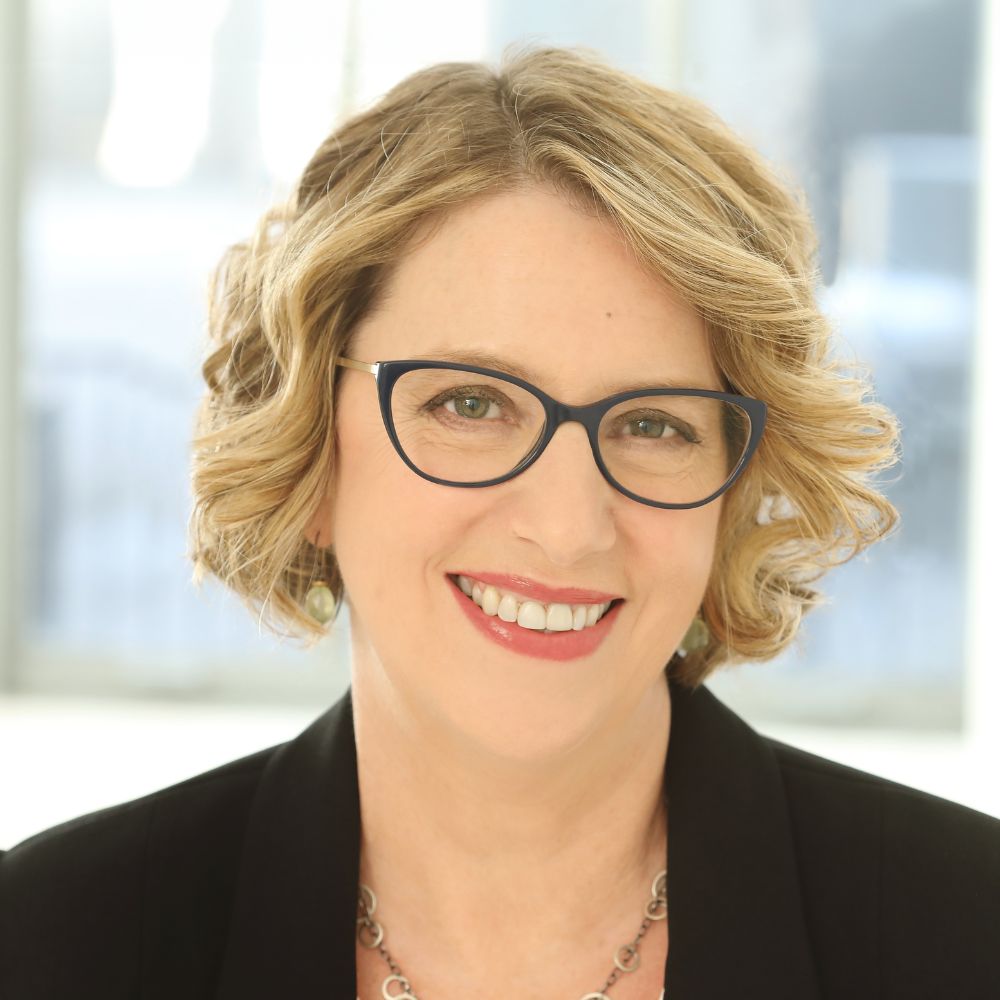
Amanda Anderson is the Andrew W. Mellon Professor of Humanities and English and outgoing Director of the Cogut Institute for the Humanities at Brown University. She is a literary scholar and theorist who has written or edited nine books, including the newly released Humanities Theory (co-authored with Simon During); Psyche and Ethos: Moral Life after Psychology (2018); and Bleak Liberalism (2016). She also has a forthcoming book on rumination. From 2008 to 2014, she served as Director of the School of Criticism and Theory, an interdisciplinary summer institute hosted by Cornell University. She serves on the boards of the School of Criticism and Theory as an Honorary Senior Fellow and the International Consortium of Humanities Centers and Institutes. Prior to joining Brown in 2012, she was Caroline Donovan Professor of English Literature at Johns Hopkins University.
About the Co-host
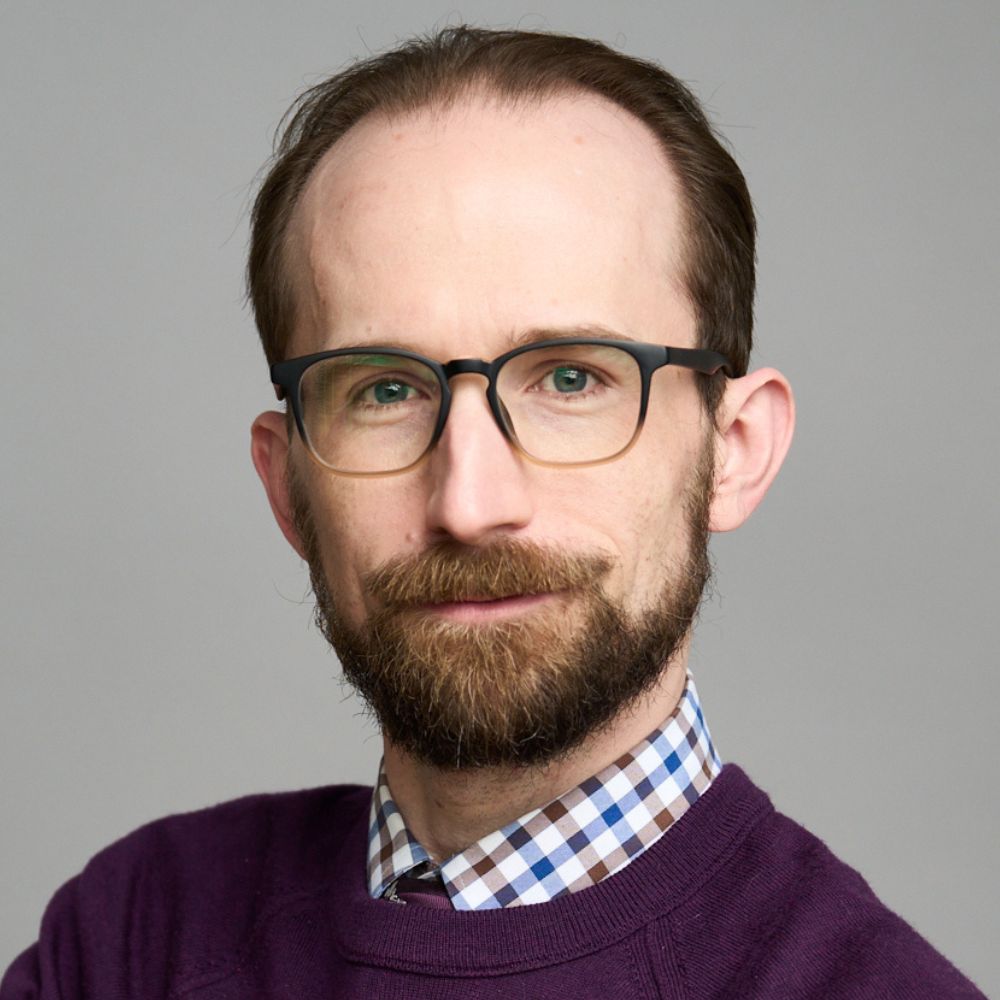
Gregory Kimbrell is the Communications Manager at the Cogut Institute for the Humanities at Brown University, where he has worked for approximately five years. His career has been dedicated to cultivating intellectually and culturally engaged community around humanities scholarship and the arts. He is also a poet; his work can be found at gregorykimbrell.com.
Acknowledgments
Theme Music: Baron Pineda (Anthropology | Oberlin College)
Sound Editing: Jacob Sokolov-Gonzalez (Music and Multimedia Composition | Brown University)
Production: Gregory Kimbrell (Cogut Institute for the Humanities | Brown University)
Special thanks to Amanda Anderson, Director of the Cogut Institute for the Humanities, and to the staff of the institute for their support in launching this podcast.
Hosts Shelley Lee (Brown University) and Gina Pérez (Oberlin College) in conversations examining how Ethnic Studies serves a public good, transforming education and our broader world as we grapple with questions of race, migration, identity, and justice.