Shelley Lee: From the Cogut Institute for the Humanities at Brown University, this is “The Confluence: Ethnic Studies and the Public Good,” a podcast about Ethnic Studies as an insurgent intellectual movement, site of contestation, and driver of transformation. I’m Shelley Lee, Professor of American Studies at Brown.
Gina Pérez: And I’m Gina Pérez, Professor and Chair of Comparative American Studies at Oberlin College. Ethnic Studies is at a crossroads, facing serious challenges about its value and importance, at the same time receiving growing recognition for its role in preparing citizens for our diverse democracy. Through conversations with thinkers and practitioners in and outside of the academy, “The Confluence” explores how Ethnic Studies serves a public good transforming education and our broader world as we grapple with questions of race, migration, identity, and justice.
Shelley Lee: Hello, Gina.
Gina Pérez: Hi, Shelley. How are you doing?
Shelley Lee: I’m good. How are you?
Gina Pérez: Good.
Shelley Lee: All right. So I have been looking forward to this episode about public humanities, what it is, and whether and how the approaches and knowledge from Ethnic Studies are informing its practices.
Gina Pérez: Me too. I’m really excited to talk to people who we have a lot of respect for, and who have been doing this work, and have real connections to the academy, come out of Ethnic Studies, Africana Studies, center the study of race, as well as gender, to their work, and to hear the concrete things that they’re doing in public humanities outside of colleges and universities.
Shelley Lee: I wondered though, when you think of public humanities — and it could be public humanities specifically or public-facing work — why is that an important conversation for us to have on this podcast about Ethnic Studies?
Gina Pérez: Well, for me, I think it’s because it goes to the origins of Ethnic Studies, that public humanities requires people to move beyond what we do on college campuses and in our classrooms, and to be engaged and to see that the work that we do inside the classroom is not only enriched, but it’s informed by what’s going on outside, and that the spaces that we inhabit as Latino studies scholars, Asian American studies, Africana studies, that they’ve been made possible because of struggles on the outside. And I feel like public humanities is that reminder of how important it is and essential for the work we do on campus and in our teaching to be in conversation with and in collaboration with people who are doing work to serve the broader public. So if there’s anything that’s a public good that comes out of Ethnic Studies, I think it’s public humanities. What about you?
Shelley Lee: I agree, and I thought a separate conversation about public humanities would be a way for us to focus in on the idea of the public good, of the publicness of Ethnic Studies and academic knowledge. And I think that the term “public humanities” evokes so many different things. It can take so many different forms, and the guests that we’re going to talk to today come specifically from the world of museums, although they also have a really interesting journey through academia and now in the world of museums, which are public institutions, but can often be thought of as very elite institutions. And so I think it’s also an opportunity to learn how that world is being or can be potentially transformed by some of the kinds of knowledge and insights that Ethnic Studies is producing. Museums take many different forms as well, right? There are community museums as well.
Gina Pérez: I think the other thing I’m really excited about with this conversation is it’s our first intergenerational conversation.
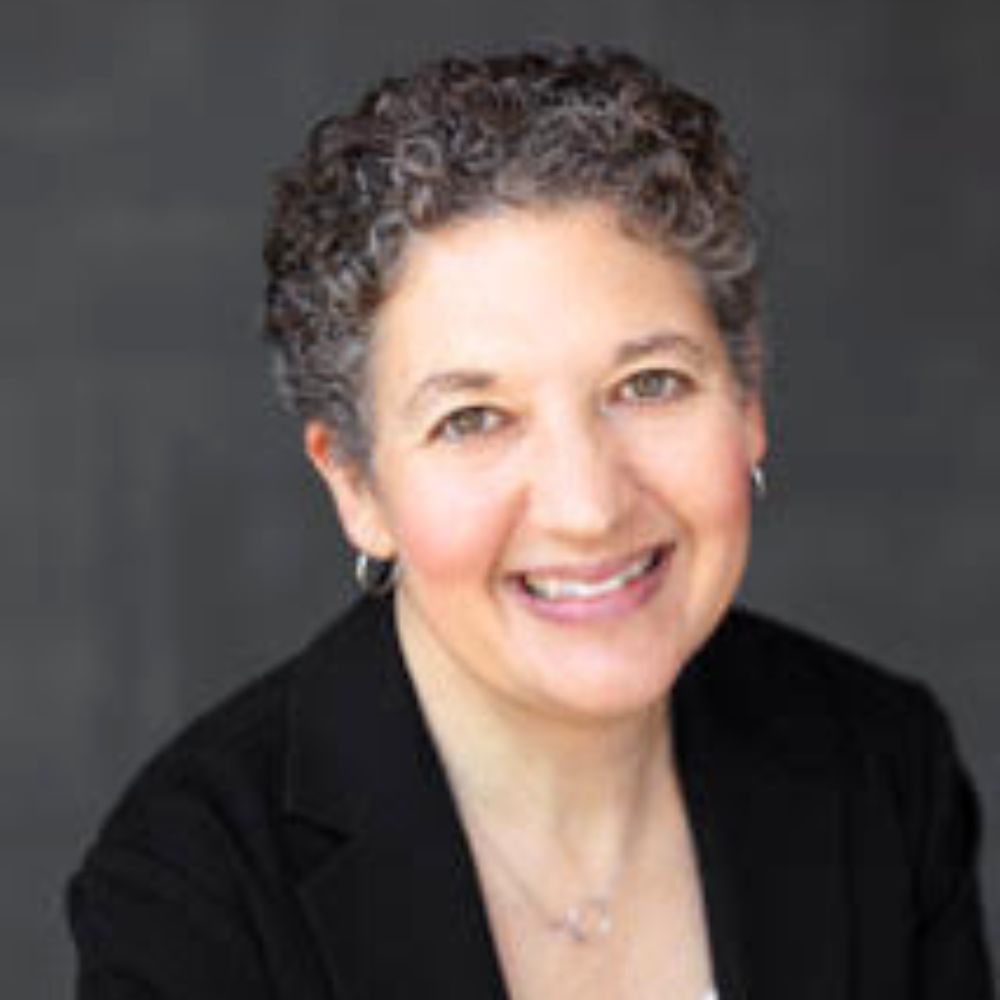
Shelley Lee: Maybe this is a good time to introduce our guests. So we’re speaking with Renee Romano, who is Emeritus Professor of History at Oberlin College and co-founder of Romano and Min Projects, a consulting firm that works with museums and other history sites. Her scholarly work explores U.S. racial history and historical memory, and she’s the author of, or co-editor of five books, including Racial Reckoning: Prosecuting America’s Civil Rights Murders and Historians on Hamilton: How a Blockbuster Musical is Restaging America’s Past. Renee’s public history work includes serving as a consultant or scholarly advisor for Kent State University’s May 4th Visitor Center, the New York Historical Society, the Brooklyn Historical Society, the Smithsonian Museum of Natural History, the Lorain County Historical Society, and the Wilson Bruce Evans Home Historical Society. She’s also developed and led community-engaged history projects that have resulted in exhibits, walking tours, and public educational programs.
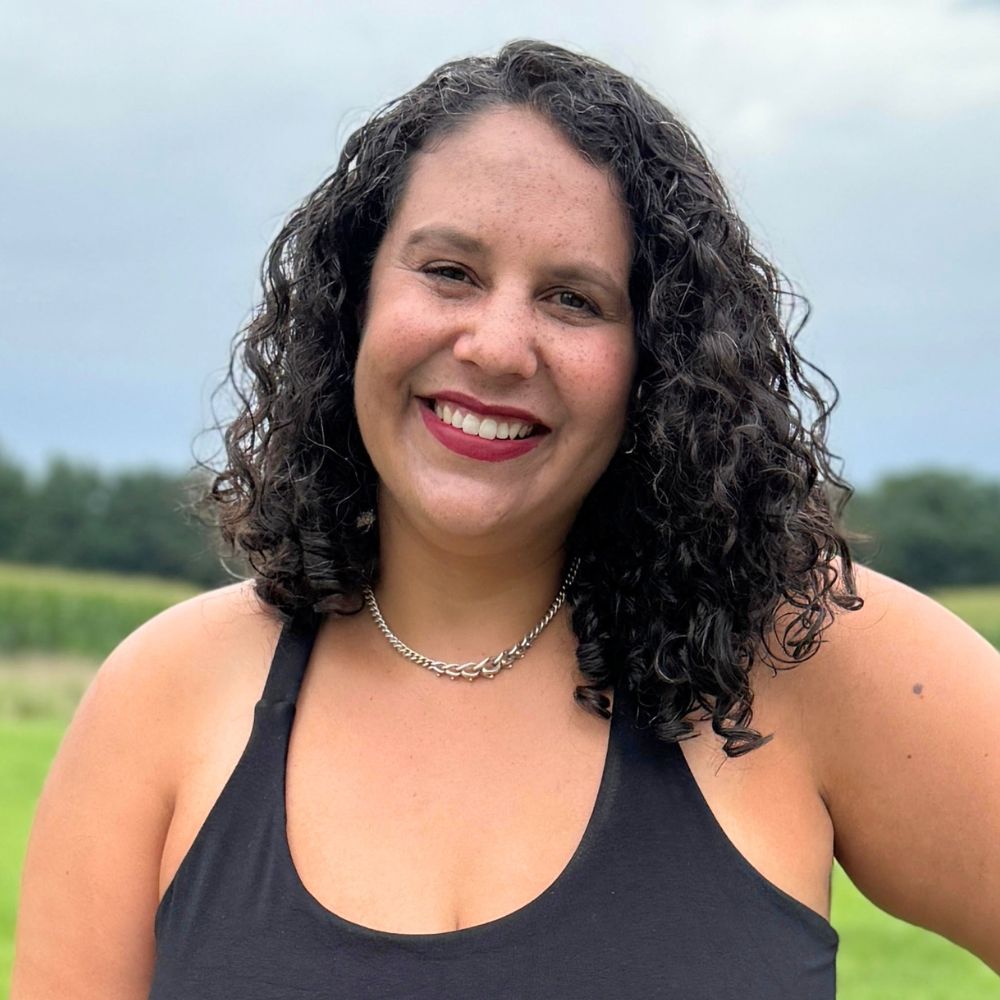
Gina Pérez: And our second guest is Gaila Sims, originally from Riverside, California. Dr. Sims received her B.A. in history and Africana studies from Oberlin College, and her master’s and Ph.D. in American studies from the University of Texas at Austin. She’s held positions at several museums, archives, and cultural institutions Including the George Washington Carver Museum and Cultural Center, the Bullock Texas State History Museum, the Harry Ransom Center, and the Smithsonian’s National Museum of American History. Dr. Sims most recently served as the Curator of African American History and Vice President of Programs and Interpretation at the Fredericksburg Area Museum in Fredericksburg, Virginia.
Shelley Lee: Renee Romano and Gaila Sims, welcome to “The Confluence.”
Renee Romano: So nice to be here. Thank you for having me.
Gaila Sims: Thanks for having us.
Shelley Lee: Thank you. So Ethnic Studies was born over 50 years ago — now we’re starting to approach 60 years ago — and it emerged partly as a critique of the ivory tower, and it was a call for institutions of higher education to serve communities. And with institutionalization, we know that it’s changed. Public humanities positions itself as community facing. So are these similar or overlapping projects? And what does each bring that the other doesn’t? Those are just some of the questions that we hope to explore with the two of you. But let’s start by having you share how you became public history practitioners and how your backgrounds as scholars of African American Studies have informed how you’ve met the imperatives to and challenges of bridging academic and public knowledge. But before we even get into that, I think we should first ask the very basic question, what are the public humanities? And I’m going to ask Renee to start.
Renee Romano: Absolutely, Shelley. Thank you. I mean, in their most basic form, in its most basic form, the public humanities is the practice of bringing the academic humanities — History, Literature, Philosophy, Art — out of the university and into public spaces and public life, with the goal of ensuring that humanities knowledge is broadly accessible to diverse publics. But in the last 30 years, I would say that public humanities has moved beyond that basic goal of bringing the findings of academic humanities to the public, a goal we might call translational, to instead focusing on how academics can work collaboratively with communities to co-create knowledge. Public humanities projects often involve and aim to use humanities knowledge and tools as a form of advocacy and activism, often in collaboration with historically marginalized communities. So I think there’s been a shift in what public humanities tends to look like over the last 30 or 40 years.
Shelley Lee: You mentioned, Renee, this change over the last few decades towards this translational move. And I was wondering, because, with regard to Ethnic Studies, there’s this history of the field that’s become very much a part of the field itself, knowing the history — and it’s a pretty short history — but I wondered if public humanities also has a legible, discreet history. And it sounds like there are at least some important turning points or points of expansion or change.
Renee Romano: Absolutely. There’s always been public intellectuals, right? Folks who are seeking to speak out in public. Think about Socrates in the public square. But in the United States, you begin to get a sort of institution building around the humanities — 1965, the National Endowment for the Humanities, state humanities councils — and these places have the project of thinking about, believing that humanities knowledge is important for democracy, is important for engaged citizens, and how do we make it more accessible to a broad public — though often with a patriotic lens, like, how do we make American heritage more accessible to a broad public? And then in the ’80s, you get universities increasingly worried about making a claim about their value — humanities programs under attack — and public humanities become a way for humanities programs to claim their importance or their value to the university and to the larger economy and world, and also, not unimportantly, to say our students develop concrete skills that are recognizable, not just how to write poems or analyze philosophy, but how to use metadata, how to create an exhibit, how to do an oral history. Those two things come together to create an infrastructure of public humanities. But I think, honestly, Ethnic Studies’ coming in and becoming more institutionalized in the university is one of the factors that helps transform public humanities from being largely translational, vertical, top down — the scholars speaking to the public in ways that they think the public will understand — to being horizontal and collaborative, exactly what Gaila’s talking about, seeing the community as holders of knowledge, as holders of experience, as groups with which you co-create knowledge rather than informing them about existing scholarship that you’re just translating to them. So I think Ethnic Studies has played a role in democratizing and making public humanities a more meaningful practice with communities.
Shelley Lee: Great. Thank you so much.
Gina Pérez: Gaila, I don’t know if you had anything you wanted to add to that.
Gaila Sims: I do. I am exactly a product of what Renee is describing. I majored in History and African American Studies when I was at Oberlin College working with all three of you, and I learned, especially from my professors in the African American Studies. I learned from them how much the work we do inside the academy can support the work that people are doing in communities. When I was at Oberlin, I did a practicum with — I can’t remember his name — there was an amazing professor of Education in the Black Studies Department.
Gina Pérez: Booker Peek. Professor Booker Peek.
Gaila Sims: I did a practicum with him, and I got to go out in the community and tutor some kids, and I would go to their house once a week and just hang out with them. They were very silly. I don’t know if we got a lot done, but I know that it mattered to them that I was there, that I was hanging out with them, that I was able to help them in whatever ways I could. So throughout my museum career, at every moment that training has come back to help me become a better educator, a better curator, a better scholar, and also most importantly, to really help the people that I’m in community with.
Gina Pérez: Thank you for that, Gaila. I think that’s a really nice segue to talk a little bit more about the pathways for each of you. And so we’ll begin with you, Renee, because you had a very distinguished career in academia as a scholar of U.S. and African American histories and had faculty appointments at Wesleyan as well as Oberlin, right? And and now you’re in the world of museum consulting and in public practice. So I was wondering if you could talk a little bit about what that shift has meant for you and for how you think about your identity as a historian.
Renee Romano: I began this shift — and I didn’t even recognize it at the time — but my scholarship began, my scholarly interests began to shift over the course of my career away from what I might define as political and social history towards historical memory, thinking about how the past is represented all around us. And when I began to look at that, I began to realize most people are not learning their history in their college classroom or their high school classroom or any classroom. They’re learning their history through their movies and their street names and the museums and other sites. So I became really much more interested in those sites. And then I had this extraordinary opportunity to be part of building museum content and development from the ground up at Kent State, where they were building for the first time a history center related to the May 4th, 1970 shooting in which four students were killed. And one of the things that just blew me away, because it opened my eyes to honestly how limiting academic history is in so many ways— we can do deep research, we can try to convey emotion through our text, but our tool is text. And text is one tool in the toolbox that public history has a thousand tools. It has sound. It has visuals. It has design. It can use space. It can communicate things in so many different ways. It can be participatory and interactive. So that really grabbed me. And then also sitting in that room with people who had survived that shooting — they were stakeholders in this process, and it really made me feel like I have written my histories with a sort of abstract sense of responsibility to the people that I’m writing about, but, boy, do you have a concrete sense of responsibility to do the job right when the folks are right there, and you are working with them every day. And so that process led me towards doing a program in Museum Studies and then shifting, when I had the opportunity to shift my career. And what I’ve really learned or changed in my practice is thinking about history as collaborative, not as individual, really being part of a team, thinking about audience from moment one, not as an afterthought, when you’re revising your text to make it accessible to the public and you’re thinking about it right from the start and thinking about history as sensory and embodied, and scholarship, but sensory and embodied experience, not just a visual, not just a textual one. So really broadening my understanding of how we can communicate more effectively and share more effectively and share in community with each other.
Shelley Lee: And we want to get more into some of these issues that you just put on the table with your response about 1) how public history does engage a wider set of tools, reaches far more people, but to some degree still relies on some of the knowledge being produced in the scholarship. It just has to be presented differently. I think there’s a lot more there for us to unpack, but, Gaila, what about you? As you said, you dove deep into African American Studies and History as a college student, and then you did go on to earn a Ph.D. in American Studies, and you’re building a career outside the traditional academy. Can you tell us about your path into public history?
Gaila Sims: When I graduated from Oberlin, it was 2011. The economy wasn’t so great. It was kind of difficult for those of us who were on the job market to get jobs. And so that’s when I decided to try out museum education. So I got a job in 2013 as the education specialist at the George Washington Carver Museum and Cultural Center in Austin, Texas, which is a small Black history museum and community center on the east side of Austin, which is rapidly being gentrified, but was at one point a solidly Black and brown neighborhood. I worked there for three years, and I learned so much about how to do community work, how to make people feel safe in a museum environment, the kinds of connections I can make from that position and the kinds of things I could accomplish in a public history area. And I decided to go back to school and get my Ph.D. because I committed to museum work as my career. And I knew that as a woman of color, I wasn’t always going to have the easiest time in the field, so I decided to get that Ph.D. so it’s harder to stop me as I continue to move forward. The whole time I was in the Ph.D. program at the University of Texas at Austin I worked at museums. I spent two and a half years as the family programs assistant at the Bullock, Texas State History Museum. I got to hang out with kids, do story time, do the big fun, family events — super tactile, super energetic. And then I also worked at an archive, the Harry Ransom Center on UT’s campus. And that’s a totally different experience. It’s an archive. It’s quiet. It’s a lot of scholars. But I realized that in both places, the public didn’t always have access to the stuff that we were doing, whether they didn’t know about it, they couldn’t get there, it didn’t make sense for them, or they just truly weren’t interested. So I started thinking a lot about how can museums fill these gaps that these institutions are trying to fill but don’t know how. So at the same time, I was working at all these museums, I was also studying how museums do their work. So I wrote my master’s and my dissertation about how museums interpret Black history generally and enslavement specifically. And that all led to the job I got right after I finished my Ph.D. program, which was as the curator of African American history at the Fredericksburg Area Museum in Fredericksburg, Virginia, which I know we’ll talk about soon. But it was the combination of working in all these sites, getting that hands-on experience with studying the history, studying museum practice, trying to figure out how I could find my purpose in this work, and I think I’m working on that, but I think I’ve figured out my niche in many ways.
Gina Pérez: Can I follow up on that? I’m so struck by how you said that you’re always looking for ways to make people feel safe in museum environments, and I think you gave some really beautiful examples. And you’ve also talked about how Ethnic Studies and your training in Ethnic Studies has become a foundation for your curatorial practice. It seems that those observations are connected. Can you elaborate a little bit more on how you see Ethnic Studies training as the foundation for your curatorial practice?
Gaila Sims: Absolutely. It is everything. Every bit of work I do, every project I work on is based in Black feminism. My beloved professor Pamela Brooks, who’s at Oberlin, is the one who taught me how to be a Black feminist. We read so widely in Black feminist practice about different authors. Shout out to Audre Lorde, my very favorite, but I have many others — bell hooks, Patricia Hill Collins, of course Angela Davis — but these women were trying to figure out how their individual lives, their perspectives, and their ancestral knowledge could help them fix parts of the world that they saw were broken. And they came up with all these different ideas for how to tackle these issues. And so I use a lot of the foundational ideas that they created in the work that I do. But of course it looks different translated into a museum. So I have five foundational tenets of my museum practice that I’ve honed over 13 years working in the field, working at five, six different museums, and then writing about it for a long time. So those five are: intersectionality — Black feminists told us we have to think about all of the different parts of people’s perspectives in their lives if we’re going to be able to help them and help each other. And so I’m always thinking about how do I — I focus on Black history, but how do I center Black women’s experiences within Black history? How do I make sure that I am representing LGBTQ+ history within an exhibition that maybe isn’t about that necessarily? I’m always thinking about ways to watch all of our different perspectives and how they create our own special blend of who we are and honor those differences rather than be frustrated by them. Second thing is community engagement. I learned how to do community from my family, from my ancestors, from my dad, from my neighbors. They showed me that you have to show up, and you have to listen, and you have to learn, and you have to be flexible as you evolve your thinking. And so that’s the third tenant: flexibility. Museums sometimes are very staid. They’re very strict. They have ideas about how you do things and how you behave when you’re in a museum. That doesn’t work for a lot of communities. It doesn’t work for a lot of Black communities, some Black communities. But we have to be quick on our feet. We have to respond to what needs to be dealt with quickly, and that’s the only way we can get communities to invest in us. The next thing is individual stories. I learned from reading a lot of memoir that people respond so much better if you tell them a story about a person rather than if you just start saying facts at them. And so in all of my exhibitions, there’s people, there’s names, there’s images, so that people can connect with these historical actors. And then finally care for Black people. I recognize that museums have not always cared for Black folks. And in everything I do, care is the first thing I think about. I believe that if you give people water when they’re thirsty, maybe they can pay attention when you’re telling them a story. Or if you make sure that they can sit because their knees hurt, then they’re probably going to remember whatever you’re trying to tell them. And it sounds so silly and trite, but it really works.
Gina Pérez: Thank you for that, Gaila. I think one of the ways that we can really help our listeners understand what public humanities practitioners actually do is to be concrete. And I think those are great examples, Gaila, of care. And both of you have pretty extensive portfolios, and we’ll include information about the range of your projects in the show notes. But what I’d like for each of you to do right now is to tell us about one specific project that illuminates the importance, the importance and the challenges of doing this work. How about if we begin with you, Renee?
Renee Romano: I want to talk about work that I did in Mount Vernon, in Knox County, Ohio, which is a 95% white area of Ohio, very highly conservative in terms of their political leanings, and a place that I was living at the time, and also studying, because as a scholar of historical memory, I realized that this town had built its civic identity around celebrating Daniel Decatur Emmett who, not a well-known name today, but was a very prominent blackface minstrel performer in the 1830s and ’40s and was also the composer of many songs, including “Dixie.” And at the time, one of the things I was teaching at Oberlin was history and practice of whiteness. I was thinking about white identity and the way in which whiteness has operated as a framework, a worldview that discounts the experience of people of color that ignores and minimizes racial violence and racism. And so I was living in this community that celebrated a blackface minstrel performer, that openly were like, “It’s great, because he was a great popular entertainer.” And so one of the things that that led to — and it was really sparked by my son who came home one day and said, “I’m going to take a knee at the Dan Emmett Memorial Festival” — the Dan Emmett Summer Festival, where the marching band played for the first time every August — “because I don’t want to have to play at a festival that demeans my humanity.” And I said, “We’ve got to do something in this town.” And there were other similar, like-minded people that began talking. And some of the things we did that I think are truly public humanity engagements — we created an organization called the Knox Alliance for Racial Equality. We organized a panel event on the history of blackface. We invited — I was on it. There was faculty from Kenyon on it — where we talked about the history of blackface in a community that celebrated blackface without understanding it, without understanding it deeply. And we had 90 people there, and many of whom were like, “Oh, I didn’t know Dan Emmett was all this.” We had public meetings, including at my house, where we asked people in and said, “Let’s talk about this and changing the name.” We started a walking tour. So the walking tour was — instead of celebrating the usual places that people went in this town, realized this town has its own interesting civil rights history. Frederick Douglas spoke here. Marian Anderson sang here. The first Black woman immunologist went to high school here. There are heroes we could be celebrating in this town other than Dad Emmett. And so we started that, and we also worked on creating historical markers. So now the Black church in town has this historical marker. There’s a historical marker to Ellamae Simmons, who is this Black woman doctor who is the first immunologist. And eventually the name of the festival got changed, though the school’s still named after him. There’s still monuments to him. There’s still a lot of remnants of Dan Emmett in this city. But that, to me, was a place where academic knowledge, in the case of the research I’d been doing, could be brought to bear to support this larger public project or to be part of a larger public project that was all about addressing this community.
Gina Pérez: One of the things I love about this is also how intergenerational it is. It starts with a young person saying that they’re going to take a knee, and then it goes to — that’s really powerful. Thank you for sharing that. Gaila, do you want to share maybe a moment or a specific project that illuminates the importance of doing this work as well as the challenges of it?
Gaila Sims: I think the most important, impactful project I’ve worked on is Fredericksburg’s auction block. The auction block was installed around 1843, and we know of at least 20 sales of enslaved people that took place there, involving at least 350 enslaved individuals, likely more. It was in use between 1846 and 1865, and then continued to stand on the corner in downtown Fredericksburg until 2020. So between 2017 and 2019, the city held a series of community conversations about whether or not they should remove the auction block from its place in the center of downtown, on the street. And eventually they decided to move it to the Fredericksburg Area Museum. And then the city partnered with the museum to create the curator of African American history position. And that position was supposed to interpret the auction block at its new home at the Fredericksburg Area Museum, create a memorial concept for where it was, on the corner in downtown Fredericksburg, and also do stuff like what Renee spoke about: install wayside panels related to Black history, do walking tours, trolley tours, make brochures, do lectures, programming, and exhibitions. And so I was in charge of all of that for the city and for and for the museum. Interpreting the action block is by far the most important thing I’ve ever done in my career. But when I came in, I was very aware of the fact that many, especially Black folks in this area, wanted the interpretation to extend far beyond the auction block. They wanted the action block recognized as a really important part of Black history in Fredericksburg, as a divisive topic within Fredericksburg generally. They also wanted to talk about free Black people and how they were entrepreneurs in Fredericksburg. They wanted to talk about the civil rights movement here. They wanted to talk about how enslaved people resisted. They wanted to honor Black churches and early Black politicians and think about the impact of Black schools. And so I was able to do all of the projects that they wanted because of the work that I had already done in grad school and at Oberlin to understand how the history worked, to do the research, and then I could figure out how to translate it to create in community, to reach people in their daily lives.
Shelley Lee: It’s all really inspiring for me to hear about, as someone who certainly is interested in ways to take some of the work that I’m doing in this very academic setting into non-academic settings. But I wonder if we could push this even further and ask you, were there moments beyond that, working on the exhibits and then hearing from people who learned from them where you realized this is why public engagement is important and humanistic knowledge from the academy can make a difference, beyond the particular exhibit itself and what people are taking away, so stepping back and taking a longer term view of like how this work can actually be transformative.
Renee Romano: One of the wonderful things I got to do when I was at Oberlin was — in part working with you, Shelley, on this — was the “Courage and Compassion” exhibit, which was this project that a national foundation had created an exhibit about Japanese American incarceration during World War II and wanted to feature communities that had responded with courage and compassion. So at Oberlin we created content around Oberlin’s response to Japanese American incarceration and about the many students who studied at Oberlin. We had school groups who came in through the exhibit. We had a month-long series of programs about that history and culture and experience. And one of the people I met doing that was a woman named Alice Takemoto, who was featured in the exhibit, who’d come to Oberlin straight out of the Jerome internment camp when she was 16, and she was now in her 90s. She came back to campus for the exhibit and was in a concert because she was in the conservatory. It was wonderful. And Alice and I became friends, and I would go visit her whenever I was in the D.C. area. And one time I was sitting at her kitchen table, and she says, “You know, Renee, that exhibit, what happened there, it was the first time I realized I was allowed to be angry about what happened to me.” And I was like — it was one of those moments. She was 95 at that point, and then she said, “And you know what? I started talking about it.” Like, she’d not been talking about. She started sharing with community groups. She’s now featured in a children’s book. She just passed away, which is a huge loss to the world. She was one of the most extraordinary souls. But that’s a personal — like, it can transform an individual’s life and perspective. That same exhibit, Asian American alums came back and made a special reunion to come visit. And one of the things they said was “Having this here made us feel more seen, made us feel represented, made us feel more respected in this institution” — like, having this history held up and explored. And so I think it can also change community dynamics and affect community dynamics. So that’s just one example of some of the work that I think this public humanities can do.
Gaila Sims: I think the creativity is the most fun part for me now. I didn’t think I was doing that until more recently. But I sit with all these elders, and they’re just telling me stories, and they’re dropping little hints. They’re not going to be like, “Hey, Gaila, I would like you to specifically do this one thing.” I have to suss it out based on the relationships that I’ve built with them. But then when I figure it out and I see them get to finally get recognition for something that matters to them, or I finally highlight a story that they believe deserves more attention, it’s the most magical thing I’ve ever experienced. And it gives me so much, too. I believe this work is service work. I believe museum work, public history work is service work. But I get so much back. In fact — this is very silly — but last night I went out and partied with two 82 year olds here in Fredericksburg, Virginia. Ms. Gaye Todd Adegbalola was one of the leaders of the Fredericksburg sit-in movement. There’s a very iconic image of her holding up a sign in front of one of the department stores in downtown Fredericksburg, and she and her best friend, Jerine, were the high schoolers in charge of the sit-in movement here. And they had a very difficult time as they were picketing places that were owned by people they knew. And then they both have had a lot of challenges in their life. Ms. Gaye is now an internationally renowned blues musician, and Jerine is a nurse. And last night, the two of them were getting down at this Black club in Fredericksburg. There’s this real reciprocity when you do community work. I’ve given Ms. Gaye the recognition that she deserves. The exhibition that I developed last year is dedicated to her. I’ve done talks about her, I’ve honored her family. We’ve collaborated on projects together. And then I also just get to be her friend and be a part of her family. And so I’m not saying that’s why you get into doing this. Don’t expect that you’re going to have an 82-year-old best friend. I’m just lucky, in many ways, but it gives you just as much as you give. And so that’s the power of public humanities, I think. it makes us feel like we’re part of this world in a way that’s very concrete and beautiful.
Gina Pérez: That’s a great story. I think, just to shift gears a little bit, what you both have shared shows just how, not only valuable, but how much fun this work can be. And I think the sad part about it is that we’re living in a moment where all of this is under threat. There’s so much uncertainty with programs being eliminated, defunding DEI, pressure on museums to sanitize and remove certain content. The examples that you gave about the Knox ...
Renee Romano: Knox County.
Gina Pérez: Knox County, and then also the auction block — all of that is under threat because it doesn’t fit into a narrative that some people want to tell about the country. But I think you’ve also shown how important it is and how generative it can be when people can engage with that in a thoughtful way. And so I’m wondering, in this moment where we are facing all of this uncertainty, what can community organizers and public historians and academics and museum practitioners do to come together to address these challenges that we’re all facing? And what might this enable in terms of bringing people together to address this uncertain landscape. Maybe we’ll begin with you, Renee.
Renee Romano: I would say it is a very uncertain landscape. It is a very depressing moment, when we are seeing the National Park Service being forced to take down content and the Smithsonian being censored. The historical perspective for me is that the National Park Service paying any attention to African American history or not, histories beyond a white patriotic narrative, is a pretty recent development. So the work was going on before these spaces got involved. The work is still going on, and what inspires me is on the community level, at the grassroots level, there are so many memory and history projects taking place right now. And thinking about the academy, thinking about the public history practitioners, about community groups, there’s so much potential and possibility for collaboration. The thing that, depending on the state you’re in, if you are an academic, you may have to do it outside of the boundaries of your university. You may need to do it as a private citizen because some states have put such strict regulations around what is acceptable. But we all have that power. We all have that choice to say, “I’m going to take my time to do this work” — which I consider justice work, I consider community work, I consider potentially transformative work. And I think making sure that the stories that Gaila’s talking about, the people that we need as resources, as heroes, we need to know about, we need to preserve those. We need to protect those, and we need to promote them. And so maybe right now we’re in a little bit of preserve mode, given what’s under attack. But that is part of the struggle to preserve it so it can be amplified and promoted, again, hopefully at national sites when we see a change in politics. But the work is ongoing despite what the federal government’s doing.
Gaila Sims: This is where my Black feminist training always comes back for me, because when these Black women were doing this work, nobody was going to support them. I think about Fannie Lou Hamer a lot. Fannie Lou Hamer is one of our most important Black women activists, and she was doing work in Mississippi that seemed completely outlandish at that moment. It seemed impossible to get Black folks in Mississippi to vote, to have their own political party to reclaim the land. She was doing all this with no idea whether or not it would go anywhere. And so I looked at her all the time. I think all that matters is that I keep doing what I need to do, and I hold fast. But I also think I fully agree with Renee. We’ve got to focus on the local. These national moments keep making the news. People are removing stuff in the Smithsonian. They’re removing stuff at the National Park Service. They’re dictating what people can say. But if you look to the Black museum tradition, Black people have been preserving, sharing, and loving their own history and culture for a very long time now, despite whatever’s happening outside. And so I would urge any students, any scholars, anyone listening, check out what’s happening in your actual community. Because it might be at the city level, it might be at the county level, it might be at the state level, but there are people that are working to preserve their history, and they need help. They need financial help. They also need eyeballs to show up for them. I do think sometimes universities are so insular that people think, “Oh, this project’s not happening. I’ve got to do it.” Well, maybe check and see if somebody is trying to work on that project and if you could support them. And then also something I’ve noticed a lot in the career that I’ve had here in Fredericksburg is if you create these opportunities for community, you make sure that you record them. You make sure that you tell people about them. You invite your local politicians to these events. They see firsthand the impact that you make, firsthand the impact of history, community, and then they’re more likely to support it within these local spaces. And so there’s so many ways to continue this work, no matter what’s happening in D.C. And sometimes it’s hard, and sometimes it’s tricky, and sometimes you’ve got to step carefully. But it’s always possible. You’ve just got to keep going.
Shelley Lee: I think that’s a really helpful reframing, because you are right, if we’re only focused on the national, it is kind of scary and uncertain, and it feels apocalyptic, and that needs to be taken seriously. But things do look different when you look at what’s happening on the ground in local communities that were never really receiving resources from the state anyway. So it’s like their work is just continuing along with the meager resources that they’ve always had. So I think that’s helpful on the one hand. But I guess I also have been thinking a lot about the discourse with this moment that we’re in. And there is a lot of language about protecting and defending, which suggests that what we’re trying to do is to preserve or go back to some earlier status quo, and in moments of upheaval and crisis, it’s often an opportunity to enact policies that often end up being very disastrous for poor, underserved communities. But I wonder, could crisis also be an opportunity to break down some of the walls at least in this public humanities conversation, some of these barriers between academia and communities, or academic historians and community historians, in a way that can actually do some lasting good. That’s just something that I’ve been pondering and wonder if you’ve thought about it as well or have your own thoughts.
Renee Romano: Crisis always presents opportunity as well as challenges. I do think that, at least for historians, I think the current moment — well for anybody who studies race, who thinks about race deeply — the current moment has reasserted itself forcefully that everything we do is political. Everything we do has political consequences. Everything we do has political impact in a way that, I think, folks in Ethnic Studies have already been more public facing and seeing their work as engaged in a political project. But for scholars who maybe were just thinking, “I was just there doing my work,” and now they realize, “Oh, actually I’ve been engaged in a political project all along.” Because the government is saying that what I’m doing is dangerous somehow. So I think it is an opportunity to think about what are the ways to — and what are the tools to intervene and to amplify and extend the work being done by community groups. How can we share their — help them and support them. But also I think about the internet. I think about social media. I think about — these tools can obviously be used for, as we’ve seen them be used for, misinformation and problematic storytelling. But there’s no reason they can’t also be used to make accessible and visible histories and stories and knowledges that need to be made available and accessible to people. So I think also becoming more cognizant and aware of how we can use the tools that are harder for government powers to control, to share stories widely and to make sure that a kid who wants to learn about this stuff — my goal is to have a world where nobody says to me anymore, “Why did I never learn that?” That’s my goal, in part. I want whatever we can do to help people who want to learn or want to know more, who are curious to be able to find ways to address that curiosity.
Gaila Sims: There’s been such fear on behalf of many Black community members that their history is being erased, because of the media attention on the national, on the Smithsonian, on the National Parks, and things that you’ve mentioned, Shelley, that every time I do a project now, people are so grateful that I’m still doing it. They’re so happy. They’re so — they’re aware of what’s going on. They’re scared. They don’t necessarily know how to fix it themselves, but then they’re showing up to support the work that I’m doing and the work that I’m doing in collaboration with other community members because they’re so grateful that it’s still happening. And that is very sustainable — that helps sustain me, that they’re noticing the impact of this kind of work. Last year I attended this symposium held at William and Mary called the Lemon symposium. It is named after a man who was enslaved at William and Mary. His name is Lemon. And last year things were very difficult. It was March 2025. People were scared. People were feeling hopeless. And the last part of our gathering was a ceremony at Hearth, which is William and Mary’s memorial to the enslaved people who were at William and Mary. And it’s this beautiful memorial. It has the names of the people that they found who were enslaved there, and then it has an actual fireplace that they light. And we all sat in front of this memorial and people would go up and read a poem or read a passage from a book, or just talk about what was weighing on them, or sing or dance. And it was the most beautiful, enriching, energy-giving experience I’ve had in a long time. And so tomorrow I am going to William and Mary for this year’s Lemon symposium. And I am taking two of my elders, Eunice and Alda. And then I’ve invited several other people from Fredericksburg to come and be in community. And so that, I believe, is one of the most beautiful examples of public humanities. This is hosted at a university. This is created by academics. Jody Allen is the president, or the director, of the Lemon Project for many years. She just retired. And in that symposium, which is free for everyone to attend — they provide food for us. It’s very comfortable. And we all get to learn from each other and be in community together. And it’s community folks, it’s academics, it’s people who live in Williamsburg and just are interested. And so I’m really looking forward to — that’s what I’m doing tomorrow. But I think it’s a beautiful example of exactly what we’re talking about here, the interchange of ideas and projects and excitement across universities and communities in a way that everyone can play to their strengths and also everyone feels safe to be themselves.
Gina Pérez: That’s really powerful. And I think it’s a nice segue to the next set of questions that we want to ask, that allows us to zoom out a little bit from the U.S. context and to think about who controls public memory, whose histories get told, and how they get told. And while we’ve been focusing on the U.S., these questions don’t stop just at our nation’s borders. And so we want to talk a little bit about what we learned in our pre-discussion with you about this time that you had with Widen the Circle in Berlin. The tagline of Widen the Circle is fighting bigotry and starting with history and which brought people together to work on race history and memory in the U.S. with practitioners who are doing this work in Germany and doing German Jewish memory. Ethnic Studies can seem very far away and very U.S. oriented or even parochial, but the concerns that both of you have articulated today about justice and critical knowledge and whose stories count raises issues about collective historical memory and power that are beyond the U.S. borders. And so I was wondering, Gaila, if you could begin to talk a little bit about what that experience was like for you, and then we can have Renee — you can follow up with that — but I think that this is really an important part of the conversation, too.
Gaila Sims: I was invited to apply to the fellowship from a Black woman that I met. I met her at UVA doing a different fellowship symposium, and she recommended me for Widen the Circle, and then I found out Renee was going, because we were at a conference at the same time and realized that we were in the same room. And so I started talking about the program, but then I knew half the people on the trip from other connections. But for me as a museum professional, I was really interested in thinking about how different spaces in Germany commemorated their own history, how they reckoned with the history of the Holocaust, how they honored Jewish and other groups who were targeted during the Holocaust. I was really interested in thinking about all of those questions because I study enslavement, and I study segregation. I wanted to think about how do we do this work sensitively, carefully, effectively? How do we do something that is ultimately impossible, which is get people to try to think about the horrors of these moments? And so that’s what I was looking for when we went on this trip. And I know Renee will talk about her experience, but one of the coolest parts of the experience for me —it was a profound experience — I think about it almost daily, the things that we learned, the ways that my body responded to learning these really difficult stories. But in Germany — and Renee could talk more about it because she knows more about it — but they have, in English, stepping stones, stones where they have recorded the names of Jewish people in their last location before they were taken, wherever they were taken. And these stones are all over the city of Berlin. They’re all over Europe, but I had only seen them in research before, because I am currently building a memorial installation for where the auction block was. And so I’d studied these stepping stones to try to think about how we could memorialize the people who were sold from the auction block. So seeing those in person, literally stumbling upon them all over the city, was so important to me. And every time I felt this moment of connection, of fear, of human empathy. And so I was able to bring that back, and we are incorporating something similar aesthetically into the memorial that we’re working on here in Fredericksburg. Not exactly the same, but a similar experience we’re trying to conjure for our community.
Renee Romano: So for me it was a fascinating, fascinating trip. I mean, one of the things that I have studied and worked on — so I was not as connected to the group as Gaila. So it was an interesting thing, and there were a few academics there, but it was more practitioners, or grassroots folks working in community organizations doing the work. So I was a little bit like, “Oh, this is interesting for me to be here as an academic who has taught classes on historical repair, who has taught classes on the historical justice movement, who has taught classes that is critical of both the American and the German approaches to historical justice and what kind of memory politics are being promoted here. So one of the things that was amazing for me was to see the grassroots work being done in Germany, and we also visited a lot of the national sites. There was a real contrast between the government-sponsored Holocaust remembrance and the grassroots Holocaust remembrance and the stumbling stones that Gaila’s talking about, which are so powerful and are meant to — and I’m thinking about different forms of encountering the past — and that is one where it is meant to just trip up your everyday life. You’re just walking, and then you see it. So very different than “I went to this monument. I went to that museum. I explicitly was thinking about how I’m going to go, and I’m going to prepare myself for this history.” Those, you don’t get to prepare yourself. And I had a really — there’s a powerful parallel in Tulsa. I was in Tulsa recently where — the Greenwood District, or the Black Wall Street District, they have essentially the same kind of brass plaques in their sidewalk that say “Site of this Black bank, opened 1898, closed 1921, never reopened.” And it’s marking all those sites about the Tulsa race massacre. For me, one of the really powerful things — just seeing the different modes of remembrance and how they affected people, how they affected people emotionally, my emotional high point. And folks doing German Jewish history, folks doing African American history, they didn’t always come together exactly. And I think one of the reasons they didn’t always come together exactly is because we’ve been talking about the power and the importance of working with communities here. There is no way you can ethically do African American public memory and not be working with the African American community. They can’t be separated. In Germany, nearly all of the German Jewish history that we encountered was being done by Germans for Germans — non-Jewish Germans for non-Jewish Germans — because the Jewish community remains small. It’s getting bigger now. But that memory culture grew out of a different impetus, which is to atone for our sins with the Holocaust. So they felt very different.
Shelley Lee: Renee, I wanted to hear some more, or connect what you had said about the memory culture in Germany and how these exhibits are designed by non-Jewish Germans for other non-Jewish Germans. And that’s not something that you’re going to see in the U.S. with regard to African American memory culture. You can’t exclude the community. But I wondered are there absences in the memory culture work around — whether around African American history or other histories that represent maybe not quite an equivalent risk as what you observed in Germany, but risks that do exist in American memory work, memory culture.
Renee Romano: I think Gaila can probably speak to this better than I, but I go back to her five points and the way her philosophy, starting with intersectionality — I think that is an amazing philosophy to bring to the work. I don’t think it’s always seen in the work. So there’s a lot of historical memory work that is a bit homogenizing, that maybe flattens out the difference between and perspectives of a diverse community or doesn’t fully reflect the differences, the beautiful differences, in the community. I think Queer history is still wildly underrepresented in our landscape and in memory sites, whether they’re African American or centered on other histories. Histories of women is getting more attention, but I still think there is a lot of work to be done to highlight the work of women and the work that they have done in sustaining struggle, in building community and transmitting culture and being the anchors in so many ways of community work. So it’s a little different than the kind of issues that were raised in Germany, which were things like, “Wow, there’s very violent images being put out without any warning and without any consideration of who might be looking at these images,” because they were meant to shock. They were meant to — “Remember that your people did this.”
Gaila Sims: I, of course, agree, but I also think that’s why you need scholars in these roles. You don’t have to have scholars in these roles. I’m not saying you need a Ph.D. to be a museum curator, obviously not. But I studied intersectionality, and I spent a lot of time reading Black feminist work. I spent a lot of time reading disability history. I spent a lot of time reading about LGBTQ+ history in my graduate program and in my undergraduate program. And that’s why those things are always on my mind when I’m curating my exhibitions. And so I’m not, again, saying you have to have those things in order to do this work, but it does enhance the work significantly in my opinion. To go back to your question though, Shelley, I think one is I have to think about how community members are going to encounter and respond to violence constantly. I personally have been subjected to very violent things in museums without warning many times in ways that have really messed me up for the rest of the day. It just happened last week. I went to Charleston. I was leading a Black history pilgrimage there. We went to a bunch of sites associated with enslavement, and our first stop was the Old Slave Mart Museum, and I’d never been there. I’d read about it before. There was a white guy who was our tour guide. He did a good job. He was talking a lot about the impact of capitalism on these markets and the amount of wealth that was being created and exchanged through the market of enslaved people. There were shackles everywhere, like everywhere. And I just had a complete meltdown. I couldn’t function. I felt like I was nauseous and dizzy. This happens to me sometimes when I’m on sites that are very, very — where there’s a lot of negative energy from the past. But because it’s happened to me so many times, I never want it to happen in my exhibitions when people come in. And so at the exhibition I curated that opened last year, “Living Legacies” — it’s about African American history in the Fredericksburg area — I included one set of shackles. It’s the first time I’ve ever included shackles in an exhibition that I’ve done. I’m very wary of including them. I don’t want Black people’s experiences to be reduced to the objects that hurt them. I don’t want their bodies to be reduced to the pain that they suffered. And so I was very careful about how I included the shackles, what I included them with, and how I interpreted them. Then around the corner I was supposed to be talking about the transition from the Reconstruction period into Jim Crow and the kind of backlash to Black emancipation that then showed itself in increasingly brutal methods of segregation. And in the Fredericksburg area museum collection, there is a KKK hood. I knew about it. I hadn’t seen it personally, but I had seen when it had previously been on display in the museum. And as I started thinking about that exhibition, I had planned to put it on display, but I talked to many members of my community. First, I made sure that I was talking to people of all different ages: “Would it be okay with you if I put this into the exhibition? Would that hurt you? How would that change your experience of this exhibition? Tell me honestly, if you think that it’s a bad idea, and I will listen.” The vast majority of people said, “You should put it in. We want to talk about it. We want to talk about the hard parts of history.” But there was one scholar who’s very important to me. She’s a local scholar named Dr. Paula Royster. She’s a genealogist and a good friend of mine. And she said, “Don’t put that in there.” She said, “I won’t want to come to this exhibition if you put that in there. It’s too painful.” And so I didn’t, I didn’t put it in there. And I know lots of curators would say that’s only one person’s opinion, but if my work hurts even one person, that’s not worth it to me. And so I put in other things. I put in — we have the original charter for the KKK in Fredericksburg, and we had a patch from a uniform. And those things are still violent. They are still objects of violence, but they didn’t feel as visceral in many ways as a hood. And so I was able to still accomplish my goal, which was to show people what Black people were experiencing and the context in which they’re trying to live, without hurting the people that I was trying to care for. And so I’m not saying that’s the best decision. I’m not saying everyone should make that decision. I’m saying that based on my experience of these places, based on the pain that I have felt encountering some of these really, really awful objects, I didn’t want to make that happen to anybody else. And so it’s a tricky thing.
Renee Romano: Listening to Gaila speak about all the thought and the care that she puts into every decision that’s going into an exhibit made me think of one other example — and I’m thinking, Gaila, of Christie — where we were talking about is it possible to do Black history without involving the community? Well, of course it is. And you can do it badly. And so it just is completely unethical. And she was on our trip, an extraordinary woman from Tulsa, a descendant of a survivor of the Tulsa race massacre. There is now a museum in Tulsa called Greenwood Rising, which is dedicated to the history, telling the history of the massacre. And she on this trip is like, “I’ve never been, and I’m not going. I will not walk — nobody in the Black community will walk a step in that museum, because they didn’t feel consulted. It doesn’t tell the story in the way that they feel is respectful. It doesn’t cover the history that they want to cover. They just — it’s a city project to restore its reputation. And so Christie has now — speaking of these community projects that are bubbling up all over — she just got a big grant to create a museum in Tulsa that will be about the Black Greenwood community and the larger Black history of Oklahoma that is being built a block and a half from Greenwood Rising. So there’s these projects going on to address — I think that’s the work to, when there are problematic representations, it’s also to critique them and to either make them better or to offer alternatives to them.
Gina Pérez: I think one of the things that strikes me about this is it goes back to those five principles, Gaila, that you identified, and the last one I think you said was about centering care and how that guides your approach. It guides how you make decisions. That takes a lot of work. But I think it’s really illuminating how, if you return to those five principles, it helps you make better decisions. And I really appreciated that in what you shared.
Gaila Sims: Thank you. I’ve always believed that there are best practices in this work. And it feels like a lot of museums are just like, “Well, we’ll throw anything at the wall and see what sticks.” And I think that’s fine. A lot of museums have many things that they’re dealing with, but I have experienced a lot of Black history tours or exhibitions that were not created by Black people, that were not created in community. And they’re missing a lot. And I’m not saying that they’re not worth trying, but my biggest pet peeve is when mainstream museums just say, “We’re doing a Black history exhibit,” or, “We’re doing a Black art show,” and expect people to come without doing the work of relationship building to make people feel safe to be there. And then people don’t show up. They get mad. They’re like, “Nobody came, so nobody cares about Black history.” And it’s like, well, no, you don’t decide what parts of Black history are important, how people can access them, what things are going to resonate with them. You have to talk to them and ask them what they need first and then build from there. But a lot of museums do it the opposite way. And so I talk about the way that I do my practice a lot, and sometimes people think it sounds pretentious, and I think that’s okay, but it’s because I want people to know that I think about it, I take it seriously, and that there are ways to do this intentionally and thoughtfully that are more effective than just throwing something on the wall and seeing if it sticks.
Shelley Lee: I think a point that you’ve made a few times in the conversation, Gaila, is about the importance of relationships in communities in this work. But I think it underscores a general point that anything important and worthwhile, anything that’s worth doing that’s really important, is going to be collaborative and is going to rely on and result in relationships and thus is going to be a community experience. And I think we can lose sight of that in this culture of individualism and in spaces like academia and in fields where people are often doing a lot of work by themselves. Although even in these fields where people are doing work by themselves, nothing is possible without help and roles that others have have played. But I think the ways that you’re foregrounding relationships, collaboration, and community is a good reminder for all of us, whatever we do.
Gaila Sims: So I talk about care a lot and I just want to throw it back to y’all and my other professors at Oberlin. I was given such care and such kindness from all of you, and I think about that every day in the work, because the reason all of the stuff you taught me stuck in my head was because I felt safe enough to learn with you all. Renee, I’ll never forget the class I took with you on street signs. I’d never thought about street signs in my life. I’d never thought of them before. And then you were like, “Did you ever see all those street signs that are MLK? Why do you think that happened?” And I was like, “How did that happen?” But anyway, care is so important to me because it has been modeled to me, especially by women, especially by women of color, throughout my career, throughout my life. And so I try to treat the people that I work with at the museum like they’re members of my family and the way that you all made me feel like a member of your family. And the cycle continues. There are bad cycles that we’re talking about, but there’s some really good ones too. And that care piece is because of how I was treated at Oberlin, and I never forget it.
Gina Pérez: Well, thank you, Gaila. I have to say though, the students, you all feed us too. And I think that maybe you all don’t appreciate how much we are fed and cared by all of you.
Renee Romano: And energized
Gina Pérez: And energized and inspired. That’s what I tell people all the time when people feel a lot of despair right now, that it gives me hope as I hang out with a bunch of 18 to 22 year olds. And all of them give me — all of you give me a lot of hope. So in closing, going back to learning — this is a question that we ask all of the people we have a chance to interview — is to just share one thing, given that we all share a spirit of being constant learners. Can each of you share what you are most motivated to learn or better understand in this moment? And maybe we could begin with you, Renee.
Renee Romano: Sure. So this is not quite — it’s a little related to the topic today, but I just had the opportunity to visit with the confederated nations of the Grand Ronde out in Oregon. And this is through my husband’s job. And we spent a day with the people of the Grand Ronde. We were able to participate in a ceremony with them. We were able to witness the community that they have managed to build since being recognized as a federal tribe. And it was incredibly powerful and incredibly moving and made me realize how incredibly ignorant I am about so much of this history of adaptation and survival and the ways in which Native American tribal groups have coped with, adapted to, transcended, fought, resisted. I know some of this history, but I don’t know enough. So I left there, went to a bookstore, and I bought a new book called Native Nations. Who wrote this? I wrote it down, and now I can’t find it.
Shelley Lee: We’ll put it in the show notes.
Renee Romano: Oh, Kathleen DuVal. Native Nation, which Leslie Harris had recommended. I don’t know if you might know her work — one of my good friends from grad school. And so I now have this new book to read because I realized next time I have a privilege to be able to visit this community, I want to be better informed. And we all, I think, have a responsibility to educate ourselves when we see our blind spots and see the things that we have not taken the time to learn or given the opportunity to. So that’s what’s on my reading list.
Gina Pérez: Thank you, Renee. Constant learner. Lifelong learner. Okay, Gaila, you get to bring it all home, Gaila.
Gaila Sims: Oh good. That’s not pressure at all. So I’ve become very obsessed with Black churches recently. I used to attend church when I was growing up. I would sometimes attend with my dad, who’s Black and my mom who was white. So I went to church a lot, but I never felt much. And in the last couple months I’ve been going to the local Black church here in Fredericksburg, the oldest historically Black church in Fredericksburg, Shiloh Baptist Church (Old Site). And I’ve been thinking a lot about Black women and their importance in Black churches and how much they hold — how strong they’ve been, but also how they’ve modeled resilience and joy. And so I mentioned I was in Charleston over the weekend. I went to Mother Emanuel, and I got to learn about the history of that church, which was truly one of the most profound and powerful experiences I’ve ever had. And then the next day we went to Ebenezer AME for their service. The women’s ministry was in charge, so it was all Black women. They were all dressed in white, and they led the whole service, and I felt so much joy and care in that room. And I don’t know if I want to learn more about Black church — I want to experience Black church. I want to keep letting that fill me up because this work is hard and I’m sad and tired a lot of the time. I know all of you are, too. I know lots of Black women across the country are struggling. I’m sure you’ve read about the vast numbers of Black women who’ve lost their jobs recently. And so I want us to find ways to care for ourselves and locate our energy where we can and, most importantly, remember who we are. We are part of a very important legacy. We’ve survived this lot. We’re going to keep surviving. And so learning about what gives us the things we need, I guess, is what I hope we all can do and take care of one another.
Shelley Lee: All right, well, I think that’s a lovely note to end on. So, Renee Romano, Gaila Sims, thank you so much.
Renee Romano: Thank you both, and thank you, Gaila. Thank you everybody. This has been a wonderful conversation and such a joy. Thank you.
Gaila Sims: Thanks y’all. I appreciate you.
Shelley Lee: That was a great conversation, and it was just fascinating to hear Renee and Gaila talk about their journeys as scholars of African American history into museum work and also to hear about the ways that this kind of work puts them into just these daily interactions with community members and stakeholders who might be uncomfortable with the kinds of exhibits they're working on and the content of those exhibits. So the daily work and negotiations that might result in discomfort, maybe even anger, but also deep appreciation,is something that I think we should all appreciate about, um, public practitioners of history. What about you, Gina?
Gina Pérez: I totally agree. There's so much discussion about how do we create spaces where people are asking tough questions and engaging in difficult conversations across differences, and I think they totally modeled that. I think for me, the big takeaway was the intergenerational dialogue. And to hear from Gayla, to talk so clearly and eloquently and powerfully about how she centers an ethic of care to her practice, and how she opened up her discussion by laying out the five values that guide her work as a practitioner was really, really powerful, and to me is one of the ways that I feel like we always learn the most in these intergenerational conversations. And she really taught me a lot. I learned a lot from her. For me, those are the things that I will take away from our conversation about how she and so many of our young people are centering care and community care and wellbeing to the work that they do.
Shelley Lee: It provided a nice full circle moment for a former student teaching her former teachers.
Gina Pérez: I know. It was, it was really humbling and just beautiful.
Shelley Lee: Well, so that’s episode three. Next episode will be the fourth and last of the year, and I will be flying solo for that one, speaking to Amanda Anderson, the director of the Cogut Institute at Brown. But Gina, I wanted to thank you for co-hosting with me in this inaugural year of “The Confluence,” and I look forward to more.
Gina Pérez: So do I, Shelley. This has been a delight. It really is. And I know you’ll do great. I'm really excited to hear what you and Amanda are going to talk about in this moment of transition at the Cogut. And thank you so much for giving me this opportunity to co-host with you, and I look forward to more conversations next season.
Shelley Lee: Okay. Well, thank you for listening to “The Confluence,” and we’ll see you next time.
Gina Pérez: Bye.